

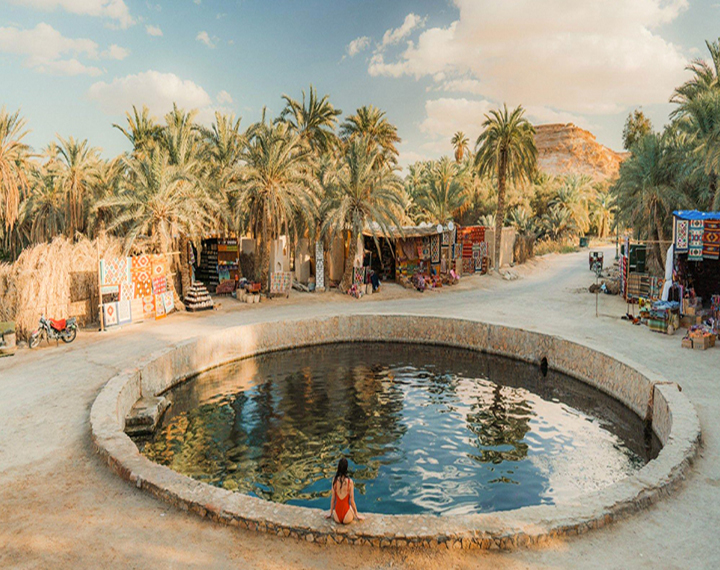
Nestled within a lush grove of date palms and olive trees near the heart of the Siwa Oasis, Cleopatra Spring—also known as Ain Juba or the Spring of the Sun—is perhaps the most famous natural pool in Egypt’s Western Desert. This circular stone basin is fed by subterranean aquifers that send bubbles dancing to the surface, making the otherwise invisible, pristine water appear to shimmer with life. For centuries, it has served as a cultural focal point for the Siwi people, offering a serene and uplifting sanctuary where the cool shade of the palms provides a welcome reprieve from the golden Saharan sun.
The architecture of the spring is characterized by its ancient stone walls, believed by some to date back to the Roman or Islamic eras, which create a deep, accessible pool perfect for a refreshing dip. This informative geological site maintains a constant, comfortable temperature of approximately 29°C year-round, making it a favorite touristic stop regardless of the season. Surrounding the water are traditional Siwan-style cafes and juice stands, where travelers can enjoy fresh hibiscus tea or date shakes, providing an inviting atmosphere to relax and watch the slower rhythm of oasis life unfold.
The cultural significance of the site is anchored by the enduring legend that Queen Cleopatra VII herself bathed in these mineral-rich waters during her historic pilgrimage to consult the nearby Oracle of Amun. While historians may debate the queen’s actual visit, the spirit of the legend is vibrantly alive in Siwa. Local customs continue to celebrate the spring’s “beautifying” properties, with traditional brides often visiting the waters to seek blessings before their weddings. This living heritage adds a profound layer of human connection to the site, transforming a simple bath into a moving encounter with ancient tradition.
For the adventurous traveler, Cleopatra Spring is a perfect midpoint on the journey between the Shali Fortress and the Temple of the Oracle. The atmosphere is one of communal tranquility, where visitors are encouraged to respect local sensitivities by dressing modestly while enjoying the water. Exploring the narrow, dusty paths that lead to the spring, one can discover handcraft stalls offering traditional Siwan embroidery and silver jewelry, providing a welcoming opportunity to take home a piece of the desert’s unique artistic legacy.
Visiting this “Spring of the Sun” is an uplifting experience that perfectly captures the essence of Siwa—a place where history, legend, and natural beauty flow together in harmony. Whether you are swimming in the legendary depths or simply soaking in the view with a cup of mint tea, the spring offers a sense of peace that is as timeless as the desert itself. It remains a radiant beacon of hospitality and wonder, inviting every wanderer to discover why this hidden emerald pool has captivated the human imagination for thousands of years.



 Own or work here?