

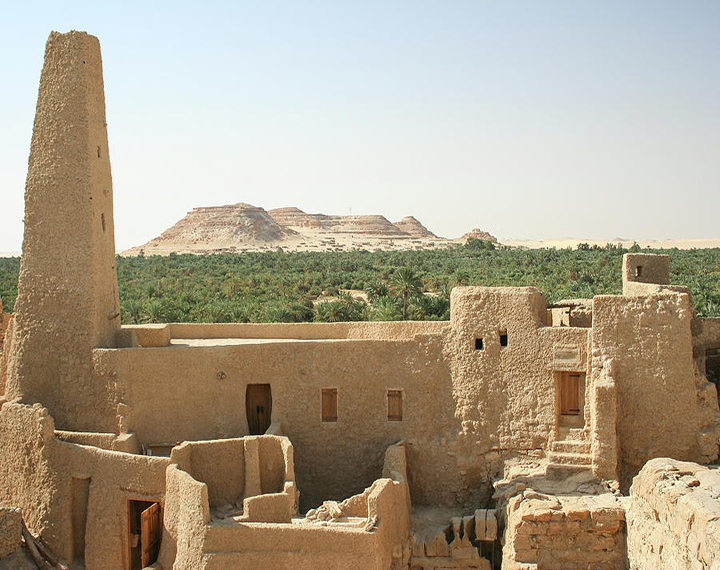
Perched atop the rocky outcrop of Aghurmi village, the Temple of the Oracle of Amun is a breathtaking landmark that has commanded the spiritual landscape of the Siwa Oasis for over two and a half millennia. Built during the 26th Dynasty under Pharaoh Amasis II, this limestone sanctuary served as one of the most influential religious centers of the ancient world. Its elevated position offers a majestic panoramic perspective, where the weathered stone of the temple looks out over a sea of emerald palm tops, shimmering salt lakes, and the infinite golden dunes of the Great Sand Sea.
The architecture of the temple is an informative blend of traditional Egyptian design and the rugged necessity of desert life. Unlike the polished granite monuments of the Nile, this “temple-fortress” was crafted from local limestone and sandstone, featuring a grand vestibule and a central sanctuary where the priests of Amun once delivered cryptic prophecies. The structure’s durability is a testament to ancient engineering, with its massive blocks and strategic placement on a defensible ridge reflecting a time when the temple was a vital political and spiritual crossroads between Africa and the Mediterranean.
For the adventurous tourist, the temple is most famous as the site of Alexander the Great’s historic pilgrimage in 331 BC. It was here that the oracle famously greeted the conqueror as the “son of Amun,” a moment that cemented his legitimacy as Pharaoh and changed the course of world history. Walking through the silent ruins, the atmosphere is one of profound mystery and reverence, allowing travelers to stand in the very spot where legendary kings and generals sought divine guidance amidst the vast silence of the Sahara.
The cultural significance of the site is deeply woven into the identity of the Siwi people, who have lived in the shadow of the temple for generations. The surrounding ruins of the ancient village of Aghurmi provide a picturesque backdrop of organic, salt-baked shapes that seem to grow directly from the earth. Exploring the narrow paths and stone stairways leads to an inviting sense of discovery, where the fragrance of the surrounding olive groves and the desert wind create a sensory bridge to the era of the Greco-Roman world.
Visiting this ancient oracle is an uplifting experience that highlights the enduring quest for wisdom and meaning. Whether you are mesmerized by the historic reliefs or simply soaking in the view from the high ramparts, the temple offers a moving encounter with the spirit of human ambition and the beauty of the Egyptian desert. It remains a timeless beacon of heritage, inviting all who wander to Siwa to listen for the whispers of the past in a landscape where history and myth are eternally entwined.



 Own or work here?