

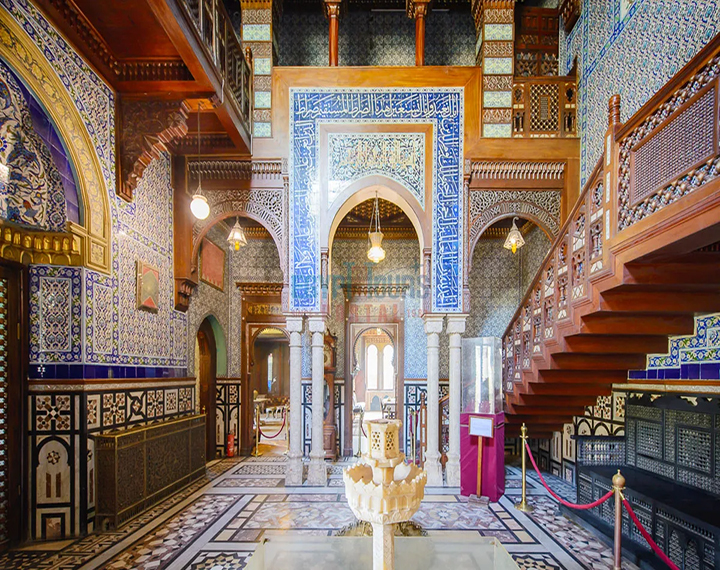
Majestic sanctuary where the beauty of Islamic art meets royal history. Nestled on the lush banks of Rhoda Island in the heart of Cairo, the Prince Mohamed Ali Palace, also known as the Manial Palace, stands as a breathtaking testament to Egypt’s royal heritage. Built by Prince Mohamed Ali Tewfik between 1901 and 1929, this exquisite complex offers a rare glimpse into the opulent lifestyle and artistic vision of a refined era. As you step through the monumental gates, the city’s bustle fades into a serene atmosphere of architectural splendor and botanical tranquility, inviting visitors to wander through a world of unparalleled elegance.
The architecture is a magnificent fusion of styles, seamlessly blending Ottoman, Moorish, and Persian influences with touches of European rococo. Each structure within the estate, from the grand residence to the ceremonial halls, was designed by the prince himself to celebrate the rich diversity of Islamic design traditions. Intricate woodwork, vibrant ceramic tiles, and hand-painted ceilings tell a story of cultural bridge-building, where Eastern craftsmanship meets a sophisticated early twentieth-century aesthetic in a way that feels both historic and timeless.
Exploring the individual saraya or halls is a journey through a treasury of art and history that captivates every traveler. The throne hall is particularly striking, featuring a brilliant golden sunburst on the ceiling and walls adorned with portraits of the Muhammad Ali dynasty, evoking a sense of imperial grandeur. Meanwhile, the residence hall displays personal artifacts and fine furniture that reflect the prince’s global travels and his deep devotion to preserving the artistic legacy of the Islamic world for future generations to admire.
Surrounding the ornate buildings is a vast botanical garden that serves as an oasis of calm within the lively metropolis of Cairo. The prince was a passionate gardener, curating a collection of rare plants and exotic trees from across the globe to create a living tapestry of greenery. Strolling along the winding paths, guests can enjoy the play of light through ancient palms and the gentle sound of fountains, making the palace grounds a favorite spot for those seeking beauty and reflection in a historic setting.
This cultural gem remains one of Egypt’s most significant monuments, preserving the essence of a pivotal period in the nation’s modern history. Beyond the physical structures, the palace museum houses remarkable collections of manuscripts, textiles, and artifacts that offer an educational and uplifting experience for all who visit. Whether you are an enthusiast of fine architecture or a curious traveler seeking the soul of Cairo, the palace provides a deeply moving encounter with the artistic brilliance and enduring spirit of Egypt.



 Own or work here?