

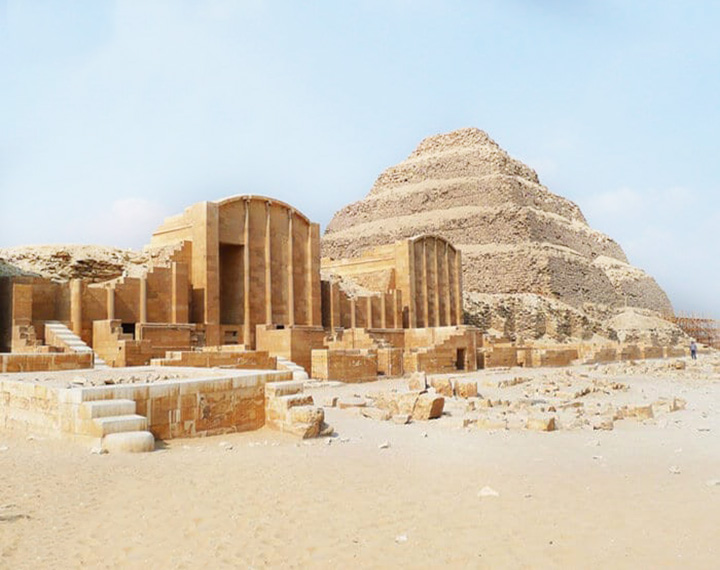
The Saqqara Necropolis is one of the most significant archaeological landscapes in the world, serving as the primary cemetery for the ancient Egyptian capital of Memphis for over 3,000 years. This UNESCO World Heritage site is a vast open-air museum that chronicles the entire evolution of Egyptian funerary architecture, from early mastaba tombs to the world’s first monumental stone structure. The atmosphere is one of profound historical depth and intellectual discovery, as the desert sands continue to yield new secrets, including remarkably preserved caches of mummies and intact tomb chapels.
The Step Pyramid: Dominated by the Pyramid of Djoser, this 6-tiered masterpiece designed by the architect Imhotep represents the groundbreaking transition from mud-brick burials to soaring stone monuments. The Serapeum: A mysterious and awe-inspiring underground gallery housing massive granite sarcophagi that once held the mummified remains of the sacred Apis bulls. Tomb of Ti and Kagemni: These “Old Kingdom” mastabas are famous for their incredibly detailed and vibrant reliefs, offering a high-definition window into ancient daily life, from farming and fishing to festive banquets. Pyramid of Unas: Though modest on the outside, the interior contains the earliest known “Pyramid Texts,” sacred spells and incantations carved into the walls to guide the pharaoh into the afterlife.



 Own or work here?