

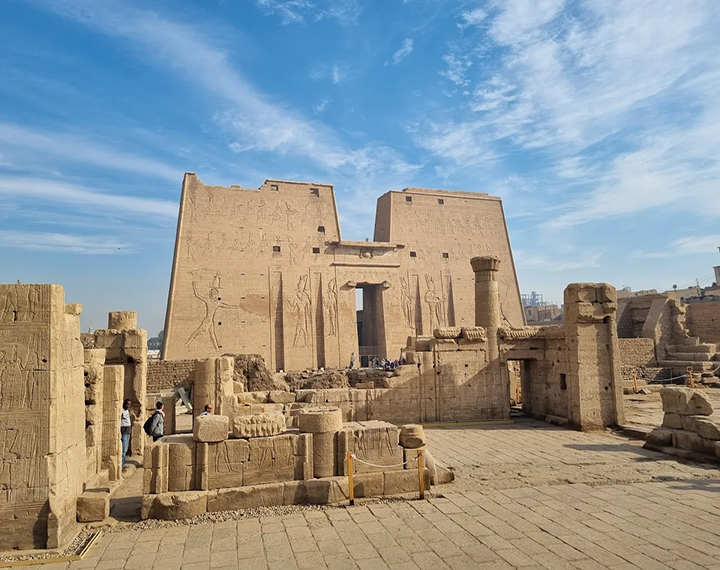
The Temple of Edfu stands as the most impeccably preserved cult monument of the ancient world, offering a breathtaking glimpse into the grandeur of the Ptolemaic era. Dedicated to the falcon-headed god Horus, this sandstone masterpiece was constructed over nearly two centuries, resulting in a structure of astonishing completeness. Walking through its towering entrance, visitors are immediately struck by the sheer scale and architectural precision that have allowed its pylons and halls to survive the passage of millennia.
The temple is renowned for its vast “library in stone,” with every wall covered in intricate hieroglyphics and relief carvings that detail ancient rituals and sacred myths. These inscriptions provide an exhaustive record of temple life, from the chemical recipes for sacred incense to the dramatic staging of the mythical battle between Horus and Seth. Exploring the dim, atmospheric corridors feels like navigating a giant archive where the spiritual wisdom of a civilization has been frozen in time for the benefit of modern seekers.
At the heart of the complex lies the sanctuary, where a beautifully carved granite naos once housed the golden statue of the deity. Surrounding this sacred core are various chapels and a fascinating laboratory where priests would prepare the oils and perfumes used in daily offerings. The play of light through the high, narrow openings of the hypostyle halls creates a mystical ambiance that enhances the sense of reverence and wonder. The preservation of the roof allows travelers to experience the original filtered lighting that ancient worshippers would have encountered.
Beyond its historical and religious significance, the temple is a masterpiece of harmony and proportion, featuring a massive courtyard lined with 32 columns adorned with diverse floral capitals. Guarding the entrance are two colossal black granite statues of Horus in falcon form, their sharp, regal features symbolizing divine protection and kingship. The site also includes a well-preserved mammisi, or birth house, where the divine birth of the god and the legitimacy of the reigning pharaoh were celebrated with vibrant festivities.
A visit to Edfu is an essential chapter in any Nile journey, providing a tangible connection to the devotion and artistry of the late Pharaonic period. The temple rises majestically from the surrounding green fields of the Nile Valley, contrasting the ancient sandstone with the vibrant life of the modern town. It remains a powerful sentinel of the river, inviting explorers to lose themselves in the epic tales and architectural splendor of a world that refused to fade. It is truly a gift of history for the curious heart.



 Own or work here?