

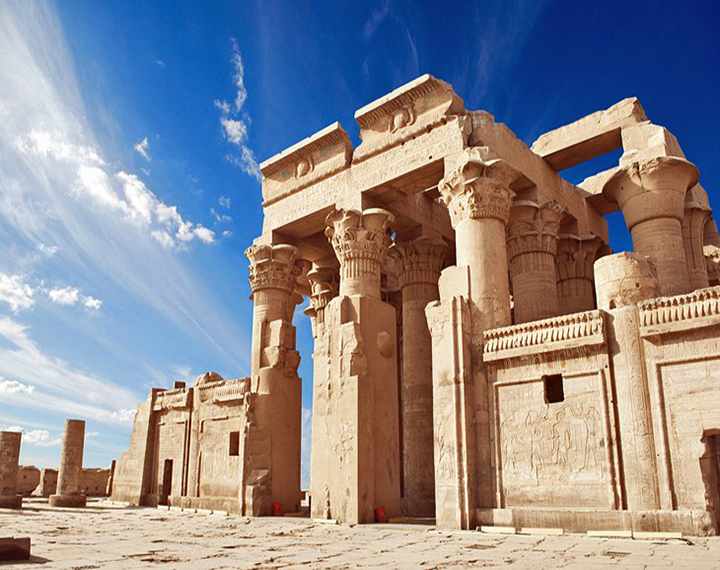
A unique dual sanctuary where the gods of Nile and sky meet. The Temple of Kom Ombo is an extraordinary architectural marvel perched on a scenic bend of the Nile, north of Aswan. This Greco-Roman monument is famous for its perfectly symmetrical dual design, featuring two identical entrances, halls, and sanctuaries. One half is dedicated to the crocodile god Sobek, while the other honors the falcon-headed Horus the Elder, representing a rare balance of divine forces.
Walking through the soaring columns, visitors are greeted by some of the most intricate and well-preserved reliefs in Egypt. One particular wall attracts medical enthusiasts as it depicts a collection of ancient surgical instruments, suggesting the site was once a place of healing. The precision of the carvings showcases the deep scientific and spiritual knowledge of the priests who once served in these sacred halls.
The temple’s riverside location provides a dramatic and beautiful backdrop, especially during the golden hour of sunset when the sandstone glows with warmth. For centuries, travelers arriving by boat have been mesmerized by the sight of its massive pylons reflecting in the shimmering waters. It remains a favorite stop for river explorers seeking to witness the unique duality of Egyptian mythology in a single stunning location.
Directly adjacent to the site is the fascinating Crocodile Museum, which adds a layer of intrigue to the visit by displaying ancient mummified crocodiles found nearby. This proximity allows for a deeper understanding of the local cult of Sobek and the historical respect for the powerful creatures of the Nile. The entire complex is a celebration of the cultural and natural history that defines this fertile valley.
As night falls, the temple is often brilliantly illuminated, creating a magical and romantic atmosphere for those visiting on evening cruises. The interplay of light and shadow on the ancient scripts provides an uplifting sense of connection to the past. It is an essential and enlightening destination that perfectly captures the spiritual harmony and artistic brilliance of the late Pharaonic eras.



 Own or work here?