

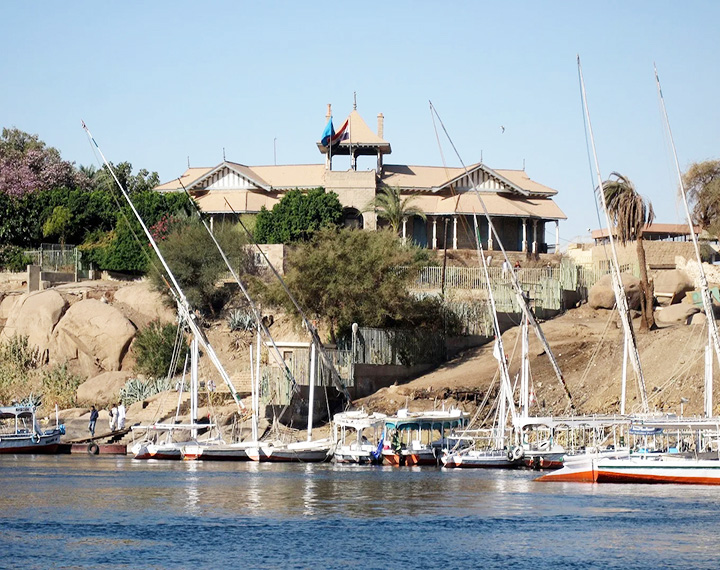
Historical treasures nestled on an island in the heart of Nile. Situated on the southern end of Elephantine Island, this museum is housed in a charming colonial-era villa that once belonged to Sir William Willcocks. The museum focuses on the archaeological finds from the island itself, which has been inhabited for thousands of years and served as a vital trading post. Exploring the galleries provides an intimate look at the daily lives of those who lived at the border of ancient Egypt.
The museum is surrounded by lush gardens and sits adjacent to the ruins of the Temple of Khnum, allowing you to pair a museum visit with an outdoor archaeological stroll. The collection includes ancient pottery, jewelry, and funerary items that tell the story of the island’s strategic and religious importance. Its smaller scale makes for a personal and manageable exploration of the region’s deep history.
The views from Elephantine Island back toward the city of Aswan are spectacular, especially with the traditional wooden feluccas sailing by. The island atmosphere adds a layer of tranquility to the experience, as you have to cross the river by boat to reach it. It feels like a hidden sanctuary where the layers of time are visible in the excavations surrounding the building.
One of the museum’s highlights is the Nilometer, an ancient structure used to measure the height of the Nile’s annual flood. Understanding how the ancients monitored the river adds a fascinating scientific dimension to your cultural tour. The museum effectively bridges the gap between the natural environment of the Nile and the civilizations it supported.
While some of the collection has been moved to the larger Nubian Museum, the Aswan Museum remains a delightful destination for those who love the atmosphere of island life and focused history. It is a place where you can enjoy the shade of the trees and the gentle river breeze while contemplating the artifacts of a bygone era. It represents the quiet, scholarly side of Egyptian exploration.



 Own or work here?