

His Majesty King Charles III writes a golden new chapter in Bermudian history
Today, the first of May 2026, etched itself permanently into the collective memory of both Britain and Bermuda. For the first time in his reign, King Charles III set foot on the coral soil of a British Overseas Territory as its sovereign — and the island he chose was this jewel of the Atlantic, radiant with history, colour, and an unshakeable sense of self. It is a visit more than half a century in the making, his last having been as a young Prince of Wales in 1970, and the emotion woven through the day’s ceremonies was entirely proportionate to its significance.
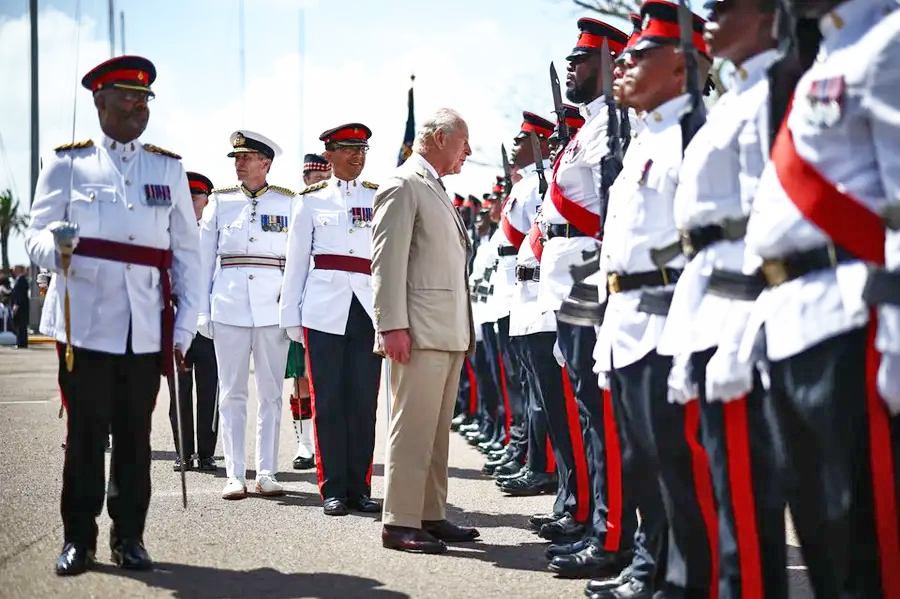 The morning began in the ancient heart of the island, at King’s Square in the former capital of St. George’s, where the Royal Bermuda Regiment stood in formal welcome and a 21-gun salute split the warm Atlantic air. Schoolchildren and islanders pressed against the square’s edges, their cheers rising above the cannon smoke as the King moved among them with visible ease and warmth. He went on to visit the venerable St. Peter’s Church — one of the oldest Anglican churches in the western hemisphere — before travelling to the Bermuda Aquarium, Museum and Zoo, where he joined celebrations marking the institution’s centenary and explored the sanctuary of Trunk Island, a living testament to what dedicated conservation can protect and restore.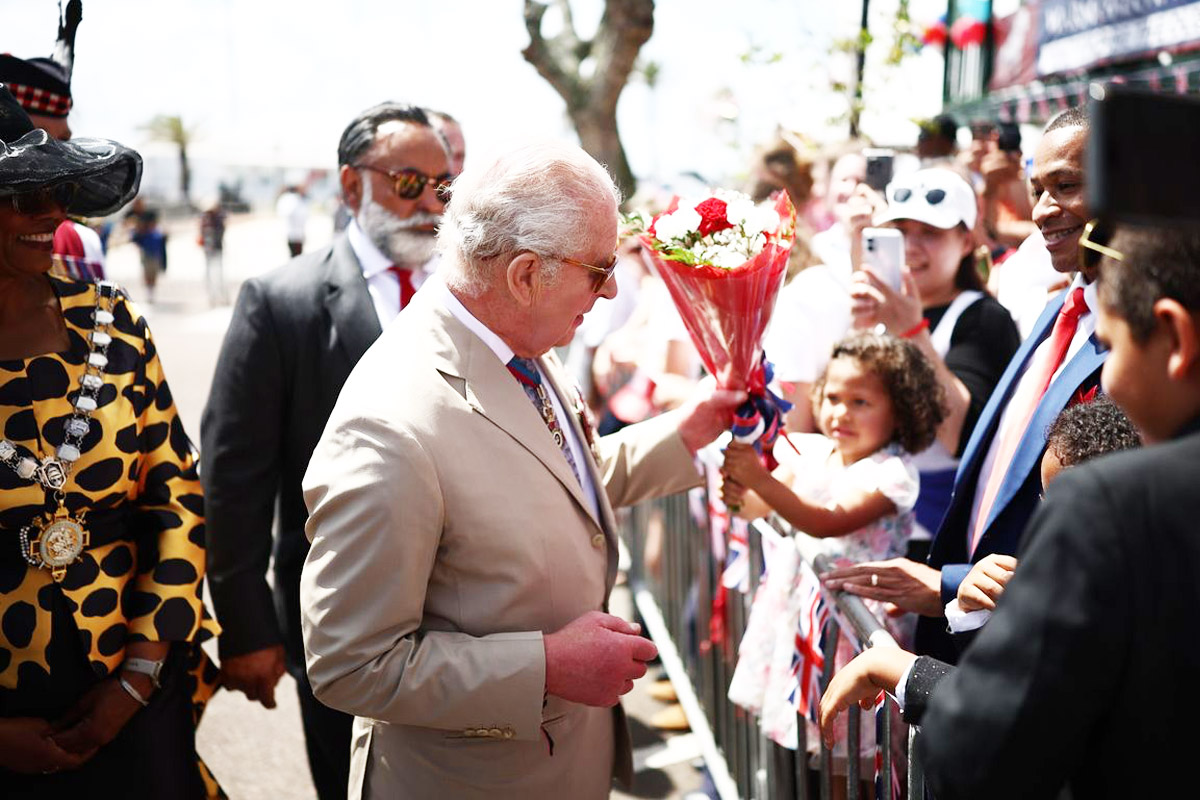
The afternoon carried His Majesty westward into Hamilton, where Bermuda’s creative community gathered at City Hall to share their work with a monarch long known for his genuine appreciation of the arts. The encounter felt less like a royal obligation and more like a natural conversation between a king and the people who give his realm its texture and vitality. From Albuoy’s Point, the King travelled on to the Royal Naval Dockyard, where the National Gombey Troupe met him at the gates of the National Museum of Bermuda — their drums thundering, their mirrored costumes blazing, their movements an expression of something ancient and irreducibly Bermudian. Inside, he toured the Queen’s Exhibition Hall and the 1850 Ordinance House, walking through layers of the island’s complex and remarkable past.
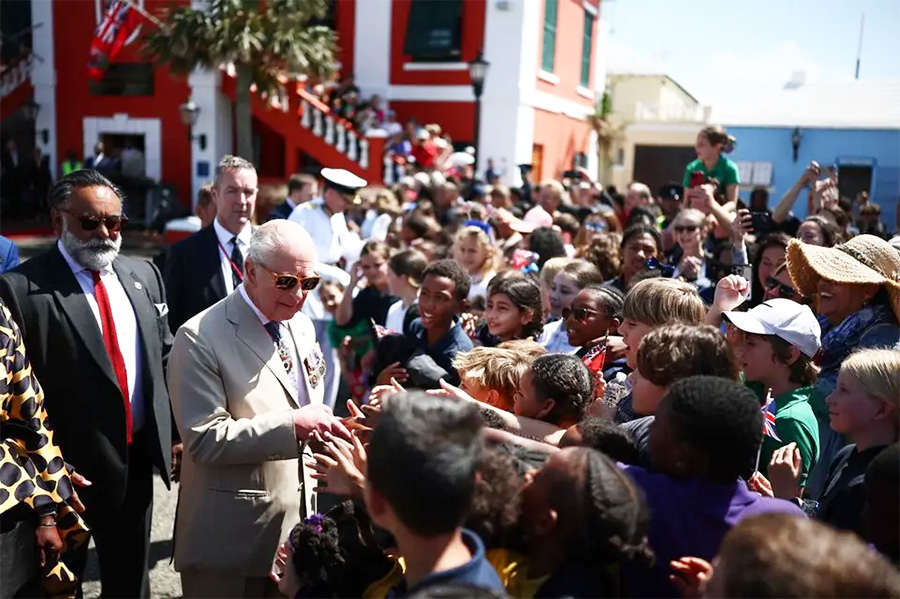
The day closed with a meeting that looked unmistakably toward the future. Young Commonwealth athletes preparing for the Glasgow Commonwealth Games this summer gathered with the King alongside members of youth organisations from across the island — a reminder that the bonds of the Commonwealth are not simply ceremonial but generational, passing from one cohort to the next like a baton. Indeed, a baton was very much at the centre of this closing chapter: the official King’s Baton for the 2026 Commonwealth Games relay was unveiled, its design crafted by Bermudian artist Chyna Talbot, its surfaces carrying the colours, spirit, and beauty of this island out into the wider world.
During his visit to Trunk Island, King Charles III stepped into a landscape that reflects both fragility and resilience—closely aligned with his lifelong environmental advocacy. Surrounded by Bermuda’s turquoise waters and vital mangrove ecosystems, the visit drew attention to the island’s role in protecting biodiversity and strengthening coastal resilience. Welcomed by conservation leaders, marine scientists, and young representatives, His Majesty engaged in thoughtful discussions on restoration, sustainability, and education. Accompanied by Bermudian officials and environmental stewards, he listened intently and shared reflections shaped by decades of commitment to environmental causes.
A highlight saw the King walking along restored mangrove areas, observing their importance in protecting shorelines and nurturing marine life. In a symbolic moment, he took part in planting, reinforcing his message that “nature is our greatest ally,” a sentiment warmly received by those present. The atmosphere was both celebratory and sincere, with locals gathering proudly to witness the visit. Applause and smiles followed his progress, reflecting appreciation for his longstanding advocacy and a shared sense of purpose. More than ceremonial, the visit to Trunk Island became a meaningful expression of global responsibility—connecting leadership with local action, and highlighting Bermuda as a place of both natural beauty and environmental leadership.
It was, from first cannon to final handshake, a day of rare and genuine grace. A king rediscovering an island. An island welcoming its sovereign. And between them, something quietly reaffirmed — that the ties of history, when tended with respect and warmth, can feel not like obligation but like belonging.
