

 King Charles, Make History in Bermuda: A Royal Welcome, a Guard of Honour, and an Island’s Proudest Moment
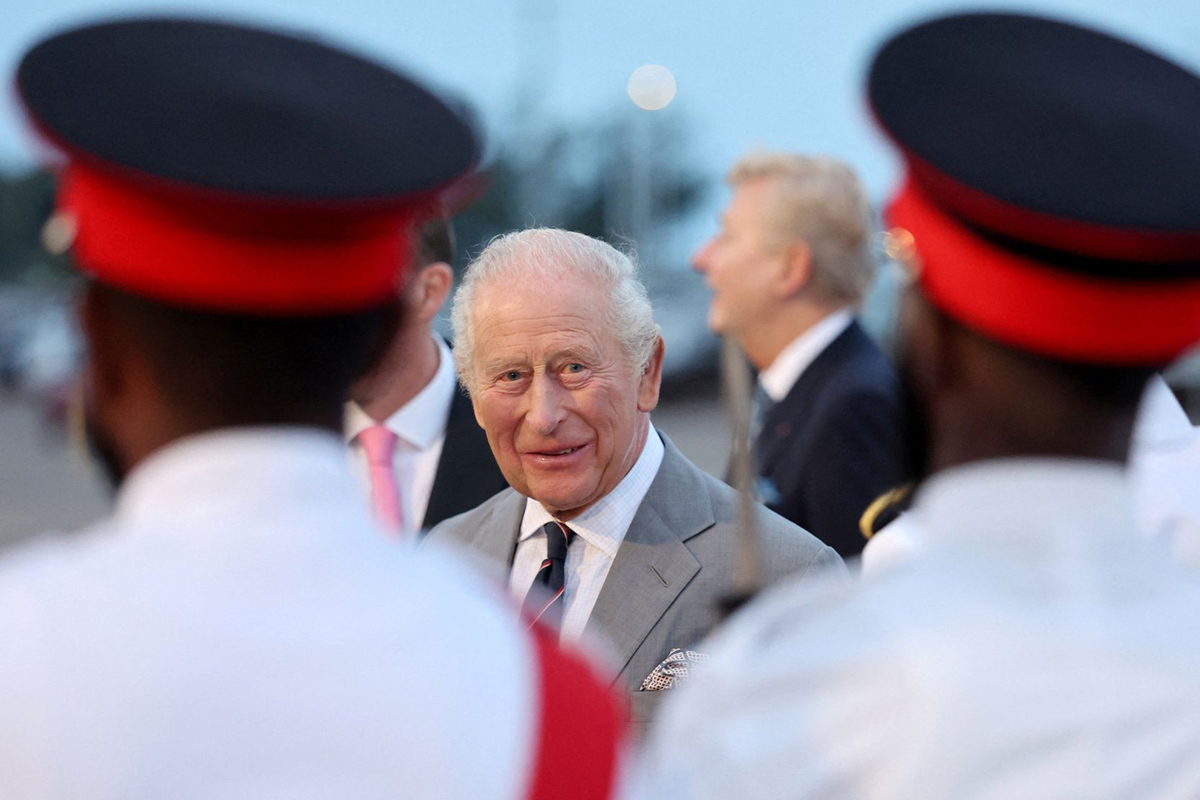
An island of extraordinary beauty opens its arms, and a King steps ashore to make history – There is a moment, rare in any lifetime and rarer still in the long unfolding story of a nation, when ceremony transcends itself entirely — when the polished boots and the presented arms and the slow, measured salute become something greater than protocol, and the air itself seems to comprehend the weight of what is being marked. Such a moment settled over the island of Bermuda on the evening of 30th April 2026, as King Charles III descended onto Bermudian soil at LF Wade International Airport, stepping from a plane bearing the King’s cypher and the Union Jack onto a red carpet that felt, to those gathered to witness it, less like an arrival formality and more like the opening line of a chapter long awaited. In that single step, His Majesty became the first reigning King in history ever to visit this beloved island jewel set in the North Atlantic — a fact that lent the warm evening air an almost tangible sense of occasion.
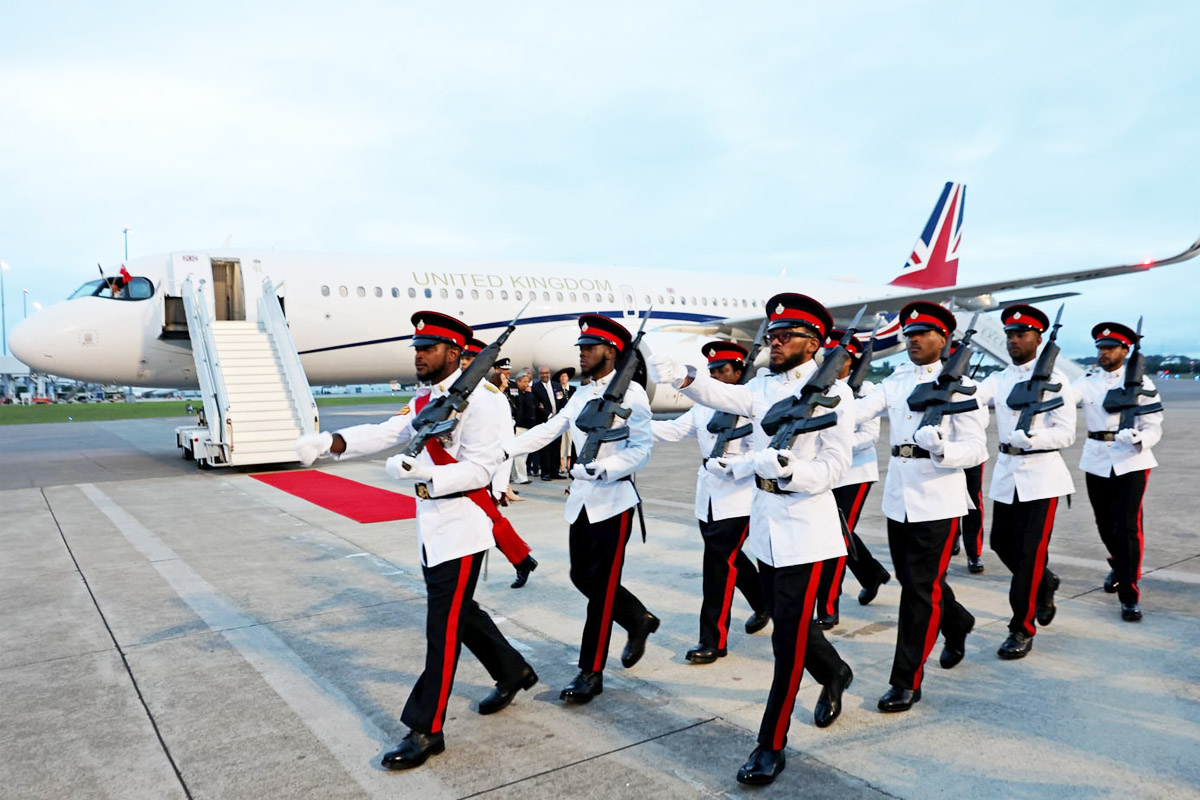
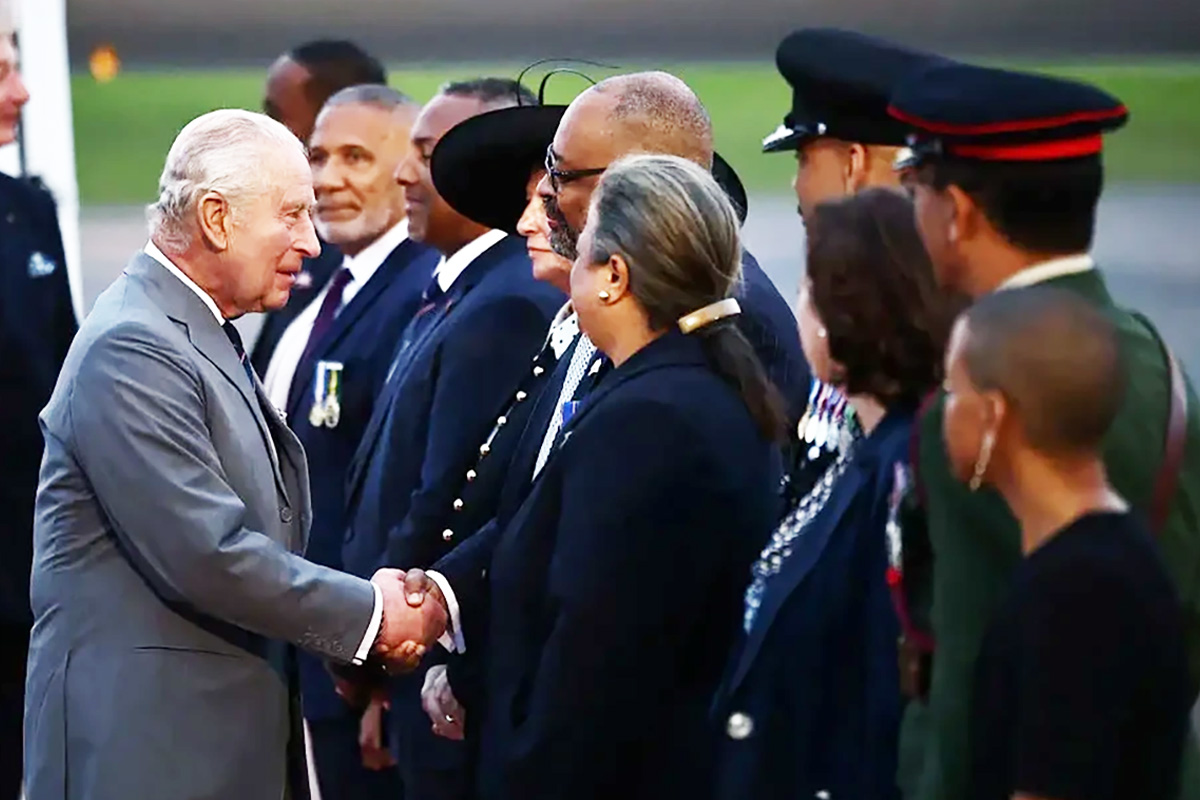
Waiting to receive him at the foot of that carpet was a welcome party that spoke, in its very composition, to the depth and dignity of the bonds being celebrated. Governor Andrew Murdoch, His Excellency representing the full constitutional presence of the Crown on the island, stood ready alongside Premier David Burt and his wife Kristin — together embodying, in one gracious tableau, the living relationship between Bermuda and its sovereign: ancient in its roots, vital in its present form, and full of shared purpose for the future. As the King moved along the receiving line, the soldiers of the Royal Bermuda Regiment stood to attention in a formal guard of honour nearby, their dark ceremonial uniforms and steady bearing cutting a picture of composed, proud service beneath the softening Atlantic sky. True to the nature that has defined his reign, the King slowed at every point, pausing to speak genuinely with each dignitary gathered to welcome him — a gesture that communicated, more eloquently than any prepared remark, that he had not come to Bermuda merely to be received, but to truly be present.
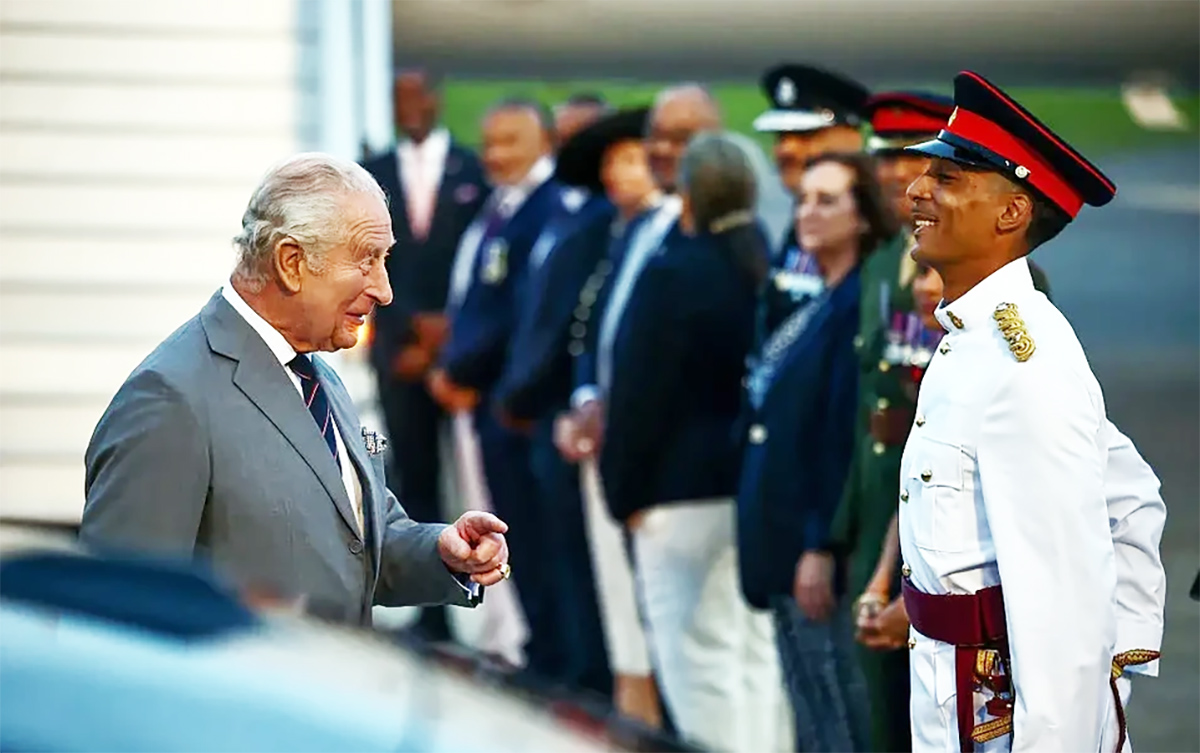
The visit itself — spanning three full days from 30th April to 2nd May 2026 — arrives bearing a significance that extends well beyond its ceremonial pageantry. This is His Majesty’s first official tour as Sovereign to any British Overseas Territory, making Bermuda not simply a destination on a royal itinerary, but the chosen beginning of an entirely new chapter in the King’s relationship with the broader British family of nations. It follows directly from the four-day state visit to the United States, undertaken to mark the 250th anniversary of American independence, and carries forward the same animating spirit: a sovereign committed to showing up, to listening, to celebrating, and to strengthening the bonds of shared identity and mutual affection that stretch across oceans and across centuries. For Bermuda, a territory whose connection to the British Crown reaches back more than four hundred years, the arrival of its King is not a diplomatic event dressed in ceremony — it is a deeply personal occasion, felt across the island with a pride both warm and genuine.
The Royal Bermuda Regiment, whose soldiers stood so impressively at the King’s arrival, bring their own extraordinary story to this historic moment. Formed in 1965 through the merging of the Bermuda Militia Artillery and the Bermuda Volunteer Rifle Corps — two units whose roots reach back to the 1890s — the Regiment stands as a testament to Bermuda’s long tradition of service and its enduring commitment to the ideals of unity and defence. Across six decades, more than eleven thousand Bermudians have worn its uniform with honour, answering the call in times of natural disaster, civil emergency, and international deployment alike. It was Queen Elizabeth II herself who conferred upon the Regiment the title of “Royal” in 2015, recognising fifty years of dedicated and distinguished service — a distinction that gave the guard of honour presented to her son on that April evening a lineage and a meaning all its own.
The full ceremonial welcome, with its 21-gun salute and formal military reception, awaited the King the following morning, as Bermuda readied itself to share with its sovereign the full richness of its culture, its landscapes, and its people across three days of purposeful and joyful engagement. The programme designed for his visit was itself a portrait of the island: from the historic King’s Square in the ancient town of St George’s, where the Regiment would again receive him before a visit to the venerable St Peter’s Church, to the living classrooms of Trunk Island and the conservation work of the Bermuda Aquarium, Museum and Zoo — celebrating its own centenary year — through to the arts and creative life of Hamilton, the maritime heritage of the Royal Naval Dockyard, and the proud young athletes preparing to carry Bermuda’s colours to this summer’s Commonwealth Games in Glasgow. It was a programme conceived not as a schedule of appearances, but as a conversation between a King and his people — unhurried, attentive, and full of genuine regard.
Yet above all the pageantry and all the planning, it was the simplest moment of that first evening that captured something essential about this visit and the man at its centre. As the King reached the end of the receiving line and caught sight of the travelling British press corps who had followed him across the Atlantic, he raised a hand, smiled, and offered three words: “you made it.” In those three words lived the warmth, the lightness, and the quiet humanity that have come to define his reign. King Charles III had come to Bermuda not to be admired from a distance, but to draw closer — to an island, to a people, and to a relationship between Crown and territory that, on this luminous April evening, felt more alive and more meaningful than ever before.
