

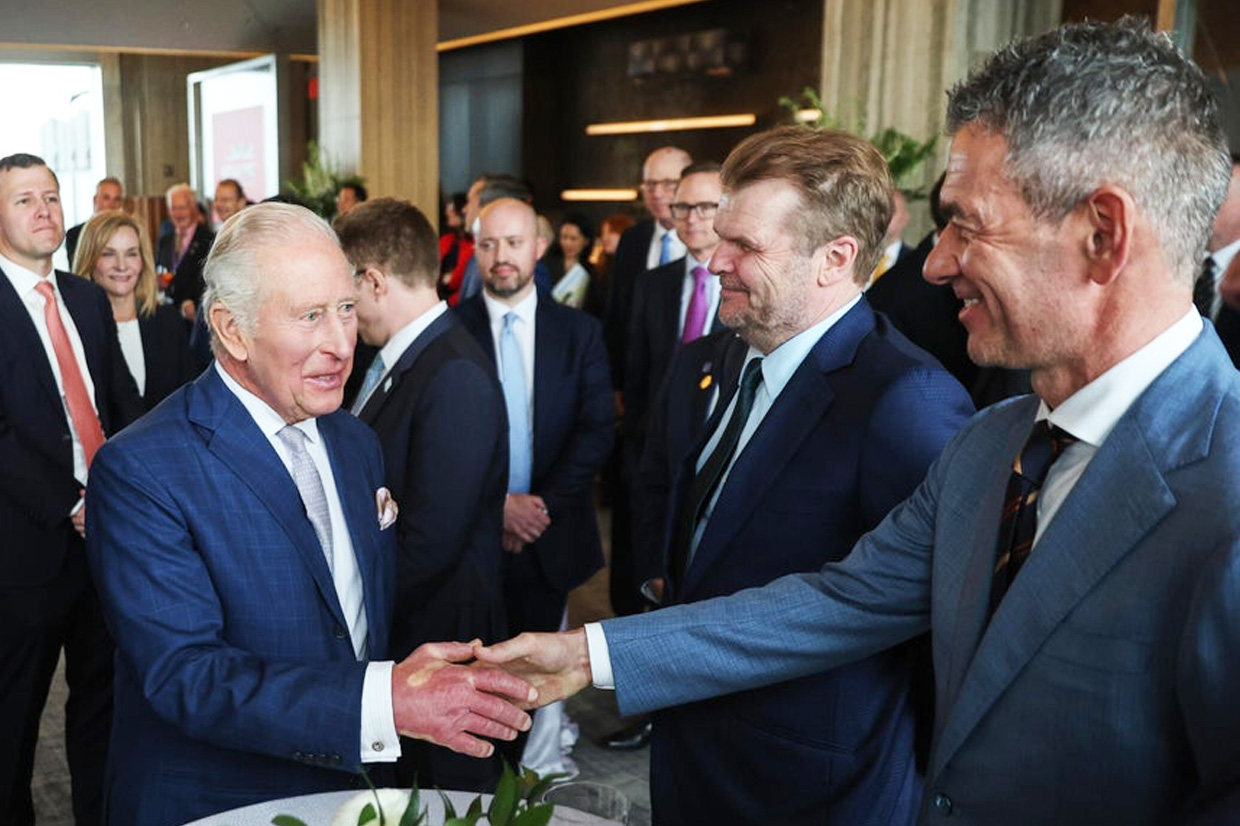
His Majesty King Charles Promoting UK-US Investment at New York Rockefeller Center: A Monarch Among Global Titans, Uniting Two Great Nations
A monarch’s gracious presence transforms Rockefeller Center into a cathedral of commerce, kinship, and shared ambition.
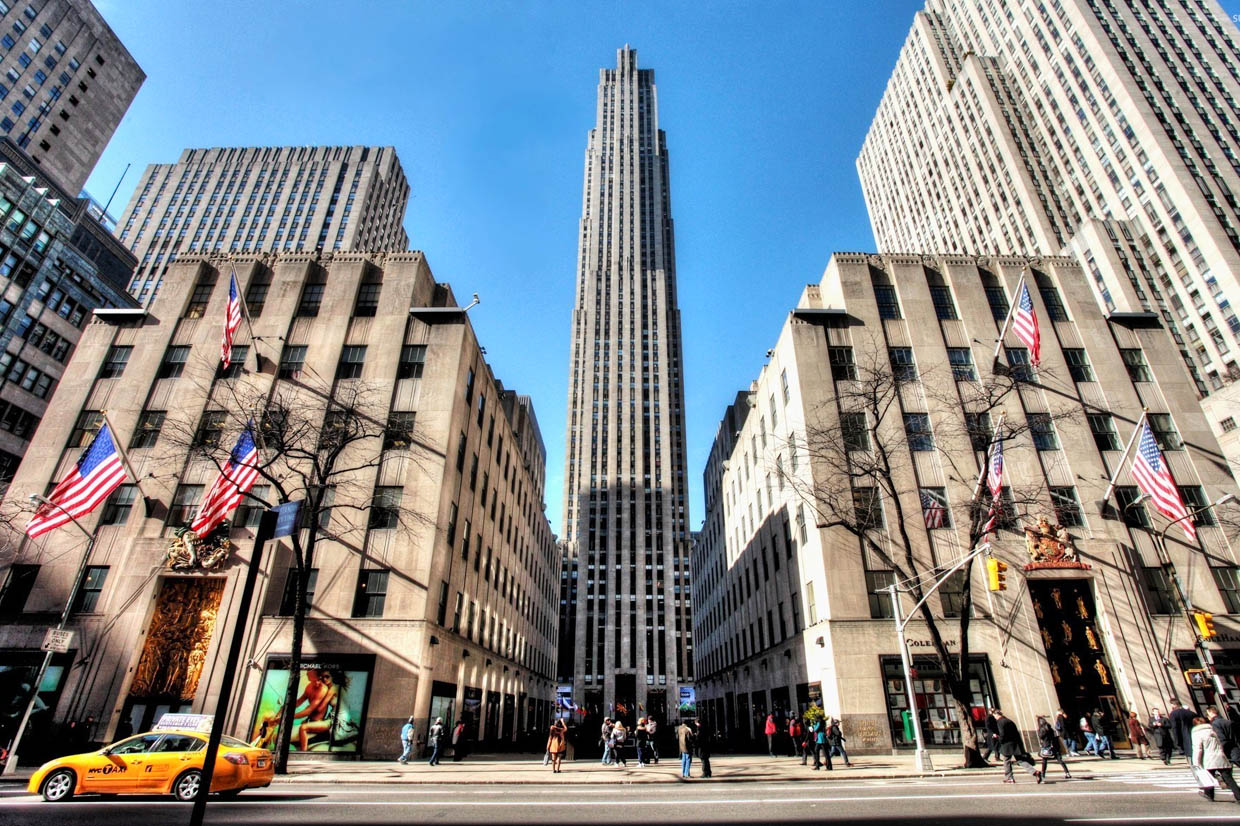
High above the glittering canyons of Midtown Manhattan, on the storied 65th floor of 30 Rockefeller Plaza, U.K. Foreign Secretary The Rt Hon Yvette Cooper MP had assembled something remarkable — twelve of the most senior business leaders from both sides of the Atlantic, drawn together into one private dining room for an afternoon that felt less like a scheduled diplomatic engagement and more like a reunion of the world’s most consequential friends. When King Charles III entered to join them, he brought with him no fanfare and no pretension — only the genuine warmth of a man deeply invested in the relationship these conversations were designed to strengthen. He moved along the line of executives with unhurried attentiveness, enquiring about careers, about places worked, about the ways in which these vast institutions were choosing to plant their futures in British soil. It was diplomacy at its most human — and, for that very reason, its most powerful.
 The gathering read like a constellation of global influence. Bank of America CEO Brian Moynihan and Blackstone’s Stephen Schwarzman were among those who greeted the King on arrival, alongside JPMorgan Chase Chairman and CEO Jamie Dimon, Citigroup CEO Jane Fraser, and Alphabet President Ruth Porat, who brought the formidable reach of Google to the table. BP CEO Meg O’Neill represented the energy sector’s established giants, while Comcast Chairman Brian Roberts — whose holdings span NBCUniversal and the UK’s own beloved Sky network — reflected warmly on the creative and innovative ties that bind the two nations so naturally together. Tishman Speyer CEO Rob Speyer spoke of his organisation’s enduring loyalty to London as a cornerstone market, a sentiment that carried real weight given the firm’s decades of transatlantic investment. Sam Altman of OpenAI brought the electric possibilities of artificial intelligence into the conversation, GSK’s newly appointed CEO Luke Miels gave voice to the life sciences, Rolls-Royce CEO Tufan Erginbilgic embodied the proud ambitions of British engineering, and Octopus Energy founder Greg Jackson CBE — one of the most energetic entrepreneurial forces in the UK today — spoke to the clean, green future that both countries are racing, with shared urgency and shared hope, to build.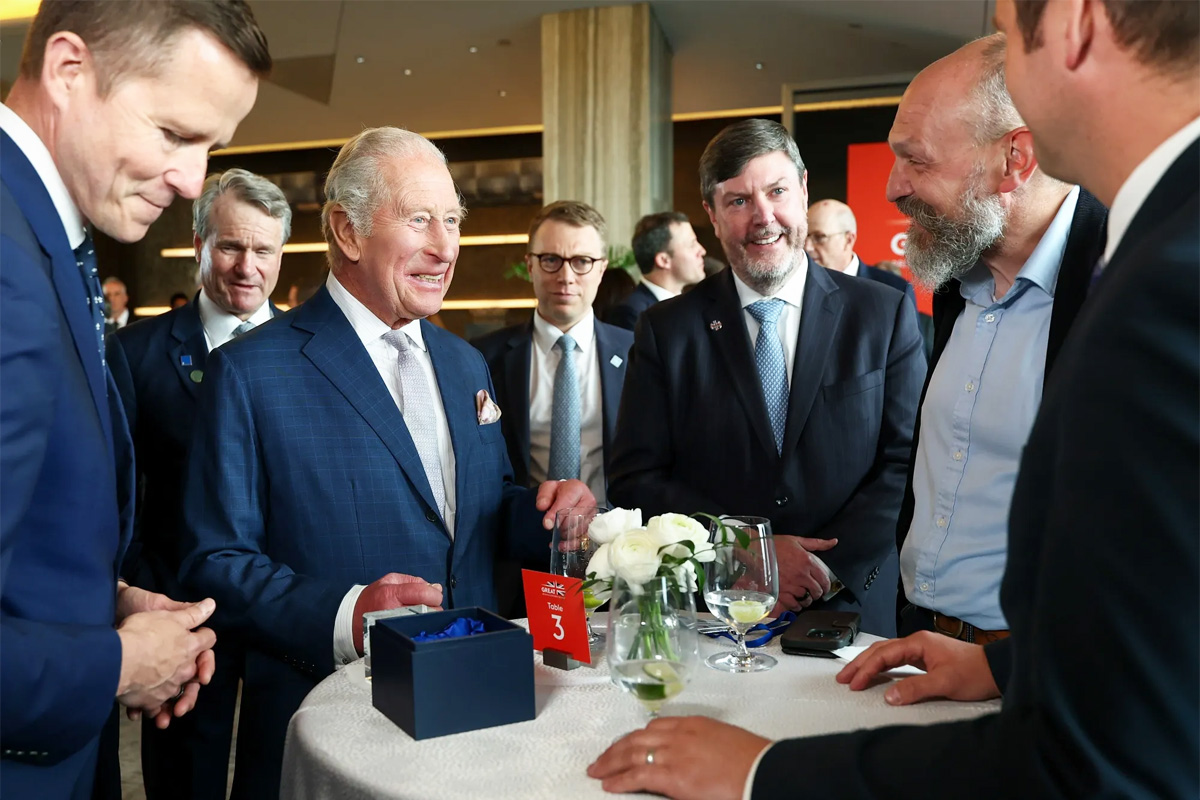
The room itself provided an almost theatrical backdrop to the occasion. With the skyline of New York City unfurling in every direction beyond the windows, the King moved freely among his hosts, standing not at the head of the room but at the centre of it — a distinction that told its own story. Blackstone’s Schwarzman, whose firm has committed to deploying £100 billion of investment into the United Kingdom over the coming decade, spoke with evident conviction about the importance of nurturing a partnership grounded in jobs, innovation and mutual prosperity. British Ambassador Sir Christian Turner offered the numbers that gave the afternoon its full sense of scale: $1.7 trillion invested by each country in the other, more than 2.5 million jobs sustained by the relationship, and $430 billion in annual trade flowing between them — commerce on a scale that speaks not merely of economic interest, but of two societies so deeply intertwined as to be, in many essential ways, inseparable. Meanwhile, in a moment that captured the afternoon’s more intimate spirit, HarperCollins CEO Brian Murray found himself in conversation with the King about his publishing house’s long history and its investments in Scotland — a reminder that behind every headline figure, there are stories, and behind every great alliance, there are people.
When the private session concluded, the King crossed into the wider reception at Bar 65 in the Rainbow Room, where more than fifty additional executives had gathered from across technology, the creative industries, energy, infrastructure and financial services. The atmosphere shifted — still purposeful, but warmer, more celebratory. Canapes moved between groups, conversations spilled naturally from one cluster to the next, and the city glittered far below like a reminder of what ambition, at its finest, can produce. Duncan Edwards, CEO of BritishAmerican Business and the voice of a transatlantic community spanning more than 400 companies, offered a measured but genuinely encouraging assessment: the visit had done real and meaningful work in affirming the depth of the US-UK bond, even as he noted that the full promise of the partnership’s newest chapter remains an inspiring work in progress. His words carried the quiet confidence of someone who had just witnessed something worth believing in.
As the afternoon gave way to evening and the King prepared to carry the day’s momentum forward into its final engagements, the prevailing feeling in that sky-high room was one of something rarer than satisfaction — it was the feeling of possibility, of a relationship consciously and joyfully renewed. Later, at the King’s Trust Gala, Charles himself would give that feeling its most eloquent expression, speaking of the cultural bond between Britain and America as one rooted in shared creativity, shared enterprise, and shared values, and reminding his audience — with characteristic simplicity — that together, the two nations are always greater than the sum of their parts. It was a phrase that could have been engraved above the entrance to every meeting room in Rockefeller Center that day, and every gathering like it that will follow.
What lingered longest, however, was something that no balance sheet could ever fully capture — the quiet, transformative effect of a King who wore his authority not as armour, but as a gift freely given to the room. These were not people easily moved by ceremony. The men and women gathered on that 65th floor had built empires, navigated crises, and shaped the contours of the global economy with the decisions they made before breakfast. And yet, to a person, they found themselves drawn to a monarch who asked more questions than he answered, who listened with the attentiveness of someone who genuinely wished to understand, and who carried the weight of history without ever allowing it to burden those around him. King Charles moved among them with the unhurried ease of a man who knows that real diplomacy is not declared in grand gestures but discovered in the spaces between them — in a handshake held a moment longer, a question asked with sincere interest, a shared laugh that dissolved the distance between sovereign and CEO. In doing so, he accomplished something of profound and lasting importance: he reminded the most influential gathering of transatlantic business minds in a generation that the United Kingdom is not merely a trading partner, but a nation of extraordinary depth, ambition, and friendship — represented, on that luminous New York afternoon, by a King whose devotion to his country was evident in every gracious, purposeful step he took.
