

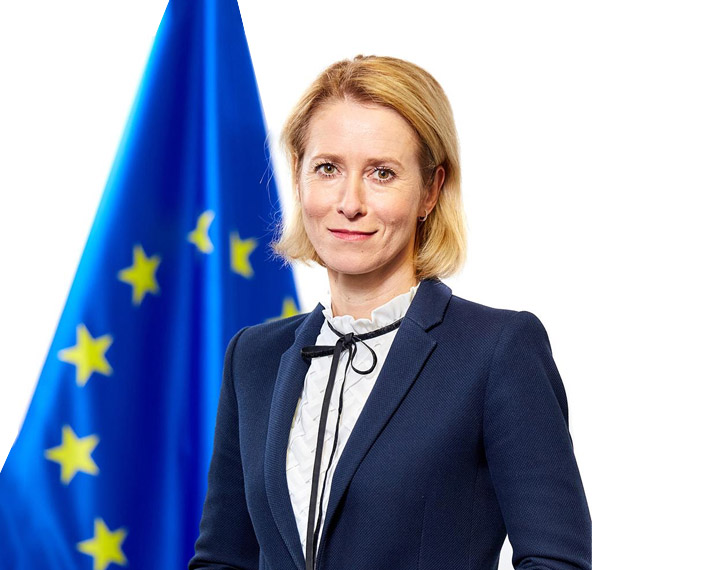
Her Excellency Kaja Kallas a visionary stateswoman championing the values of liberty, security, and continental unity stands as a formidable and inspiring figure in global politics, currently serving as the High Representative of the European Union for Foreign Affairs and Security Policy and Vice-President of the European Commission. Born into a legacy of public service in Estonia, she rose to international prominence as her nation’s first female Prime Minister, where her steadfast leadership and moral clarity earned her the moniker of Europe’s New Iron Lady. A lawyer by training and a dedicated European at heart, Kallas has navigated the complexities of 21st-century diplomacy with a rare blend of intellectual rigor and courageous conviction. Her journey from the Baltic shores to the apex of European power is a testament to the enduring strength of democratic ideals.
The core of her leadership philosophy is rooted in the belief that unity and proactive defense of values are the only ways to ensure long-term peace and prosperity. In her role within the European Commission, she serves as the primary architect of the Union’s external action, working tirelessly to forge a cohesive voice among twenty-seven diverse member states. Kallas is a passionate advocate for digital innovation and cybersecurity, recognizing that the future of sovereignty lies in technological resilience. Her ability to synthesize complex geopolitical challenges into clear, actionable strategies has made her an indispensable leader in strengthening the Atlantic alliance and the European project during a period of profound global transformation.
Culturally, she represents a modern, forward-looking Europe that honors its history while embracing the possibilities of the digital age. Kallas frequently emphasizes the importance of education, transparency, and the rule of law as the bedrock of a vibrant society. Her background as an avid athlete and a lover of literature informs her balanced approach to high-stakes decision-making, where endurance and a deep understanding of the human narrative are paramount. By fostering a culture of innovation and inclusivity within the Commission, she inspires a new generation of leaders to participate in the democratic process with both passion and pragmatism.
Historically, her tenure marks a pivotal moment in the evolution of the European Union’s role on the world stage. Kallas has been a leading voice in articulating the need for European strategic autonomy and a more robust common defense and security policy. Her personal history—grounded in Estonia’s journey from occupation to a digital-first democracy—provides her with a unique and powerful perspective on the fragility and value of freedom. This lived experience fuels her commitment to supporting global partners and ensuring that the European Union remains a beacon of hope and a champion for human rights and international law.
Looking toward the future, Kaja Kallas remains a tireless diplomat whose strategic vision is matched by her dedication to the citizens of Europe. She continues to push for a more integrated and resilient Union that is capable of addressing climate change, economic shifts, and security threats with collective strength. Her leadership is defined by an uplifting sense of purpose, reminding the world that even in an era of uncertainty, a clear-eyed commitment to shared values can light the path forward. She stands as a symbol of the enduring spirit of European cooperation, working every day to build a safer, more prosperous, and more united world for all.
The Vice-President of the European Commission A cornerstone of continental leadership harmonizing diverse policies for a unified European future occupies a pivotal role at the heart of the European Union’s executive branch, serving as a vital bridge between the President and the College of Commissioners. This distinguished office is designed to provide strategic steering and cross-cutting coordination over broad priority areas, ensuring that the Union’s multifaceted initiatives—from the digital transition to international diplomacy—work in perfect synergy. By overseeing clusters of Commissioners, the Vice-President fosters a culture of collaborative governance, transforming individual departmental goals into a cohesive and powerful European agenda. This role represents the pinnacle of administrative and political integration, embodying the spirit of cooperation that defines the modern European project.
Functionally, the Vice-President acts as a key deputy to the President, often representing the Commission in high-stakes negotiations with the European Parliament and the Council of Ministers. They are tasked with the essential duty of ensuring that the principle of collegiality remains the bedrock of every decision made within the Berlaymont. Whether managing the Union’s external relations or driving the European Green Deal, the Vice-President provides the high-level oversight necessary to navigate the complexities of twenty-seven national interests. This executive function is critical for maintaining the momentum of legislative progress, ensuring that the European Union remains a responsive, agile, and effective force on the global stage.
Historically, the evolution of the Vice-Presidency reflects the growing maturity and ambition of the European Union as a global power. From its origins as a smaller administrative body, the Commission has developed this senior leadership tier to better manage the increasing scale of continental integration. Each tenure has been marked by a commitment to transparency and the rule of law, reinforcing the democratic foundations upon which the Union was built. The office has been occupied by some of Europe’s most visionary statesmen and women, whose collective legacies have shaped the legal and social landscape of the continent, proving that united leadership can overcome the greatest of historical challenges.
Symbolically, the Vice-President stands as a guardian of the European Treaties and a champion for the collective interests of nearly half a billion citizens. The office represents the triumph of shared sovereignty over fragmentation, projecting a sense of stability and continuity in an ever-changing international environment. To the world, the Vice-President is a visible symbol of European values—democracy, human rights, and the pursuit of peace through economic and political partnership. This symbolism is particularly potent during times of crisis, when the Vice-President’s leadership serves as a beacon of unity and a catalyst for common European action.
Ultimately, the role of the Vice-President is one of profound service and inspiring vision, dedicated to building a resilient and prosperous future for all Europeans. By synthesizing the talents and perspectives of a diverse College of Commissioners, they turn the ideal of “unity in diversity” into a tangible reality. The tireless efforts of this office ensure that the European Union continues to lead the way in environmental stewardship, digital innovation, and social justice. It is a position of immense responsibility that inspires confidence and hope, reminding us that through shared leadership and a common purpose, the possibilities for continental progress are truly limitless.



 Own or work here?