

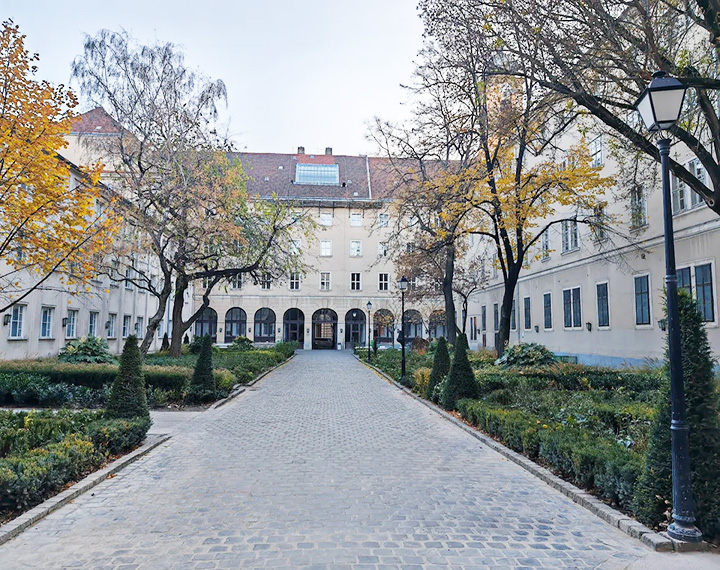
The Budapest City Hall serves as the majestic seat of the Mayor’s Office and the General Assembly, occupying one of the city’s largest and most significant Baroque complexes. Located in the heart of the fifth district, the building radiates an atmosphere of administrative dignity and historical grandeur, featuring expansive courtyards and an imposing facade that stretches along Városház utca. It is an inviting landmark for those interested in the governance and architectural evolution of the capital, symbolizing the enduring spirit of Budapest’s civic autonomy.
* The building is a massive four-story complex centered around eleven courtyards, originally designed as a hospital and veterans’ home.
* The facade is decorated with masterful Baroque sculptures and a central gate that reflects the architectural ambitions of the 18th century.
* It houses the Merlin Theatre and various municipal departments, blending historical preservation with active modern administration.
* The Merlin Courtyard often hosts seasonal cultural events and public gatherings, making the administrative heart accessible to citizens and visitors.
Culturally, City Hall is the nerve center of the metropolitan government, where the future of the city is shaped through democratic debate and planning. It acts as a guardian of the capital’s heritage while fostering contemporary urban development and social initiatives. The building represents the unity of the once-separate cities of Buda, Pest, and Óbuda, serving as a physical manifestation of the collective identity and shared history of the residents of Budapest.
Historically, the structure was commissioned by Archbishop György Széchényi and built between 1716 and 1735 according to the designs of the renowned architect Anton Erhard Martinelli. Originally known as the Invalidus House, it was intended to provide a dignified home for disabled soldiers before transitioning into its current role as the City Hall in the late 19th century. Its long corridors and sturdy walls have survived numerous historical upheavals, remaining a steadfast icon of stability and civic pride throughout the dual monarchy, the world wars, and the modern era.
Tourists and architecture enthusiasts find the complex to be a fascinating highlight of the inner city, providing a sense of the sheer scale of Baroque urban planning. While the interior is primarily functional for government business, the grand exterior and the accessible courtyards offer excellent opportunities for photography and historical reflection. Its central location makes it a perfect stop between Deák Ferenc Square and the Astoria district, offering an uplifting perspective on the administrative foundations that support the beauty and functionality of the Hungarian capital.



 Own or work here?