
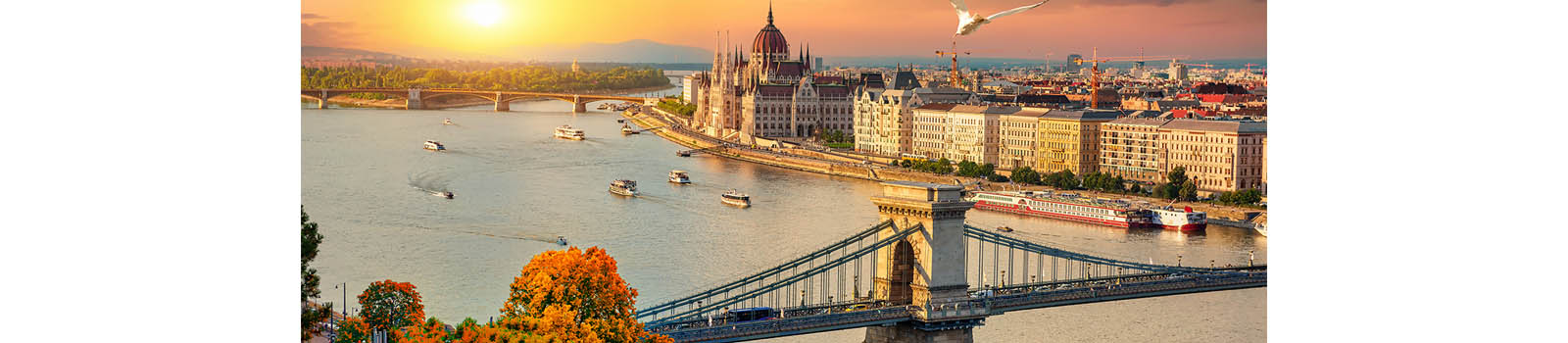
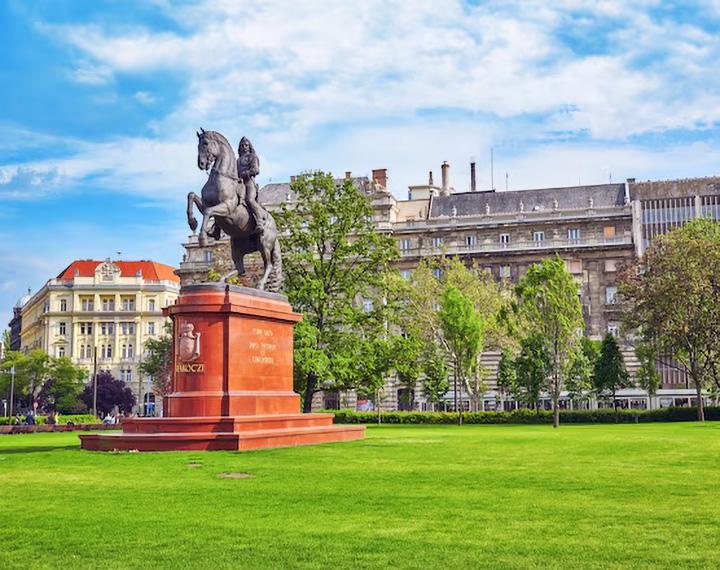
The Equestrian statue of Francis II Rákóczi stands as a powerful and noble monument on the southern side of Kossuth Square, positioned directly across from the Hungarian Parliament. This bronze masterpiece depicts the Prince of Transylvania and leader of the 18th-century war of independence in a dynamic, galloping pose that captures the fire of revolution. The atmosphere surrounding the statue is one of profound respect and historical weight, especially as the morning light illuminates the intricate details of the rider’s traditional Hungarian attire and the strength of his steed.
Culturally, the monument serves as a vital symbol of the eternal Hungarian struggle for sovereignty and national self-determination. Francis II Rákóczi is revered as a figure who united the nobility and the peasantry under the banner of freedom, making his statue a site of significant national pilgrimage. The Latin inscription on the pedestal, Pro Patria et Libertate, remains a resonant motto that continues to inspire the collective cultural identity of the people and the spirit of the capital.
Historically, the statue was created by the renowned sculptor János Pásztor and inaugurated in 1937 to commemorate the 200th anniversary of the Prince’s death. Its placement in the most prominent political square of the nation was an intentional act to link the medieval and early modern struggle for independence with the modern state. Throughout the decades, the monument has remained a silent witness to the various political shifts and public gatherings that have defined the square, standing firm as a permanent guardian of the nation’s historical memory.
Tourists find the statue to be an essential stop during an exploration of the Parliament district, offering a grand perspective on Hungary’s aristocratic and military past. The site provides a perfect vantage point for photography, allowing visitors to capture the hero against the backdrop of the neo-Gothic legislative building. It offers an uplifting and educational moment of reflection, encouraging travelers to look beyond the architecture and understand the heroic individuals who shaped the destiny of the Carpathian Basin over the centuries.



 Own or work here?