

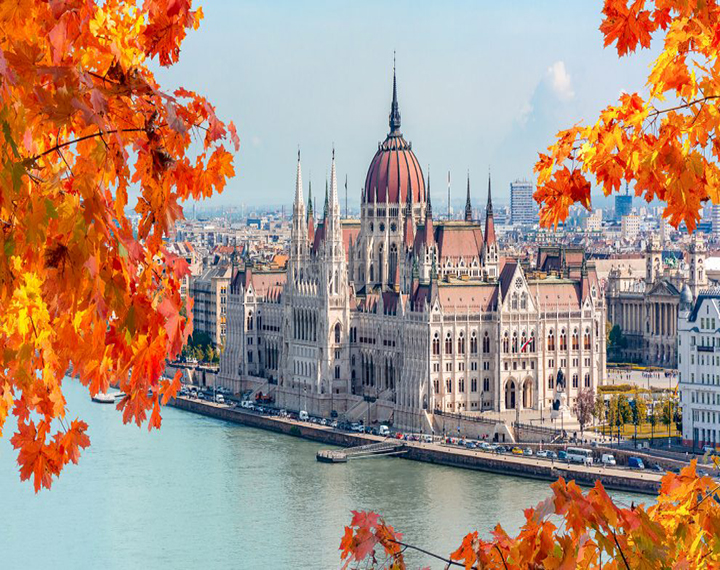
Experience the breathtaking grandeur of one of the world’s most beautiful legislative monuments. The Hungarian Parliament Building stands as a magnificent sentinel on the banks of the Danube, its neo-Gothic spires and limestone facade defining the silhouette of Budapest. Designed by Imre Steindl and completed in 1904, it is the largest building in Hungary and a masterpiece of the Eclectic style, incorporating Renaissance and Baroque elements. The atmosphere is one of profound national pride and architectural wonder, especially when its 365 towers are reflected in the shimmering river at twilight. Features a symmetrical layout with a central 96-meter high dome, symbolizing the year of the Hungarian conquest (896). Adorned with 242 sculptures on the exterior and interior walls depicting Hungarian monarchs and military leaders.
Houses the Hungarian Crown Jewels, including the Holy Crown of St. Stephen, guarded by a dedicated honor guard in the Great Hexagonal Domed Hall. Culturally, the building is the symbolic heart of Hungarian democracy and a testament to the nation’s historical ambition during the Austro-Hungarian era. It serves as a vibrant center for state ceremonies and a focal point for the cultural identity of the Hungarian people. Inside, the opulence continues with nearly 40 kilograms of 22-carat gold used for gilding, alongside massive stained-glass windows and intricate frescoes that narrate the country’s storied past. The interior boasts 691 rooms and more than 20 kilometers of stairs, showcasing the sheer scale of 19th-century engineering. Contains the oldest and largest hand-knotted carpet in Europe, located in the delegational room.
Utilizes a unique historical cooling and heating system that originally used ice blocks in hidden shafts to circulate air. Historically, the construction was a massive national undertaking, intended to represent the sovereignty and power of Hungary within the Dual Monarchy. Every piece of material used, with the exception of the massive marble monolithic columns, was sourced from within the country to showcase domestic resources. The building has survived the turmoils of the 20th century, including world wars and revolutions, remaining a resilient icon of the Hungarian state’s continuity and architectural brilliance. Built using approximately 40 million bricks and half a million precious stones. The Great Stairs consist of 96 steps, leading to the spectacular Dome Hall where the most important state events occur.
The North Wing houses the offices of the Prime Minister, while the South Wing contains those of the President of the Republic. Tourists find the guided tours to be an essential and uplifting highlight of their visit to Budapest, offering access to the grandest ceremonial spaces. The visitor center provides deep insights into the construction process and the parliamentary traditions of the nation. Whether viewed from a river cruise or explored through its gilded corridors, the Parliament offers a sensory journey through the very soul of Hungary, leaving an indelible mark of beauty and majesty on every visitor. The best photography spots are found directly across the river at Batthyány Square or from the middle of the Margaret Bridge. Guided tours are available in numerous languages but must be booked well in advance due to high demand. The surrounding Kossuth Square is a beautifully landscaped pedestrian zone featuring monuments to national heroes and the tragic 1956 revolution.



 Own or work here?