

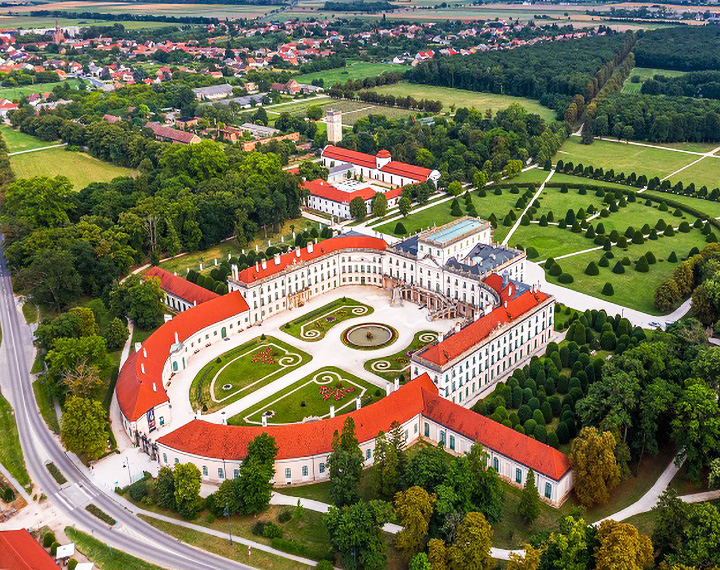
The Esterházy Palace in Budapest stands as a magnificent testament to the grandeur of one of Hungary’s most influential aristocratic families. Located in the historic heart of the city, this Baroque masterpiece reflects the immense wealth and cultural patronage of the Esterházy line, who were renowned for their support of the arts and music. The architecture is characterized by its elegant facade and intricate stone carvings, which have been preserved through centuries of urban evolution. Walking past its historic walls, one can feel the weight of its legacy as a center for high society and diplomatic gatherings during the height of the Austro-Hungarian era.
The interior of the palace is equally breathtaking, featuring expansive halls adorned with ornate frescoes, gilded stuccowork, and shimmering chandeliers that evoke a sense of timeless opulence. Each room tells a story of the family’s sophisticated lifestyle, showcasing a blend of traditional Hungarian craftsmanship and broader European aesthetic influences. Historically, the palace served as a private residence that hosted legendary figures, including famous composers and political leaders, solidifying its reputation as a sanctuary for intellectual and artistic exchange. Today, the preserved structural elements provide a window into the luxurious living standards of the 18th and 19th centuries.
Beyond its physical beauty, the Esterházy Palace remains a vital cultural landmark that bridges Budapest’s imperial past with its vibrant present. It serves as a reminder of the pivotal role that noble estates played in shaping the architectural identity of the city’s historic districts. While the family is perhaps more famously associated with their expansive rural estates like Fertőd, this urban palace highlights their strategic presence in the capital. It continues to fascinate visitors and historians alike, standing as an enduring symbol of prestige and a must-see site for anyone looking to understand the aristocratic heritage of the Danube’s “Pearl of the Orient.”



 Own or work here?