

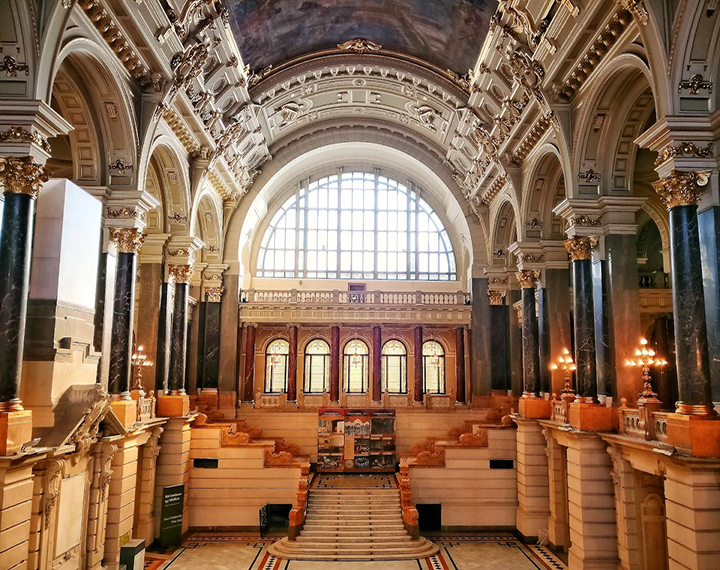
A striking modern landmark at the edge of the City Park, its sweeping curved silhouette resembling a pair of intertwined hills. This innovative building is more than just a gallery; it is a gateway to understanding the everyday lives, rituals, and artistic expressions of the Hungarian people and diverse cultures from across the globe. Since moving to its award-winning new home in 2022, the museum has become a symbol of Budapest’s architectural renewal, blending seamlessly with the surrounding landscape while providing a world-class space for its vast and precious collections.
Culturally, the institution serves as one of Europe’s most important specialized museums, preserving over two hundred thousand artifacts that tell the story of humanity’s shared heritage. The exhibits transition beautifully from the intricate embroidery and wooden carvings of rural Hungarian villages to fascinating ethnographic objects from distant continents, collected by pioneering explorers. This global perspective fosters a deep sense of connection, highlighting the universal themes of family, work, and celebration that unite different societies across time and geography, all presented with state-of-the-art museological techniques.
The history of the museum is one of constant evolution, beginning in the late nineteenth century as a department of the Hungarian National Museum. For decades, it was housed in the majestic Neo-Renaissance palace opposite the Parliament, but its move to the Városliget has allowed the collection to breathe in a space specifically designed for modern storytelling. One of the building’s most enchanting features is the accessible roof garden, which offers a panoramic view of the city and symbolizes the museum’s philosophy of openness and its invitation for the public to engage with culture in a natural, outdoor setting.
For visitors, the museum offers an immersive touristic experience that goes far beyond traditional glass display cases. The “Ceramics Space,” visible from the central staircase, features thousands of pottery pieces arranged in a breathtaking vertical gallery that stretches across the building’s interior. Its location makes it a perfect starting or ending point for a day spent in the City Park, conveniently situated near the Heroes’ Square and the Széchenyi Thermal Bath, allowing travelers to combine historical sightseeing with a deep dive into the colorful fabric of Hungarian identity.
Stepping inside, the atmosphere is one of light, space, and quiet inspiration, where the building’s glass walls allow the changing daylight to interact with the exhibits. Whether you are marvelling at the laser-cut metal “pixel” facade—which depicts ethnographic motifs from around the world—or exploring the interactive digital displays, the museum provides a welcoming environment for all ages. It remains a shining testament to how traditional heritage can be celebrated through futuristic design, ensuring that the voices of the past continue to resonate with the audiences of today and tomorrow.



 Own or work here?