
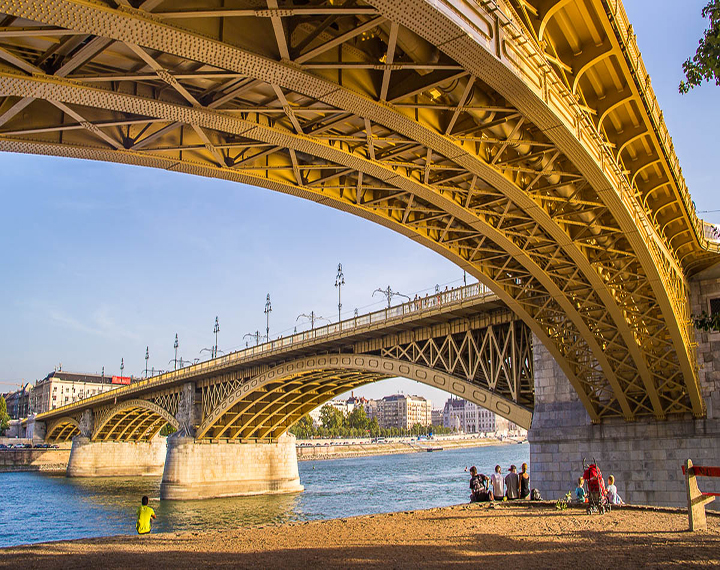
The second oldest permanent bridge in Budapest, recognized by its distinctive yellow hue and its unusual Y-shaped geometry. Designed by French engineer Ernest Goüin and completed in 1876, the bridge features a central wing that extends directly onto Margaret Island, a feat that was added decades after the initial construction. This architectural landmark serves as a vital artery for the city’s transport while providing one of the most beloved viewpoints for observing the majestic Parliament building and the rolling hills of Buda. Showcases elaborate French-inspired ornamentation, including stone sculptures of Hercules and winged figures that adorn its sturdy river piers.
Acts as a primary connection for the city’s tram network, carrying the high-frequency lines 4 and 6 across the water. Provides a dedicated pedestrian and bicycle path that offers a seamless transition from the urban bustle of the Grand Boulevard to the lush parklands of the island. Features a unique 165-degree bend in its structure, a design choice necessitated by the currents of the Danube and the positioning of the island. Culturally, the bridge is a symbol of the nineteenth-century cooperation between French engineering and Hungarian urban planning. Having survived extensive damage during World War II, its meticulous restoration preserved the delicate ironwork and classical aesthetics that reflect the Belle Époque era. It remains a social hub where the path of commuters intersects with the leisurely pace of joggers and tourists, standing as a testament to the city’s resilience and its commitment to maintaining the historical integrity of its world-famous riverfront.
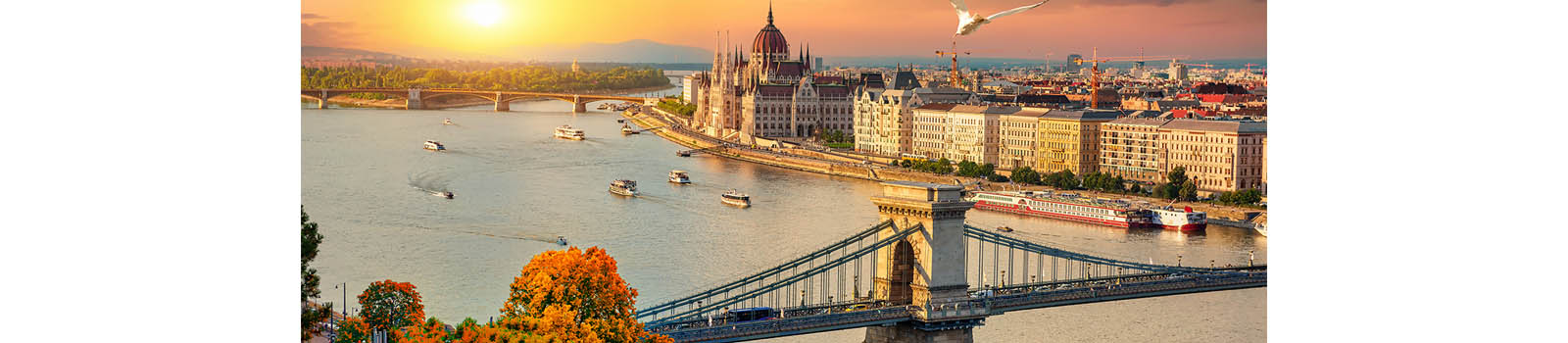
The surrounding Jászai Mari Square is a vibrant cultural pocket, filled with historic bookstores and traditional coffee houses. For tourists, walking across the bridge is an essential Budapest experience that rewards every step with a shifting perspective of the city’s skyline. The northern side offers a tranquil look at the wide expanse of the Danube and the Obuda island, while the southern side presents the classic imperial vista of the castle and the chain bridge. Its central location makes it an ideal starting point for a day spent exploring the thermal baths of the island or the grand boulevards of Pest, ensuring a journey that is as scenic as it is efficient. Offers wide, well-lit sidewalks that are perfect for evening strolls when the city’s monuments are brilliantly illuminated. Highly accessible via the M2 metro line at Batthyány Square or the numerous tram stops at either bridgehead.
The pedestrian descent to Margaret Island is located exactly at the bridge’s midpoint, allowing for a unique mid-river entrance to the park.
The atmosphere on the bridge is one of uplifting energy and expansive beauty, where the fresh river breeze and the rhythmic hum of the trams create a sensory map of the capital. As the sun sets, the iron trusses and stone statues catch the golden light, casting long shadows over the water and creating a romantic ambiance that has inspired countless artists and poets. It is a place that celebrates the connection between the two halves of the city, offering an inspiring reminder of the harmony between industrial ambition and natural grace.
Budapest,



 Own or work here?