

A Neoclassical sanctuary of heritage where the epic narrative of the Hungarian nation unfolds in golden halls. The oldest public museum in Hungary, housed in a magnificent Neoclassical palace designed by Mihály Pollack and completed in 1847. Standing as a powerful symbol of national identity, its grand portico and Corinthian columns served as the backdrop for the start of the 1848 Revolution, when the poet Sándor Petőfi allegedly recited his National Song from the museum steps. The building is surrounded by the lush Museum Garden, a tranquil urban oasis that has long been a favorite meeting spot for students and thinkers in the heart of the palace district.
Houses the legendary Coronation Mantle, a thousand-year-old silk textile embroidered with gold thread that was worn by Hungarian kings for centuries.
Features a comprehensive archaeological collection ranging from the Paleolithic era to the arrival of the Magyars, including the breathtaking Seuso Treasure.
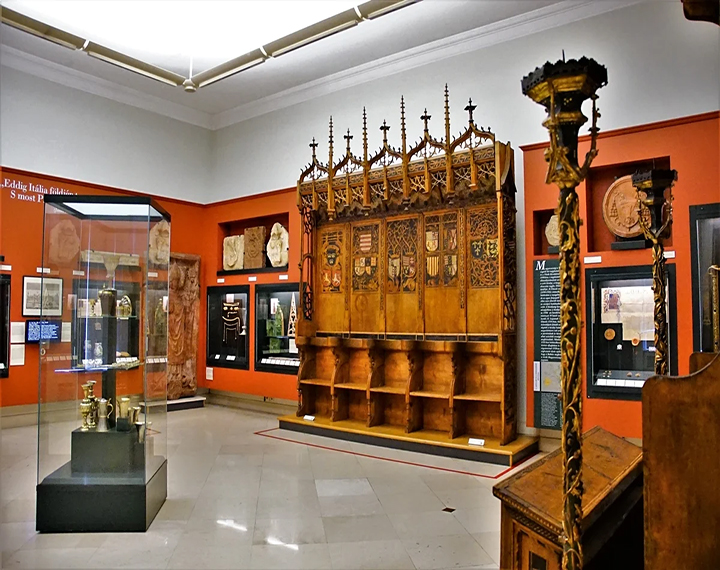
Boasts the spectacular Lapidarium in the basement, where Roman stone monuments and medieval carvings are displayed in an atmospheric, vaulted setting.
Presents the “On the Border of Two Worlds” exhibition, which meticulously chronicles the history of Hungary from the founding of the state to the end of the communist era. Culturally, the museum acts as the guardian of the country’s collective memory, preserving over a million artifacts that define the Hungarian spirit.
The interior is an architectural triumph, featuring a monumental grand staircase adorned with allegorical frescoes and a soaring dome that reflects the enlightenment ideals of its founders. It is not merely a storehouse of the past but a vibrant center for research and education, regularly hosting historical symposiums and modern temporary exhibitions that connect the heritage of the Carpathian Basin to the broader European narrative. The Great Hall serves as a prestigious venue for state ceremonies and classical concerts, utilizing its perfect proportions and historic resonance. Maintains an extensive numismatic collection with over 150,000 coins and medals that trace the economic history of the region.
The museum gardens feature statues of prominent Hungarian literary and historical figures, creating an outdoor gallery of national pride. For tourists, the museum provides the most thorough and engaging orientation to the complex history of Hungary, making it an essential first stop for any cultural itinerary. The permanent exhibitions are designed to lead visitors through the ages, from the Roman province of Pannonia to the glitz of the Austro-Hungarian Empire. Its central location on the Museum Boulevard makes it easily accessible via the M3 or M4 metro lines, offering a sophisticated and educational retreat just steps away from the bustling Great Market Hall and the Jewish Quarter.



 Own or work here?