
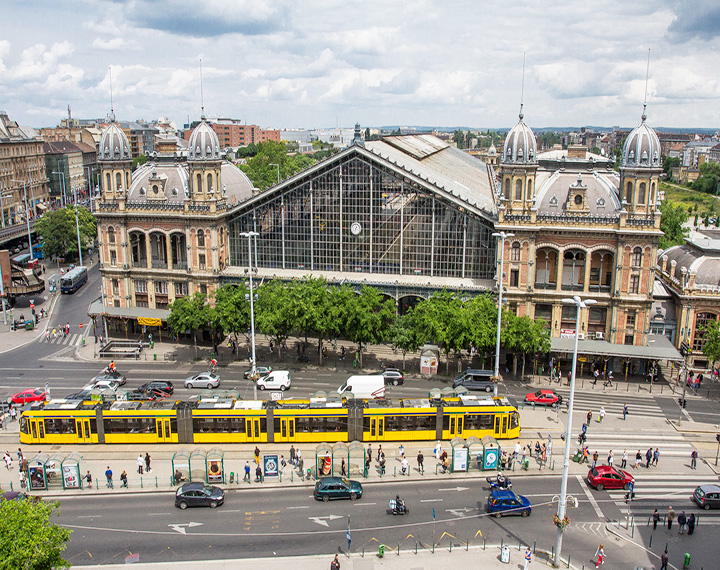
A magnificent iron and glass gateway where nineteenth-century engineering meets the constant pulse of modern European travel. Or the Western Railway Station, is an architectural masterpiece designed by the August de Serres and the Eiffel company, opening its grand doors in 1877. This iconic structure is celebrated for its massive iron-framed glass hall, which was a revolutionary feat of engineering that allowed natural light to flood the platforms long before the age of electricity. It serves as one of the three main railway hubs in the capital, acting as a stunning transition point between the historic Grand Boulevard and the sprawling rail networks that connect Hungary to the rest of the continent.
The interior of the station is a soaring cathedral of industrial art, featuring intricate wrought-iron details and vast arched windows that create an atmosphere of timeless movement. One of its most famous features is the world-renowned McDonald’s located in the former imperial dining hall, often cited as one of the most beautiful fast-food locations in the world due to its preserved colonial elegance and gilded ceilings. This blend of high-end historical preservation and practical modern utility creates an inviting and busy ambiance that captures the romantic spirit of the “Golden Age” of rail travel while serving thousands of commuters and travelers daily.
Features a spectacular glass-and-iron main hall that stands as a primary landmark of the city’s industrial heritage. Houses a historically significant dining wing that retains its original nineteenth-century royal splendor and architectural detailing. Serves as a major transportation node with direct connections to the M3 metro line and the city’s busiest tram network. Acts as the primary gateway for trains traveling to the Danube Bend, the Great Hungarian Plain, and international destinations like Prague and Berlin. Culturally, Nyugati is a symbol of the rapid urban expansion that transformed Budapest into a global metropolis at the end of the nineteenth century.
The station has witnessed the city’s most pivotal historical moments, from the peak of the Austro-Hungarian Empire to the challenges of the twentieth century, yet it remains a resilient and functional heart of the community. It is a place where the echoes of steam engines past harmonize with the digital schedules of today, providing a cultural bridge that connects generations of Hungarians to their heritage of innovation and mobility. Designed by the legendary Eiffel company, bringing the same structural elegance found in the Parisian tower to the streets of Pest. The surrounding square is a vibrant social hub, constantly buzzing with the energy of street performers, students, and travelers



 Own or work here?