

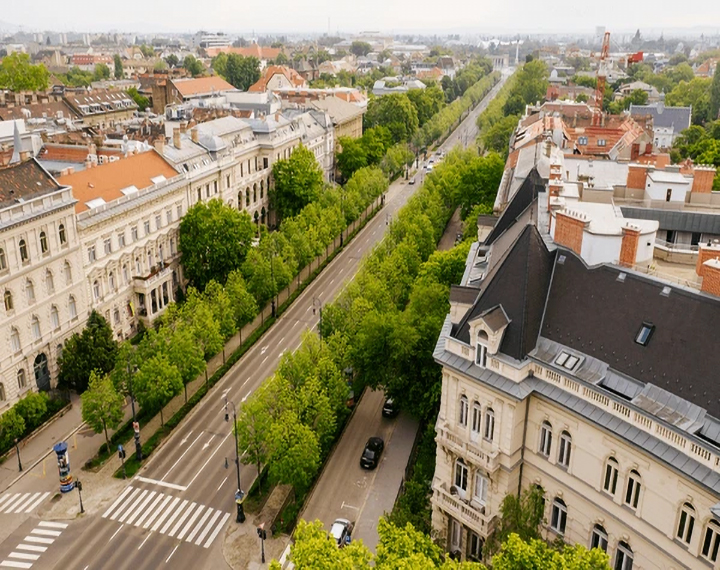
Andrássy Avenue is the most celebrated boulevard in Hungary, a UNESCO World Heritage site that stretches over two kilometers from the city center to Heroes’ Square. Completed in 1885, it was designed to mirror the grand boulevards of Paris, serving as a showcase for the nation’s rapid modernization during the Austro-Hungarian era. Lined with spectacular Neo-Renaissance mansions and townhouses, the avenue is divided into three distinct sections, transitioning from a bustling high-end shopping district to a serene, leafy residential area flanked by grand villas and embassies. Features the historic M1 Millennium Underground running directly beneath it, which was the first subway line in mainland Europe.
Andrássy Avenue stands as the crowning jewel of Budapest’s urban planning, a magnificent boulevard that epitomizes the elegance of the late 19th century. Built to connect the bustling city center with the lush City Park, this UNESCO World Heritage site is often compared to the Champs-Élysées for its grand proportions and architectural harmony. Walking down its tree-lined pavements, you are flanked by an impressive array of Neo-Renaissance mansions and townhouses, many of which feature intricate stonework, ornate balconies, and sprawling facades that whisper stories of the Austro-Hungarian Empire’s golden age.
The avenue is a cultural artery that pulses with the artistic heritage of Hungary, most notably anchored by the majestic Hungarian State Opera House. As you transition from the high-end luxury boutiques and trendy cafes of the inner section toward Oktogon and beyond, the atmosphere shifts from commercial vibrancy to a more serene, residential grandeur. This stretch is home to numerous embassies, historical museums like the House of Terror, and hidden villas tucked behind lush greenery, offering a poignant look at the layered and often complex history that has shaped the city over the last century.
Beneath the surface of this historic thoroughfare lies another marvel: the Millennium Underground Railway, the oldest subway line in continental Europe. This yellow line allows travelers to hop between iconic spots like Heroes’ Square and the city center while maintaining the nostalgic charm of the 1890s with its tiled stations and wooden carriages. Whether you are admiring the monumental statues of the Millennium Monument at its terminus or simply enjoying a coffee under the shade of its plane trees, Andrássy Avenue remains an essential, sophisticated experience that captures the timeless soul of Budapest.



 Own or work here?