

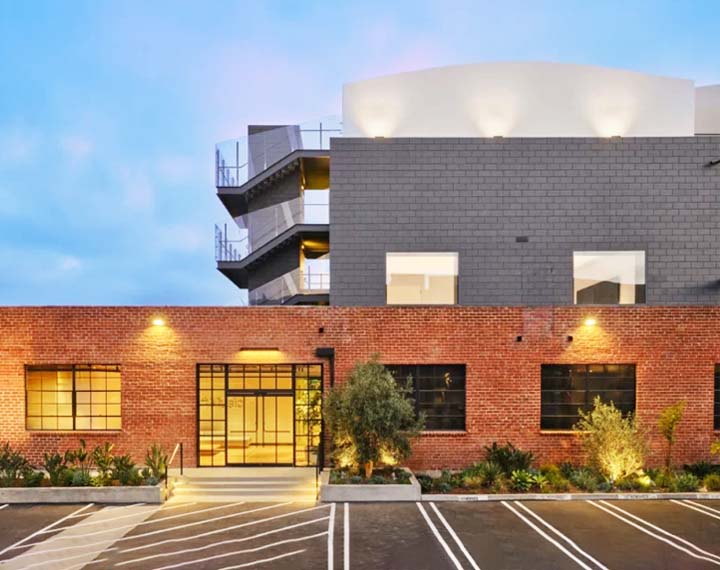
Apple Music’s Los Angeles Global Hub, located in the architecturally adventurous Hayden Tract of Culver City, is a 15,000-square-foot “creative campus” that serves as the heartbeat of modern music innovation. Opened in the summer of 2025 to coincide with the platform’s 10th anniversary, this three-story facility is a motivating testament to the intersection of human artistry and cutting-edge technology. Under the leadership of Rachel Newman and Oliver Schusser, the hub is designed to be an “artist-first” ecosystem where musicians can record, broadcast, and connect with a global audience of over 100 million subscribers.
Historically, the facility is housed in a striking building designed by the legendary Eric Owen Moss, a pioneer of experimental architecture who transformed the Hayden Tract from an industrial wasteland into a world-class creative district. The site represents a decade of evolution for Apple Music, which launched in 2015 following the acquisition of Beats Electronics. By consolidating its radio and content production under one roof in 2026, Apple has created a permanent historical anchor for Apple Music Radio, featuring the iconic “Archive Corridor” which showcases the most significant cultural moments and artist interviews from the platform’s first ten years.
Culturally, the LA hub acts as a global flagship for Ethical Audio and the democratization of creative tools. The interior features the “A-List Corridor” and a mesmerizing lobby installation by glass artist Katherine Gray, creating a cultural space that feels more like a museum of living sound than a corporate office. It is the home of Spatial Audio innovation, equipped with a dedicated 9.2.4 PMC mixing suite and two radio studios specifically designed for immersive broadcasts. By hosting album launch parties and intimate “Sunset Sessions” in its third-floor green room, Apple Music fosters a culture where artists like Zane Lowe and Ebro Darden can elevate storytelling to a global art form.
For the touring music lover, while the studio remains a private working facility, it serves as the centerpiece of the Culver Crossings area—a sprawling 536,000-square-foot campus that is a must-see for fans of urban design and media history. The surrounding district features public-facing amenities like a 4,000-square-foot soundstage for fan events and a lush central courtyard designed by Gensler. Visitors can explore the neighborhood’s “experimental” landmarks or take in the views of the Santa Monica mountains that frame the studio’s broadcast bays. As Apple aims to grow its LA workforce to over 3,000 employees by late 2026, the hub remains an inspiring destination for anyone seeking to witness the future of the global creative economy.

Apple Music is a global cultural institution and a premier streaming platform dedicated to the belief that music is a fundamental part of the human experience. Launched in 2015, it was born from a vision to create a “one-stop shop for pop culture,” evolving from the revolutionary foundations of iTunes and the iPod into a sophisticated ecosystem where human artistry meets cutting-edge technology. In 2026, Apple Music stands as a motivating force in the industry, championing high-fidelity sound, ethical artist compensation, and a “human-first” approach to curation that celebrates the soul behind every note.
The historical trajectory of Apple Music is a story of bold adaptation and visionary leadership. Following the acquisition of Beats Electronics in 2014, Apple transformed its digital jukebox model into a vibrant, living service. A defining historical moment occurred when the platform committed to a “patient capital” approach, choosing a pure subscription model without an ad-supported tier to prioritize user privacy and premium quality. By 2026, the service has reached over 108 million subscribers, proving that a dedication to “the art of music” can drive immense global success while supporting the broader Apple hardware ecosystem of iPhones, AirPods, and HomePods.
Culturally, Apple Music acts as a global curator and a champion of diversity, bridging the gap between underground talent and global superstars. Unlike algorithm-heavy competitors, Apple Music relies on an “algo-torial” philosophy—a symbiotic fusion of human editorial judgment and machine learning. With a team of over 1,000 curators maintaining 30,000 editorial playlists like “Rap Life” and “Today’s Hits,” the platform ensures that music remains a conversation rather than a utility. This cultural commitment is further seen in Apple Music Radio, where legendary DJs like Zane Lowe and Ebro Darden provide a platform for artists to tell their stories to a global audience.
For the modern listener, Apple Music in 2026 offers an uplifting, immersive journey into sound. The platform has set the industry standard with Spatial Audio with Dolby Atmos and Lossless Audio, allowing fans to experience music with the clarity and depth intended by the creators in the studio. New features like AutoMix, which uses AI to create seamless, DJ-style transitions, and Lyrics Translation help break down cultural barriers, making it easier than ever to sing along and understand global hits. As a motivating hub for both creators and fans, Apple Music remains an inspiring testament to the idea that technology should always be used to leave the world—and its music—better than we found it.



 Own or work here?