

HRH The Prince of Wales Champions Men’s Mental Health in Powerful BBC Radio 1 Discussion
The Prince of Wales joined a compelling edition of BBC Radio 1’s Life Hacks, reinforcing his long-standing commitment to transforming the national conversation around mental wellbeing. Taking part in a special episode hosted by Greg James, His Royal Highness engaged in a live panel discussion focused on mental health and male suicide. The panel featured Allan Brownrigg, Director of Clinical Services at James’ Place; Professor Green, rapper and mental health advocate; Guvna B, grime artist and campaigner; and Nathan, a young man who courageously shared his lived experience. The programme followed the launch last autumn of The Royal Foundation’s National Suicide Prevention Network, an initiative spearheaded by the Prince to strengthen coordination and transform suicide prevention efforts across all four nations of the United Kingdom.
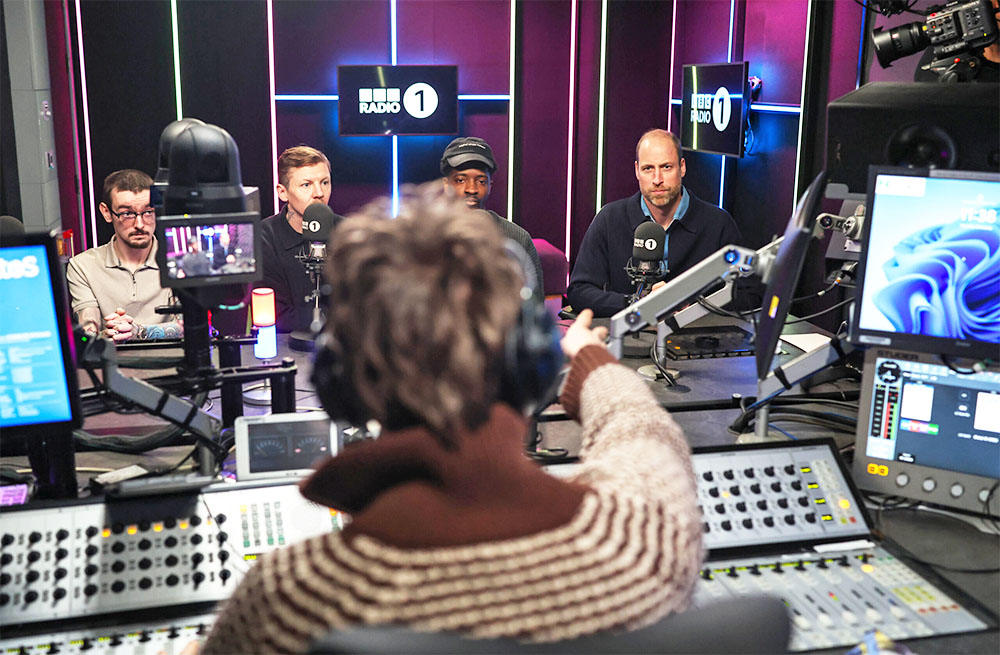
Throughout the broadcast, the Prince participated actively in the discussion, responding to questions on air and reflecting with striking candour. In one particularly relatable moment, when asked whether his own children speak openly about their feelings, he responded with warmth and humour that they sometimes “talk too much,” using the exchange to underline how essential it is to create homes and communities where emotions are welcomed rather than suppressed. Drawing on personal experience — including the lasting impact of bereavement in his youth and the profound encounters with trauma during his years as an air ambulance pilot — he explained how emotional pressures can quietly accumulate without healthy outlets.
A key theme of the programme was the idea of building a personal “mental health toolbox” — practical strategies, trusted relationships and coping mechanisms that individuals can rely on during challenging periods. The Prince emphasised that suicide remains one of the leading causes of death among young men in the UK, urging listeners to recognise warning signs early and to ask direct questions when concerned about someone. The testimonies shared by fellow panellists, particularly Nathan’s account of reaching out for support, reinforced how early intervention and open dialogue can be life-saving.
The Royal Foundation’s National Suicide Prevention Network is a bold and compassionate commitment to saving lives across the United Kingdom. Launched under the leadership of The Prince of Wales, the Network brings together charities, clinicians, frontline responders and community leaders with a shared mission: to prevent suicide through earlier intervention, stronger collaboration and a culture that replaces silence with openness. It reflects a powerful shift toward coordinated national action, ensuring that support is accessible, informed and timely for those who need it most.
At its core, the Network carries an uplifting belief that suicide is preventable and that collective responsibility can transform lives. By strengthening partnerships, sharing expertise and encouraging honest conversations in homes, schools and workplaces, it seeks to create lasting cultural change. Above all, it sends a clear message of hope — that every life matters, that asking for help is an act of courage, and that together we can build a society where more people find understanding, support and renewed possibility.
In continuing to place mental wellbeing at the forefront of national life, His Royal Highness The Prince of Wales demonstrates a rare and powerful form of leadership — one grounded not only in duty, but in humanity. By speaking openly, sharing personal reflection and engaging directly in honest dialogue, he helps dismantle stigma and replace silence with strength. His willingness to address such vital issues with authenticity sends a profound message: that vulnerability is courage in action. Through his sustained advocacy and example, the Prince of Wales is helping to educate, support and inspire countless individuals who may be struggling quietly — ensuring that those who most need to hear this conversation understand they are not alone, and that hope, help and understanding remain firmly within reach.
.
.
.
