

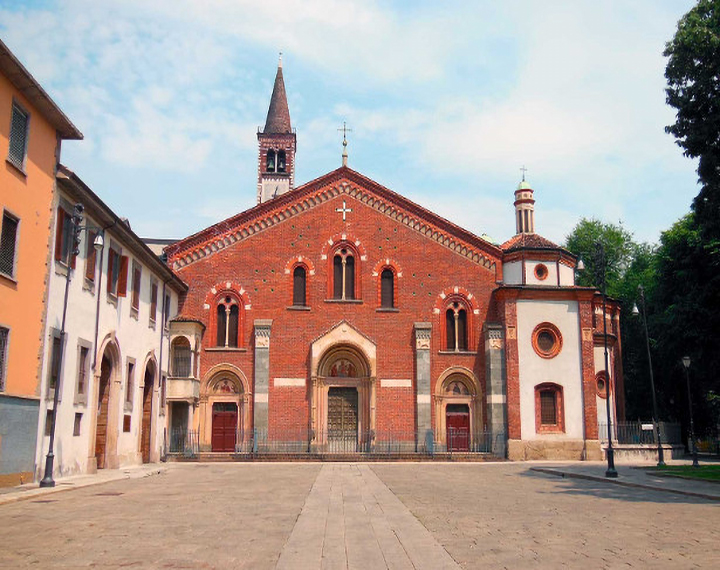
A triumphant sanctuary where the Three Kings rest amidst masterfully preserved medieval soul. The Basilica di Sant’Eustorgio is a masterfully designed religious landmark that serves as one of Milan’s most sophisticated spiritual centers, famously known for housing the relics of the Three Magi. Located in the vibrant Ticinese district near the Navigli canals, the basilica offers a soul-stirring atmosphere of ancient devotion, where the red-brick Romanesque architecture creates an inviting transition from the energetic city streets to a landscape of profound peace—especially resonant as a serene cultural escape during the ongoing 2026 Winter Games in Milano Cortina.
Informational: The basilica functions as a primary site for early Christian study, featuring a masterfully curated complex that includes a Paleo-Christian necropolis, the renowned Portinari Chapel, and an attached museum displaying sacred artifacts. It houses the monumental stone sarcophagus traditionally believed to have held the bones of the Magi, along with liturgical treasures in the Museo di Sant’Eustorgio. The site excels in urban accessibility, positioned at the end of Corso di Porta Ticinese and easily reached via tram stops at Piazza XXIV Maggio or nearby metro lines, ensuring its historic galleries remain an essential, high-end stop for travelers exploring Milan’s spiritual roots.
Cultural: As a cultural beacon, Sant’Eustorgio reflects the sophisticated spirit of Milanese tradition, serving as the focal point for the city’s unique Epiphany celebrations with costumed processions concluding at its steps. The church’s soul shines brightest in the Portinari Chapel, a triumphant Lombard Renaissance masterpiece adorned with vibrant frescoes by Vincenzo Foppa, embodying the “Made in Italy” legacy of artistic harmony and faith. This blend of medieval austerity and Renaissance elegance keeps the basilica a vibrant contributor to global cultural heritage.
Historical: The historical narrative is one of triumphant endurance, originating as a 4th-century foundation and expanded by the Dominicans into a medieval center of learning and pilgrimage. It survived challenges like the 12th-century Barbarossa raids—which saw the Magi’s relics famously taken to Cologne—before their partial triumphant return centuries later. The architecture layers Romanesque elements, a soaring 73-meter Gothic bell tower crowned by a star symbol of the Magi, and later additions, telling a soul-stirring story of Milan’s resilient identity through epochs.
Touristic: For visitors, Sant’Eustorgio delivers an exhilarating journey into Milan’s hidden historic layers, where close inspection of the Portinari Chapel’s multicolored dome and intricate frescoes inspires profound awe. It provides a design-forward experience of religious art, early Christian archaeology, and Renaissance painting beyond mere worship, offering a sophisticated, high-end sanctuary that captures the bold, sacred heart of Milanese spirit—perfect for reflection amid the dynamic energy of the 2026 Games.
Features the Three Kings’ Sarcophagus, a triumphant and masterfully carved stone tomb by Giovanni di Balduccio that serves as the energetic and legendary spiritual centerpiece.



 Own or work here?