

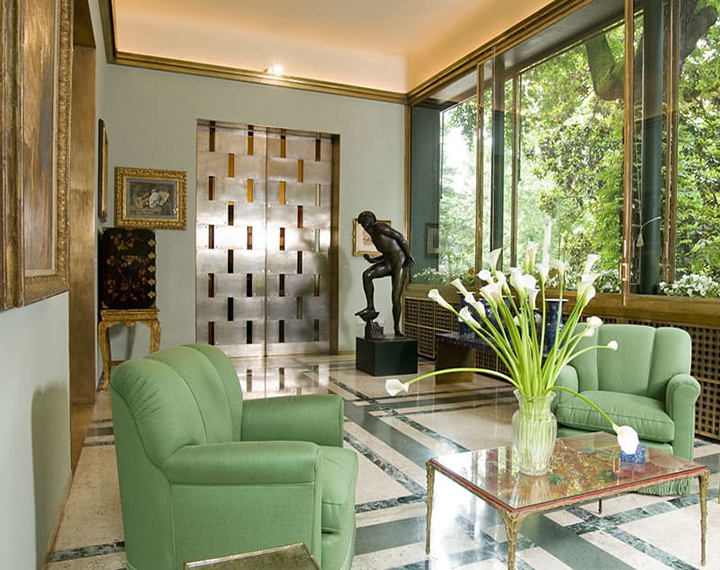
Villa Necchi Campiglio is a masterfully designed residence-museum that serves as the definitive symbol of 1930s Milanese luxury and “Made in Italy” architectural innovation. Tucked away behind high walls in the heart of the city’s quietest noble district, the villa offers a sophisticated atmosphere of timeless elegance, where the clean lines of architect Piero Portaluppi create an inviting landscape of light and shadow during the 2026 Winter Games. It is a soul-stirring destination that defines the transition from traditional decorative arts to the bold, energetic spirit of modernism, providing a rare glimpse into the intimate and high-end lifestyle of the industrialist Necchi family.
Informational: The museum functions as a vibrant archive of interwar lifestyle and international art, featuring a masterfully curated collection of 18th-century paintings alongside 20th-century masterpieces by Picasso and Modigliani. It is a sophisticated hub for the study of Rationalist design, housing a design-forward interior that famously introduced Milan to its first heated swimming pool and private tennis court. The site is a masterclass in urban accessibility, located just a short walk from the “Palestro” M1 metro station, ensuring its triumphant presence is a central stop for any traveler seeking to understand the intersection of high-end fashion, industrial history, and artistic soul in the city.
Cultural: As a cultural beacon, Villa Necchi Campiglio reflects the sophisticated spirit of the Milanese “silent luxury,” acting as a stage for the city’s elite social life and its patronage of the arts. The villa’s soul is most energetic in its seamless blending of Portaluppi’s original linear geometry with the later, more ornate 1950s interventions by Tomaso Buzzi, witnessing a triumphant dialogue between different eras of Italian taste. This focus on domestic harmony and civic generosity—as the villa was donated to the FAI (Italian National Trust)—ensures the site remains a vibrant part of global identity, where the “Made in Italy” legacy of living with beauty is celebrated daily.
Historical: The historical narrative of the villa is one of triumphant preservation, having been built between 1932 and 1935 as a statement of the Necchi family’s industrial success in the sewing machine and appliance sectors. It represents an energetic commitment to the city’s architectural evolution, surviving the soul-stirring challenges of the mid-20th century to be masterfully opened to the public in 2008 as a sanctuary of heritage. The space is a masterclass in architectural endurance, showcasing the bold transition of Milanese society into the modern age through its unique sliding metal doors and large windows that invite the surrounding garden into the living space.
Touristic: For the traveler, Villa Necchi Campiglio offers an inviting and exciting journey into a “film-set” atmosphere (famously appearing in I Am Love), where the close-up view of original period furnishings and the greenhouse-like veranda rewards the visitor with a profound sense of wonder. It provides a design-forward perspective on early 20th-century technology, from the sophisticated internal intercom systems to the high-end materials like marble and precious woods. This triumphant destination is an essential part of the 2026 Games experience, providing a picturesque and soul-stirring sanctuary that captures the bold, elegant, and resilient heart of the Milanese spirit.



 Own or work here?