

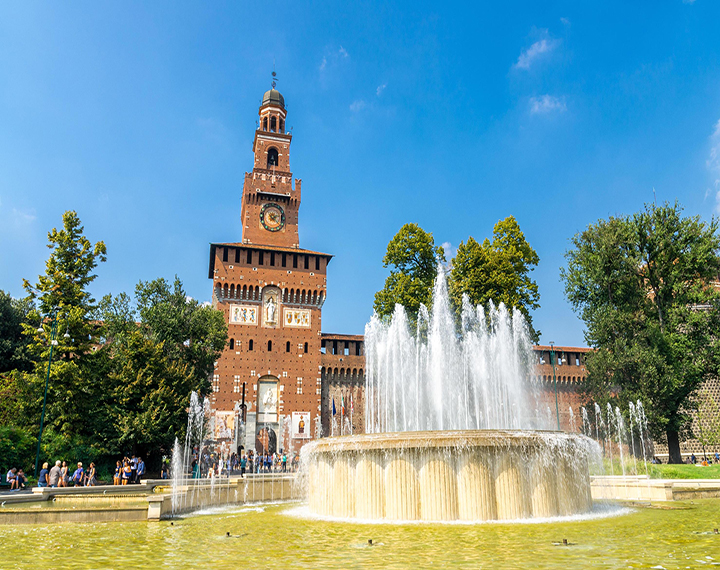
A triumphant gateway to the Renaissance, this soaring red-brick sentinel masterfully anchors the entrance to Milan’s historic fortress, representing a soul-stirring symbol of the city’s architectural resilience. The Filarete Tower (Torre del Filarete) is a masterfully designed landmark that serves as the primary entrance to the Sforza Castle, acting as a sophisticated transition between the bustling city and the serene castle grounds. Standing at 70 meters tall, the tower offers a picturesque and energetic silhouette, characterized by its distinctive tiered design, crenelated battlements, and a central clock that beams with the radiant sun motif of the Sforza coat of arms. As a focal point for visitors during the 2026 Winter Games, it provides an inviting atmosphere of grandeur, welcoming guests into the vast courtyards where the “Made in Italy” genius of Leonardo da Vinci and Michelangelo awaits discovery.
Informational: The tower functions as the monumental centerpiece of the castle’s southeastern curtain wall, providing a high-end vantage point that aligns perfectly with the sophisticated promenade of Via Dante. It is a sophisticated example of early Renaissance design-forward engineering, originally conceived by the Florentine architect Antonio Averulino, known as Filarete. The structure is a masterclass in urban accessibility, located directly in front of the Piazza Castello Fountain and just steps from the “Cairoli” M1 metro station. Today, the tower houses a statue of Saint Ambrose and serves as a triumphant introduction to the 18 museums located within the fortress complex, ensuring its presence is a central stop for any cultural itinerary in Milan.
Cultural: As a cultural beacon, the Filarete Tower reflects the sophisticated spirit of the Milanese Renaissance, acting as a stage where the city’s identity was first masterfully forged by the Sforza dynasty. Its design is a manifesto of the “ideal city” concepts proposed by Filarete, where the artistic soul of the structure was intended to convey the power and enlightened nature of Duke Francesco Sforza. This deep connection to the city’s creative heritage ensures the tower remains a vibrant part of Milan’s global identity, where the beauty of its terracotta-red bricks and the elegance of its clock face are celebrated as a triumphant expression of civic pride and architectural beauty.
Historical: The historical narrative of the tower is one of triumphant rebirth, as the original 15th-century structure was masterfully destroyed in 1521 by an accidental gunpowder explosion after being converted into an armory. It represents an energetic commitment to the preservation of memory, as the tower seen today is a faithful 20th-century reconstruction by architect Luca Beltrami, based on ancient 16th-century drawings and inaugurating in 1905. The space is a masterclass in architectural endurance, dedicated to the memory of King Umberto I and surviving the soul-stirring bombings of World War II to emerge as a sanctuary of historical continuity that bridges the gap between the medieval fortress and the modern metropolis.



 Own or work here?