

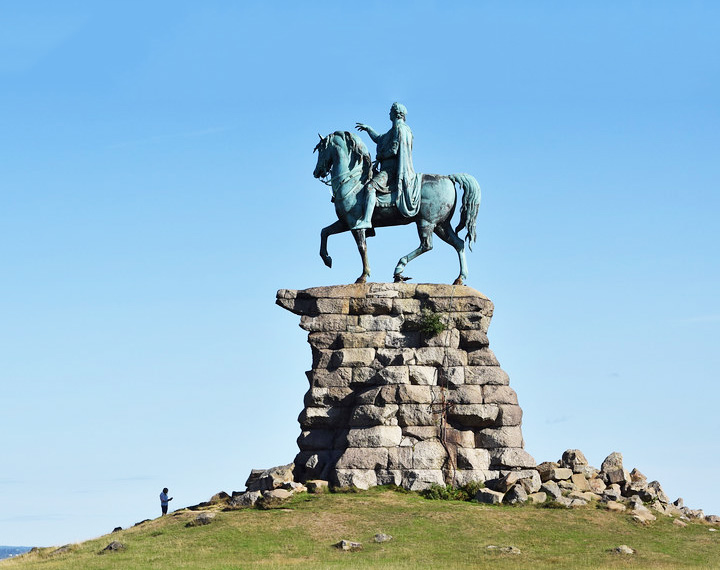
At the summit of Snow Hill in Windsor Great Park stands the impressive equestrian statue of King George III, known affectionately as “The Copper Horse.” Cast in bronze and unveiled in the early nineteenth century, it commands one of the most majestic vistas in England, gazing proudly down The Long Walk toward Windsor Castle. The monument, created by sculptor Sir Richard Westmacott, presents the monarch as a heroic Roman figure, draped in classical attire and mounted confidently on horseback. Its neoclassical style speaks to the era’s fascination with antiquity and imperial grandeur, while the site itself evokes the deep connection between monarchy, land, and national identity.
Historically, the statue reflects a moment when the monarchy sought to memorialise legacy through grand public art. King George III, often remembered for his long reign and the turbulence of the age, from Enlightenment progress to American independence, is here immortalised not in frailty but in strength and dignity. Commissioned by his son George IV, the statue embodies filial tribute as well as patriotic pride, linking royal heritage to the sweeping parkland sculpted over centuries by successive sovereigns. Its bronze surface, weathered by time, reminds visitors of the passage of history, while its commanding pose still conveys the authority and symbolism of the British Crown.
For visitors, the Copper Horse experience begins long before reaching the statue itself. Approaching along The Long Walk — a tree-lined avenue stretching majestically toward Windsor Castle — offers a sense of ceremony and quiet wonder. Deer often graze in surrounding meadows, and the gentle rise of the hill reveals expanding panoramas of palace, forest, and sky. Standing at the monument’s base, one feels both the grandeur of the royal estate and the peaceful escape of the countryside. It is a place to pause, breathe, and admire not only a monumental work of sculpture, but the timeless harmony between nature, monarchy, and the artistic legacy woven into Windsor’s historic landscape.



 Own or work here?