

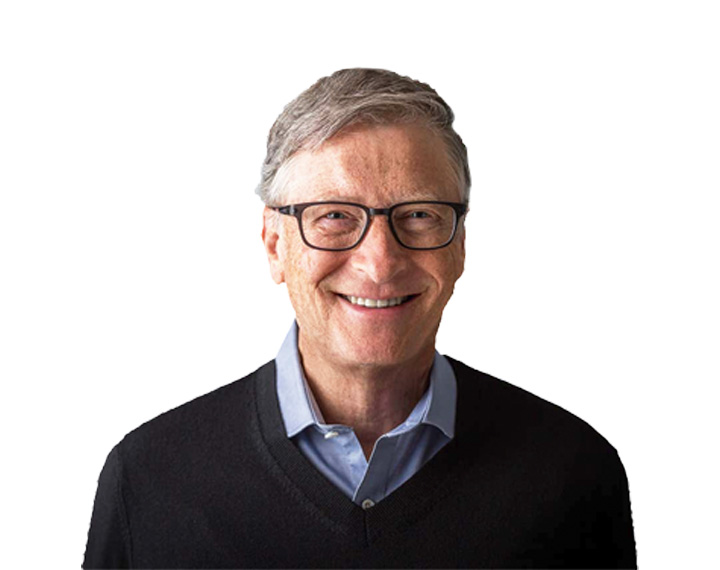
Bill Gates stands as one of the most remarkable catalysts for progress in modern history — a pioneer whose ideas reshaped the world and whose purpose continues to elevate humanity. Born in Seattle in 1955 with a mind wired for possibility, he saw computers not as machines, but as instruments of empowerment, imagination, and connection. That vision — bold, improbable, and decades ahead of its time — led him to co-found Microsoft and spark a technological revolution that opened the digital age for every student, dreamer, and entrepreneur who dared to reach further. Gates reminded the world that innovation isn’t just about invention — it’s about unlocking human potential on a global scale.
But his greatest legacy rises not from technology, but from humanity. With profound humility and unwavering conviction that every life has equal value, Bill Gates transformed personal success into global service. Through the Bill & Melinda Gates Foundation, he has championed the fight against malaria and polio, advanced education and opportunity for millions, empowered women and communities, and sparked scientific breakthroughs that protect future generations. His life’s mission echoes a powerful truth: that intelligence finds solutions, but compassion gives them meaning.
Today, Bill continues to push forward with the same restless optimism that defined his journey — urging the world to prepare for future pandemics, innovate for clean energy, and build a future where progress is shared by all. His story is a testament to perseverance, creativity, and a deep belief in what is possible when ambition is guided by empathy. Bill Gates inspires us not merely to succeed, but to serve, to dream boldly and act urgently, to measure achievement by impact — and to believe that every challenge we face can be answered by human ingenuity and heart.
We typically hear about two sectors, the public and the private. The private sector—business—is good at developing products and services, while the public sector—government—is good at delivering solutions to all the people who need them.
In many cases, the private and public sectors, acting either separately or together, meet people’s needs. But there are gaps, spaces where some people don’t get what they need to live healthy, productive lives.
Here’s an example: A generation ago, the market for vaccines worked well in wealthy countries—if you wanted to be immunized against a whole range of diseases, you could—but the system did not work for other parts of the world. Certain vaccines just weren’t available for most people. The private sector didn’t sell them in low-income countries because it wasn’t clear there would be buyers. Governments tried to step in, but they weren’t in a position to bring all the pieces—the funding, the partnerships, the logistics—together to make it work. Tragically, millions of children were dying of preventable diseases each year.
This is the kind of problem that philanthropies can help solve, and it’s how we define our foundation’s role. How do we actually help solve problems? What does our foundation do specifically?



 Own or work here?