

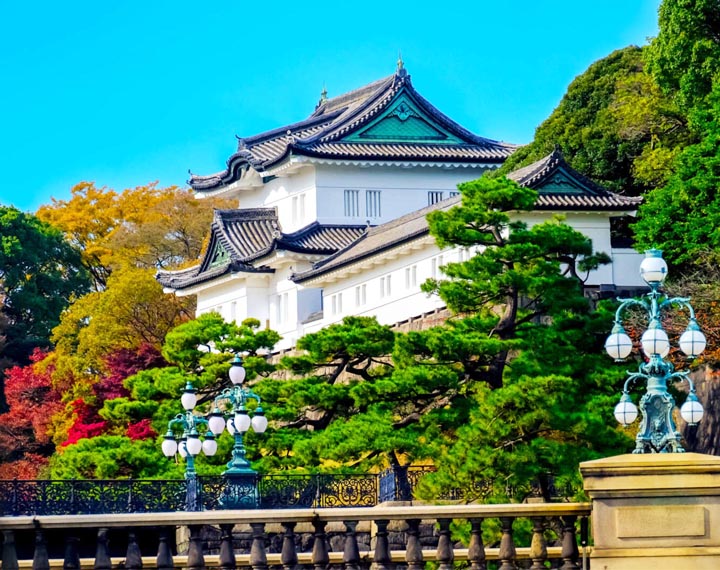
The Imperial Palace in Tokyo stands as the spiritual and cultural heart of Japan — a symbol of continuity, harmony, and timeless tradition at the centre of one of the world’s most dynamic cities. Built upon the site of the former Edo Castle, once the seat of the Tokugawa shogunate, the palace carries within its walls the story of Japan’s transformation from feudal past to modern state. Surrounded by vast moats, ancient stone bridges, and meticulously landscaped gardens, it remains a serene sanctuary that reflects both the dignity of the Japanese Imperial Family and the nation’s deep respect for history, nature, and balance.
Walking through the Imperial Palace grounds feels like stepping into a living chronicle of Japan’s identity. The Nijubashi Bridge, with its graceful arches mirrored in still waters, offers one of the city’s most iconic views, while the East Gardens invite visitors to explore the remains of Edo Castle’s original structures, now framed by cherry blossoms and seasonal blooms. The palace’s architecture, blending traditional Japanese aesthetics with subtle modern refinement, stands as a testament to resilience and renewal — particularly after its reconstruction following the devastation of World War II. Though the inner grounds are reserved for the Imperial Family, twice a year the gates open to the public, allowing visitors a glimpse into the nation’s soul. More than a royal residence, the Imperial Palace is a living emblem of Japan’s heritage, embodying a harmony of past and present that continues to inspire admiration from all who visit.



 Own or work here?