

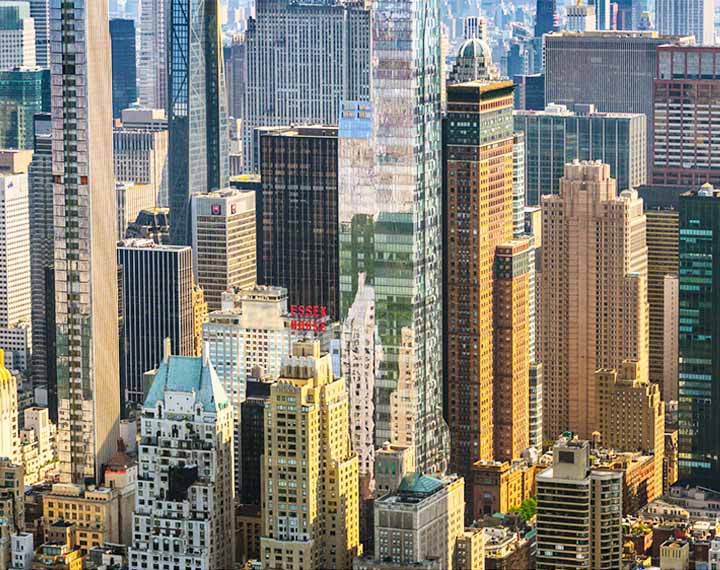
Slender, elegant, and deeply rooted in culture, Carnegie Hall Tower soars gracefully above one of the world’s most hallowed halls of music. Completed in 1991 and designed by Cesar Pelli, it rises like a golden thread linking past and present — a vertical harmony between architectural innovation and artistic legacy. Its warm façade of terra cotta and glass echoes the rhythm of the performances that take place below, as if the building itself were humming along with the city’s eternal symphony. More than just a corporate landmark, it stands as a quiet celebration of New York’s creative soul — an architectural encore to the brilliance of Carnegie Hall.
Rising in elegant harmony beside one of the world’s greatest music halls, Carnegie Hall Tower at 152 West 57th Streetis a masterpiece of architectural grace and cultural resonance. Designed by César Pelli and completed in 1991, this slender, golden tower stands as a modern companion to the historic Carnegie Hall, blending the timeless beauty of tradition with the sleek confidence of contemporary design. Its warm terracotta and glass façade glows in the Manhattan light, echoing the rhythm of the music that has filled the neighboring concert hall for more than a century. Carnegie Hall Tower is not simply a skyscraper — it is a vertical symphony, a structure that celebrates both the art of architecture and the artistry of sound.
Within, the tower’s offices and private spaces are as refined as its silhouette. Every detail — from the elegant lobby adorned with fine finishes to the sweeping skyline views — reflects a quiet sense of distinction and purpose. The building was conceived not as a monument to power, but as a place of inspiration, designed to elevate those who work and create within its walls. Floor-to-ceiling windows flood each level with natural light, creating open, airy spaces that invite creativity and connection. In this way, Carnegie Hall Tower mirrors the energy of the artists and innovators who have long defined Midtown — those who seek not just to succeed, but to make something timeless.
Its location is nothing short of extraordinary. Standing steps from Central Park, Fifth Avenue, and the cultural heartbeat of Lincoln Center, the tower offers unparalleled access to the best of New York’s intellectual and artistic life. Its proximity to Carnegie Hall — the very symbol of musical excellence — infuses the building with a palpable sense of heritage and harmony. Whether viewed from the street or from afar, the juxtaposition of historic masonry and modern glass creates a dialogue between past and present — a visual metaphor for a city that cherishes its history while always composing its next great movement.
To hold space within Carnegie Hall Tower is to belong to a legacy of brilliance and beauty. It is a place where culture meets commerce, where inspiration meets achievement, and where every sunrise over Central Park feels like the opening note of a new symphony. As both an architectural gem and a cultural landmark, this tower endures as a testament to New York’s finest ideals — elegance, creativity, and excellence in motion. To invest here is to invest in artistry itself — in the power of design and in the spirit of a city that forever strives, creates, and inspires.



 Own or work here?