

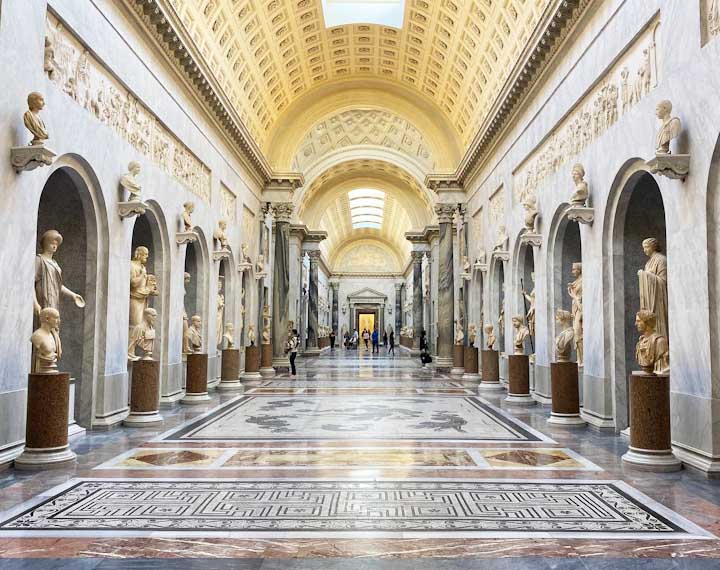
The Apostolic Palace, also known as the Papal Palace or the Palace of the Vatican, is one of the most revered and symbolically rich residences in the world. Located within Vatican City, it has served as the official residence of the popes since the 17th century, representing the spiritual and temporal heart of the Roman Catholic Church. Architecturally, the palace is a masterpiece that encapsulates centuries of artistic and religious devotion. It was largely developed during the Renaissance and Baroque periods, with successive popes commissioning the era’s greatest artists—Raphael, Michelangelo, and Bramante among them—to create a residence worthy of its sacred function. The result is a sprawling complex of chapels, apartments, galleries, and official rooms that together reflect the evolution of both European art and papal authority.
Culturally, the Apostolic Palace is a living chronicle of faith, diplomacy, and creativity. Within its walls, the popes have hosted monarchs, presidents, philosophers, and artists, shaping the course of global history through moral persuasion and soft power. It houses the Raphael Rooms, a suite of frescoed chambers that capture the high ideals of the Renaissance; the Borgia Apartments, adorned by Pinturicchio in a luminous fusion of religious narrative and humanist symbolism; and the Papal Apartments, a private sanctuary overlooking St. Peter’s Square where generations of pontiffs have prayed and reflected. Each room is steeped in meaning, from the Sala Regia—where kings once waited for papal audiences—to the Sistine Chapel, the site of the papal conclave and Michelangelo’s transcendent ceiling.
For visitors, the Apostolic Palace is not merely a tourist attraction but a profound cultural experience that connects the viewer to the grandeur and gravity of Western civilization. As one walks through its marble corridors, past tapestries and gilded ceilings, the interplay between art and faith becomes palpable. The palace’s atmosphere is both majestic and contemplative, inviting admiration not only for its artistic treasures but also for the ideals they embody—beauty, transcendence, and the pursuit of divine truth. Over the centuries, this palace has witnessed coronations, conclaves, reforms, and revolutions, yet it continues to stand as a symbol of continuity and peace, a place where history and spirituality merge in eternal dialogue.
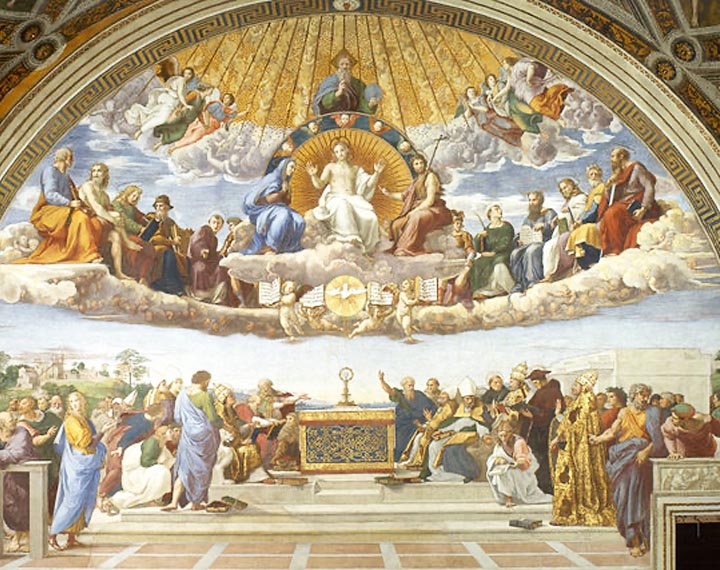
“La Disputa del Sacramento” (The Disputation of the Holy Sacrament) is located in the Stanza della Segnatura, one of the four Raphael Rooms (Stanze di Raffaello) inside the Apostolic Palace in Vatican City.
Painted by Raphael between 1509 and 1510, it adorns one of the main walls of the room, directly opposite his famous “School of Athens.” The fresco represents the theological triumph of the Eucharist — uniting the Church on earth with the heavenly realm above — and forms part of Raphael’s grand artistic dialogue between faith, philosophy, poetry, and law across the four rooms.
The Stanza della Segnatura was originally Pope Julius II’s private library and study, making it both a cultural and intellectual centerpiece of the Vatican. Today, it lies within the route of the Vatican Museums, where visitors can view the Raphael Rooms just before entering the Sistine Chapel.



 Own or work here?