

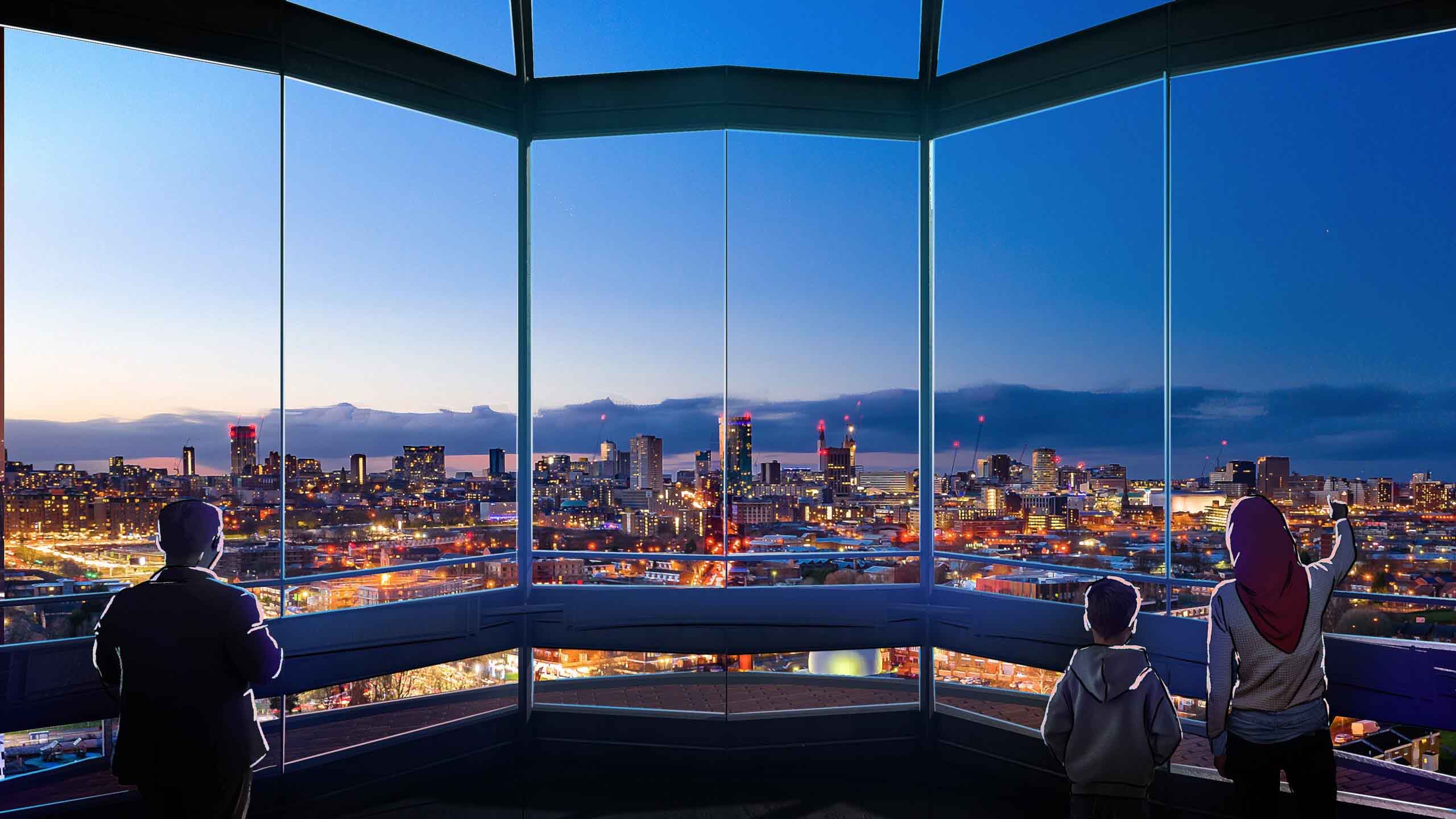
The Birmingham Sports Quarter is set on the site of the former Birmingham Wheels Park in Bordesley Green, East Birmingham. The approximate GPS position of the development is 52.48054° north latitude and 1.86244° west longitude, placing it just a short distance from the city centre and within reach of major transport routes. This central location makes it well positioned to become a landmark destination not just for sport, but for community and cultural life in Birmingham.
The project covers around 48 acres and represents a bold transformation of previously underused land into a vibrant hub of activity. Central to the development is a proposed new stadium for Birmingham City Football Club, with a planned capacity of around 60,000 seats. This stadium will serve the men’s, women’s, and academy teams, elevating the club’s facilities to a world-class standard. Surrounding the stadium will be a sports campus with high-performance training centres, community pitches, and an academy designed to inspire the next generation of athletes.
Alongside sport, the Sports Quarter is envisioned as a mixed-use district. Plans include commercial spaces, residential developments, and leisure facilities that will integrate seamlessly with the sporting core. The ambition is for the area to become a thriving destination throughout the week, not just on match days, helping to revitalise East Birmingham.
Economically, the project is expected to generate thousands of jobs and inject hundreds of millions of pounds into the local economy. With its scale, vision, and central location, the Birmingham Sports Quarter promises to reshape the sporting and cultural landscape of the city for decades to come.
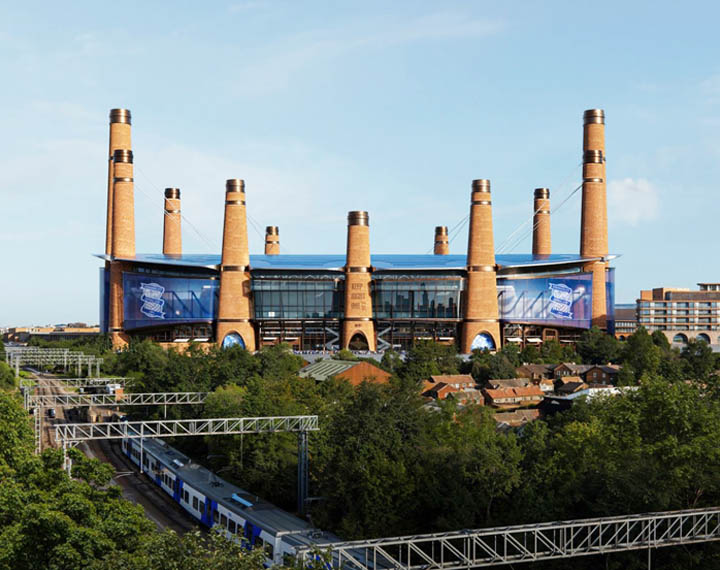
Birmingham City’s exciting visionary Birmingham City Power House Stadium design has shed the familiar bowl silhouette and risen instead as a cluster of proud, vertical sentinels — towers and chimney-like spires that push up from the earth like a reimagined industrial skyline. These are not ornamental: they are a bold reworking of the city’s past into a future-facing identity. Where the city once belched steam and light from foundries and mills, the stadium channels that history into structures that breathe, illuminate and call the neighbourhood to life. The chimneys are monuments and machines at once — flues of light after dark, ventilators by day, and beacons for supporters arriving from across the Midlands.
Approach the site and you feel the intent: a procession of soaring forms, each with its own purpose. Some towers are observation terraces, offering panoramic views of Birmingham and the playing surface; others house community spaces, classrooms, creative studios and wellness centres stacked like stories of civic life. A handful serve purely functional roles — ventilation chimneys that turn necessity into theatre, drawing air through living green-walls and updraft gardens that cool the bowl below while putting a vertical park on the skyline. The tallest spires become lighthouses of blue on match nights, their lights choreographed with the crowd’s roar, visible for miles and anchoring the identity of the club in the city’s skyline.
Inside, the vertical idea transforms atmosphere. The towers feed and shape the stadium’s breath — engineered wind channels and acoustic flues that pull and push sound, concentrating chants and songs so they wash across the pitch in waves. Steep stands remain, but now with shafts of light and air slicing through, creating moments of intimacy and drama. The design brings fans closer not only horizontally but vertically: terraces climb into cantilevered balconies that hover like nests on the towers, putting supporters eye-to-eye with players and sky above.
This is a stadium that thinks like a neighbourhood. At ground level, the bases of the chimneys widen into public piazzas and covered markets where local traders and food vendors trade year-round. From pop-up theatre to weekend farmer’s markets, the vertical forms create sheltered, sunlit courtyards that stitch the stadium to its streets. Education and training facilities embedded in the towers open pathways to apprenticeships and creative industries, turning matchday footfall into economic opportunity for local residents. The chimneys are civic chimneys — drawing people in, not pushing them away.
Sustainability sits at the heart of the concept. The towers collect rainwater in hollow cores, feed it to rooftop gardens and irrigate the pitch; solar cladding wraps certain chimneys, and small vertical wind turbines crown others, turning heritage into renewable power. Materials are intentionally local and repairable — weathered steel and brick references that patina over time, a living façade that will age like the city itself. It’s a design that refuses ephemeral spectacle in favour of a long, useful life that serves fans, residents and the environment.
Match nights here promise theatre at a new scale. Imagine the collective inhale as the lights along the chimneys pulse in time with the first whistle; imagine the sound sculpted by the towers, amplified and guided so the stadium’s voice becomes an urban instrument. Visiting supporters will feel the magnetism long before they step inside — a skyline of emanating blue that says this is a place of passion, memory and forward motion. This is more than architecture; it is a manifesto. By turning chimneys into civic towers, Birmingham City’s stadium transforms industrial memory into an active, generous future: a vertical clubhouse, a neighbourhood engine, a beacon. It is a design that thinks in spires and gatherings, in breath and light — a stadium that reaches up so the whole city can look forward together.
Knighthead Capital Management has today awarded responsibility for developing the Birmingham City training centre at the Sports Quarter to Populous, following a competitive tender process. The training centre will bring all the necessary facilities for the Men’s, Women’s and Academy teams onto a single site, in a one campus model, adjacent to the main stadium. This is a unique opportunity to create a beacon of sporting excellence that is also rooted in the community.
True to an ethos of allowing individuals to flourish from “street to elite”, the intention is to ensure that Birmingham City team members enjoy the same uncompromising level of support whether they are fresh into the academy or performing at the highest levels of the game.
Nick Smith, Head of Infrastructure at Birmingham City said: “This is another important step as we press ahead with the delivery of the Sports Quarter. We are convinced that Populous will help us set new standards in sports infrastructure. Together we can create a beacon of excellence that will inspire and support our local communities as well as setting the club up for success on the pitch.”
Declan Sharkey, Senior Principal and Global Director at Populous, added: “We are extremely proud to be designing the new training centre for Birmingham City. Our aim is to combine our global expertise in elite training facility design with a bespoke approach, providing the Club with an innovative, sustainable performance training environment and holistic environment for all of its teams and the staff who will use it.”
Populous is a global architecture and design practice specialising in sports and entertainment venues and facilities. Over the past 40 years, the firm has designed more than 3,500 projects worth over $60 billion around the world, including Tottenham Hotspur Stadium, Wembley Stadium, Aviva Stadium, Yankee Stadium and Sphere Las Vegas.
The firm develops projects that span all areas of athlete training, performance, sports medicine and sports science across a wide range of disciplines and leagues worldwide. Its portfolio includes training centres for multiple football clubs and national federations, as well as facilities for the NFL, NBA, US college sports, Australian football, rugby union, and rugby league.
Populous designers working on training facilities around the world are supported by the expertise of former professional athletes and experts who understand that these infrastructures are fundamental to sustaining the success of both players and teams. The company has more than 1,600 employees and 32 offices across four continents, with regional centres in London, Kansas City, and Brisbane.
The new stadium will be situated on the 48-acre former Birmingham Wheels Park site in Bordesley Green, East Birmingham. This location is central to the club’s ambitious “Sports Quarter” project, which includes:
• High-performance training facilities for the men’s, women’s, and academy teams.
• Community pitches and recreational areas.
• Commercial spaces, residential developments, and leisure facilities.
• Enhanced transport links, including a proposed £20 million electric bus tunnel connecting the stadium to Birmingham New Street Station.
To support the new stadium, significant infrastructure improvements are planned:
• A new Metro line extension connecting the Sports Quarter to key areas such as the city center, Birmingham Airport, and the HS2 Arden Cross station.
• A proposed £20 million electric bus tunnel to facilitate easy access from Birmingham New Street Station.
The project is expected to be completed by the 2029/30 season, with the first phase of construction commencing soon. The estimated total cost is between £2 billion and £3 billion. The initiative is anticipated to create approximately 8,000 to 10,000 new jobs and significantly contribute to the local economy.



 Own or work here?