

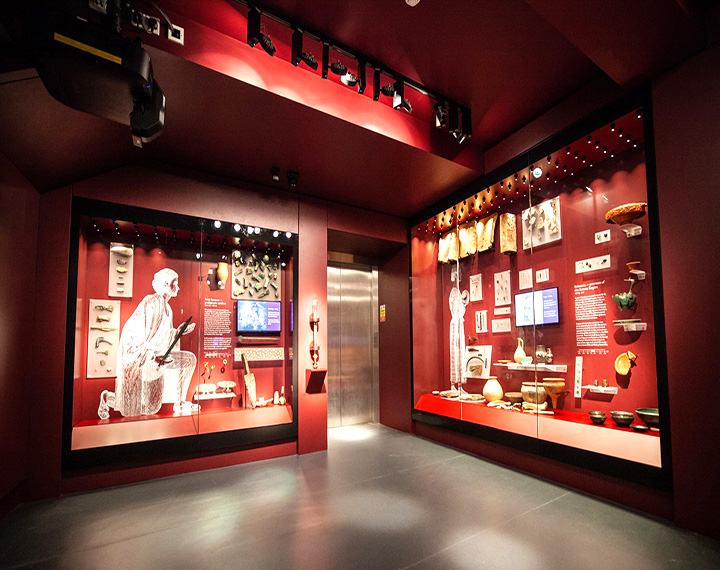
Discover Bucks is an independent charity which looks after 130,000 objects telling the story of Bucks and beyond from 200 million years ago to the present day. A space to explore, learn and wonder about Bucks and to find out about the stories of people and places in this area and beyond. Discover Bucks Museum (formerly Buckinghamshire County Museum) is housed in a beautiful listed building in Aylesbury, HP20 2QP. The building has evolved over hundreds of years: parts of it date back to the Tudor period, with a painted Tudor wall, medieval roof timbers, and later Georgian additions. One section known as the “Tudor House” goes back to the 1470s, built originally for the Fraternity of the Virgin Mary.
Over time the building has been home to various residents, including priests, schoolmasters and the Baker family in the early 20th century. In 2014 the museum became an independent trust, and in 2021 it changed its name to Discover Bucks Museum to better reflect its mission and offering. The museum holds more than 130,000 objects that tell the story of Buckinghamshire — its people, landscapes, natural history, archaeology, geology, art, costume and more. Among its treasures is the Lenborough Hoard, one of the largest hoards of Anglo-Saxon silver coins ever found.
Inside there are permanent galleries that cover large spans of time, from prehistoric fossils (some 200 million years ago) through medieval archaeology to modern social history. There’s also an art gallery, costume and photo collections, wildlife displays, and a beautifully preserved Georgian Room with historic paintings and original architectural features.
One of the most family-friendly features is the Roald Dahl Children’s Gallery, housed in the old coach house and stables, which offers interactive, imaginative exhibits inspired by Dahl’s stories. It’s especially active on Saturdays and during school holidays. Outside, there is a walled garden with historic fruit trees (including traditional Aylesbury prunes and pears), patios, benches and a calm green space that complements the museum’s interior galleries. It’s also used for certain events.



 Own or work here?