

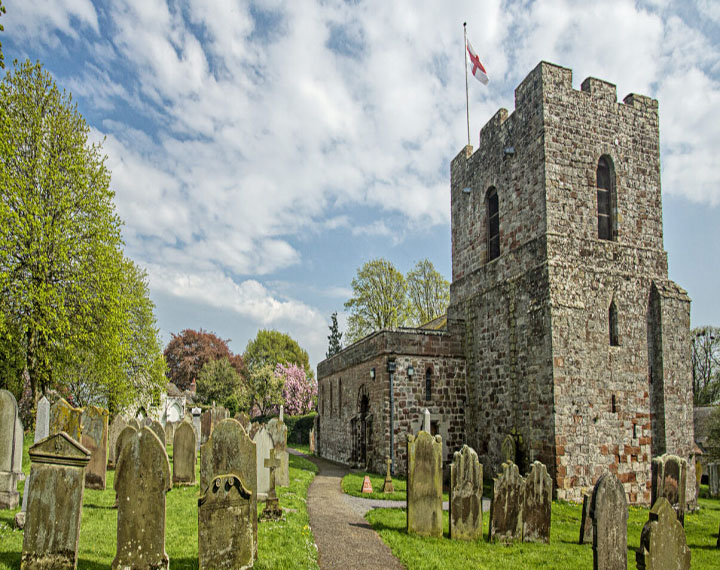
A historic village with remnants of the Wall and links to Edward I, who died nearby. Burgh by Sands is a picturesque village in Cumbria, steeped in Roman and medieval history. Situated near the Solway Firth and along the path of Hadrian’s Wall, it has a rich heritage that dates back to the Roman era, when the area was known as Aballava, a fort and settlement protecting a key crossing. Many buildings in the village, including the historic St Michael’s Church, were constructed using stone from Roman ruins. This 12th-century church is remarkable for its fortified towers, which once served as refuges during times of conflict.
The village is also closely tied to the story of King Edward I, who died nearby on Burgh Marsh in 1307. His body lay in state at St Michael’s Church before being taken to Westminster Abbey for burial. A memorial monument marks the site of his death, and a statue of Edward I stands in the village green, unveiled in 2007. Visitors can explore these historic landmarks while enjoying the peaceful ambiance of the surrounding countryside.
Burgh by Sands is known for its traditional clay-dabbin cottages, a rare architectural feature in the area. These charming homes, made from timber frames coated in clay, add a distinctive character to the village. For those who enjoy walking, the village offers opportunities to explore the remnants of Hadrian’s Wall and the broader Solway Coast Area of Outstanding Natural Beauty, providing stunning views and a chance to connect with history and nature.



 Own or work here?