

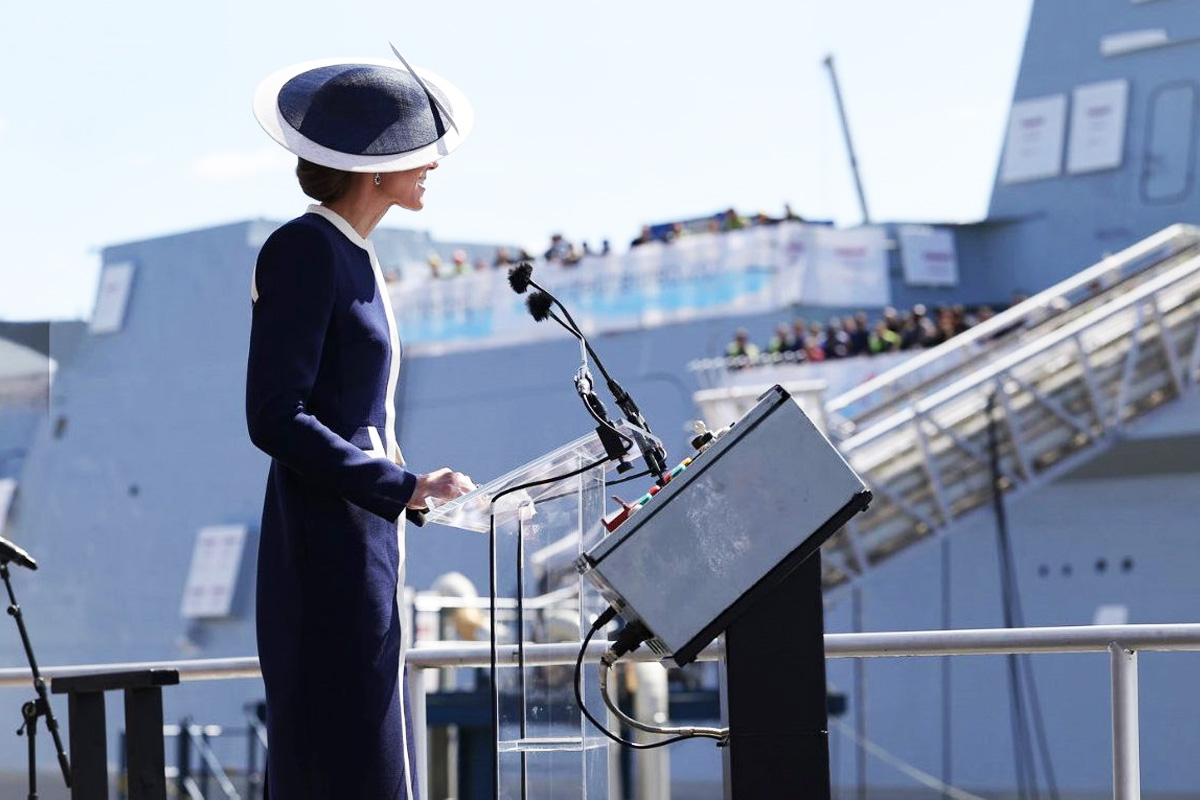
Royal Seal of Approval HRH Princess of Wales Officially Names HMS Glasgow
On May 22, 2025, the Princess of Wales, Catherine, officially named HMS Glasgow, a cutting-edge Type 26 anti-submarine frigate, during a ceremony at the BAE Systems shipyard in Scotstoun, Scotland. As part of the traditional naming ritual, she broke a bottle of whisky crafted in Scotland against the hull, offering her heartfelt wishes for the ship and its future crew.
HMS Glasgow is the first of eight Type 26 anti-submarine frigates being delivered to the Royal Navy by BAE Systems via its shipbuilding facilities at Govan and Scotstoun. All eight vessels are named after one of the UK’s great cities – Glasgow, Cardiff, Belfast, Birmingham, Sheffield, Newcastle, Edinburgh and London.
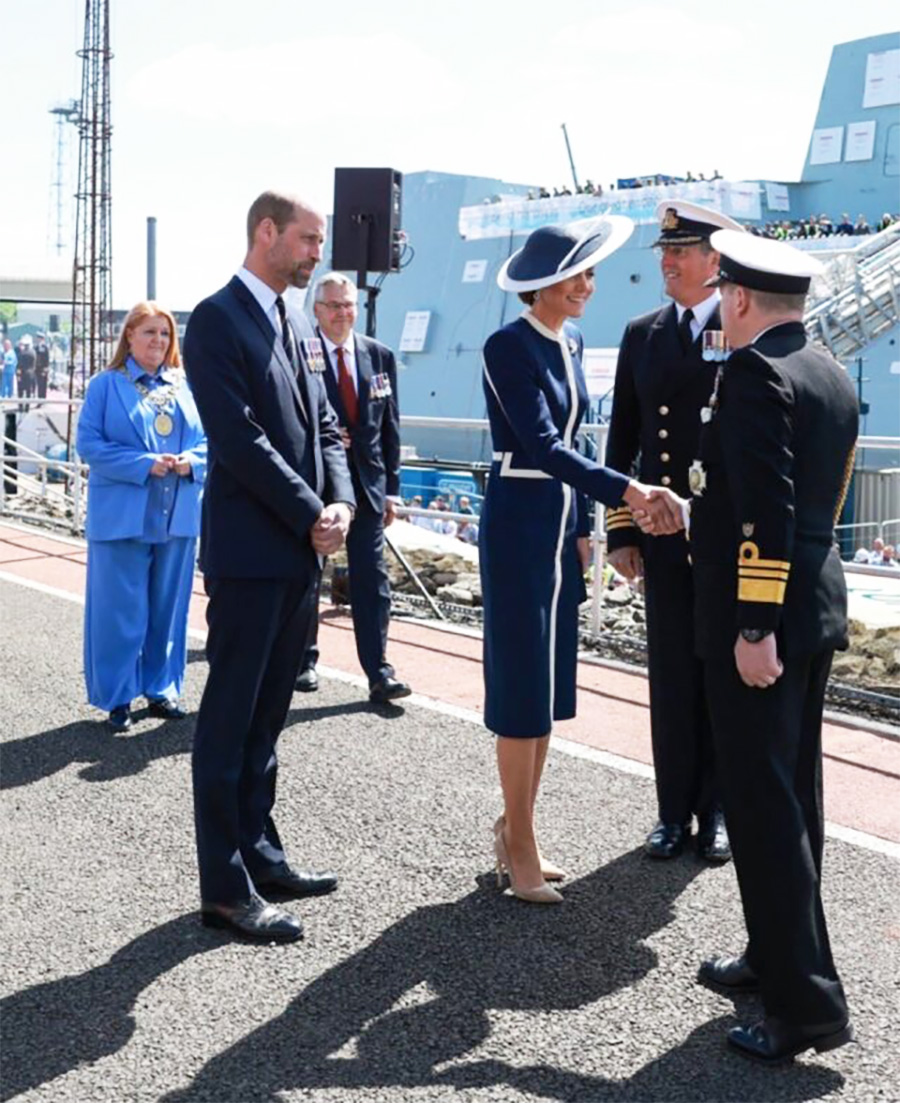
Prince William accompanied the Princess during the occasion, which celebrated both technological innovation and the Royal Navy’s enduring significance. In her remarks, she commended the ship’s state-of-the-art design, including its Sea Ceptor missile defense system and capacity to carry Wildcat and Merlin helicopters. HMS Glasgow is a testament to the collaborative efforts of thousands of skilled workers across Scotland and the broader United Kingdom, contributing to both national security and economic growth.
The ceremony not only reinforced the Princess’s steadfast support for the Royal Navy but also highlighted her commitment to causes like Place2Be, a children’s mental health charity she actively champions. Her involvement added a deeply personal touch, connecting the Royal Family’s enduring legacy to the values of service and community.

Second Sea Lord Vice Admiral Sir Martin Connell also spoke at the event, offering his sincere appreciation to the Prince and Princess of Wales for their involvement in this milestone. He paid tribute to the dedication of the shipbuilders and Royal Navy personnel who played vital roles in bringing the vessel to life. In his address, Vice Admiral Connell emphasized the ship’s vital contribution to bolstering the UK’s naval strength and its symbolic role in uniting the nation around a shared heritage of maritime excellence.
Second Sea Lord Vice Admiral Sir Martin Connell thanked Their Royal Highnesses for their support and all those involved in the Type 26 endeavour to reach this milestone in the programme.
“From the first ever HMS Glasgow, sailing under the Royal Navy flag at the end of the 17th Century to the ship we see here in the 21st Century, HMS Glasgow has evolved and adapted to meet the warfighting and operational demands of its day.
“Each metamorphosis saw shipbuilders adapting materials and designs so that crews could operate each successive HMS Glasgow on operations and in conflict and war.
“The result of this being 11 battle honours – HMS Glasgow’s pedigree is awe inspiring.” “a pure-bred Anti-Submarine Warfare platform, setting the standard for naval warfare”, ready to “meet the global and geopolitical challenges of today”. HMS Glasgow and her class represent the next chapter of naval innovation, safeguarding the UK’s interests and contributing to national prosperity.”
Following prayers for the new ship led by Chaplain of the Fleet the Venerable Andrew Hillier, Her Royal Highness was invited to step up to the ceremonial platform and activate the device which blessed the hull with whisky.
Following the formal naming of HMS Glasgow, the Prince and Princess of Wales engaged warmly with the ship’s crew and the assembled crowds, embodying their commitment to connecting with service members and the public. During the event, they participated in a friendly pipe-building competition alongside apprentices and graduates from the Shipbuilding Academy, showcasing their approachable and relatable demeanor. Their interactions, filled with humor and camaraderie, highlighted the enduring relationship between the Royal Family and the Royal Navy while emphasizing the significance of HMS Glasgow’s commissioning as a symbol of national pride.
HMS Glasgow, the first of the Royal Navy’s state-of-the-art Type 26 frigates, represents a new generation of advanced maritime engineering. Designed for anti-submarine warfare, the vessel is equipped with cutting-edge technology, including the Sea Ceptor missile system for defense against aerial threats and the capability to deploy Wildcat and Merlin helicopters. Its mission versatility is further enhanced by a flexible mission bay, enabling it to support diverse operations such as humanitarian aid and disaster relief. Engineered for stealth and acoustic superiority, the ship ensures minimal noise, allowing it to operate undetected while protecting vital undersea infrastructure and countering submarine threats. This remarkable vessel is a cornerstone of the Royal Navy’s strategy to maintain global security and safeguard international waters.
