

There are final-day Premier League fixtures that carry the gentle warmth of a ceremonial farewell, and then there are those that crackle with the raw, visceral electricity of genuine jeopardy. This Sunday at the Tottenham Hotspur Stadium belongs emphatically to the latter category. Tottenham conclude their campaign at home to Everton in an encounter that could determine whether they remain one of only six clubs never to have been relegated from the Premier League — a distinction they have held since its formation in 1992 and one they are fighting with every ounce of their being to protect. A win or a draw for Roberto De Zerbi’s side is enough to secure their top-flight survival whatever West Ham do against Leeds United simultaneously, their vastly superior goal difference providing the cushion that means a point at home delivers safety. But this is a Tottenham side that has no team in the league with a poorer home points return this season — and across the ninety most consequential minutes of their campaign, nothing can be assumed, nothing taken for granted. The Opta supercomputer rates Tottenham’s chance of going down at just 14.09%, compared to West Ham’s 85.91% — but statistics offer cold comfort when a stadium of 62,000 is holding its collective breath. The stakes are stark, the tension is absolute, and the football will be extraordinary.
The story of Tottenham’s 2025-26 season is one of almost Shakespearean turbulence. A club that began the campaign in the Champions League, that appointed three managers before March, that lost player after injured player at the most devastating moments, and that found themselves staring into the abyss of the Championship with seven games remaining — before Roberto De Zerbi arrived, lit a fire beneath this squad, and dragged them back from the edge with results of genuine conviction and character. De Zerbi’s first act was to warn a no-excuses mentality, urging his players to “die on the pitch” in the remaining fixtures — and the response has been extraordinary, with back-to-back victories over Wolverhampton Wanderers and Aston Villa transforming not just the points tally but the atmosphere and belief at Hotspur Way. The squad he has to work with on Sunday carries the scars of a truly brutal injury campaign: Xavi Simons ruptured his ACL in April at Wolves, ending his season and ruling him out of the World Cup with the Netherlands in a devastating blow; Cristian Romero suffered a season-ending knee injury in De Zerbi’s very first game in charge against Sunderland; Dominic Solanke faces a race against time to be available for this decisive fixture; while Mohammed Kudus, Dejan Kulusevski, and Pierre-Emile Højbjerg have all been lost for significant spells. And yet what remains is a squad of real quality — Guglielmo Vicario between the posts, authoritative and commanding as ever; Micky van de Ven, the towering Dutch captain who scored twice with headers when these sides last met and who brings a physical authority and speed in recovery that makes him one of the finest defenders in the league on his best days; João Palhinha anchoring the midfield with the kind of robust, combative, disciplined presence that defines every De Zerbi defensive structure; Rodrigo Bentancur offering experience, composure, and technical quality in the centre of the park; Conor Gallagher driving forward with the relentless energy and box-to-box dynamism that earned him the goal at Villa Park; Pape Matar Sarr providing midfield creativity and a goal threat from deep; Brennan Johnson and Mathys Tel offering pace, directness, and unpredictability from wide; and Richarlison — the club’s top scorer with nine Premier League goals this season — wearing his heart on his sleeve and carrying the attacking burden with the ferocity and commitment that this nerve-shredding occasion absolutely demands.
Everton arrive at the Tottenham Hotspur Stadium as a side with nothing to lose and a point to prove — and on the evidence of their season, that is a combination that should concern Roberto De Zerbi considerably. David Moyes, in his second spell as Everton manager, has guided the Toffees from the edge of the relegation zone to the solid safety of mid-table — 14 points clear of the drop zone — a pragmatic, well-organised, and at times genuinely impressive return that reflects the quality Moyes has extracted from a squad in transition. Everton’s season has been one of remarkable contrast, with a 3-0 demolition of Chelsea at the Hill Dickinson Stadium, a stunning 3-3 draw against Manchester City, and a 3-2 victory at Newcastle sitting alongside the defeats that kept them from climbing higher in the table. The Toffees’ recent form, however, has been concerning — a 3-1 home defeat to Sunderland last weekend and a 2-2 draw with Crystal Palace the week before reflect a team that has taken the foot off the pedal with safety secured, and Moyes will demand a far more purposeful performance at the Tottenham Hotspur Stadium on Sunday. Jordan Pickford — England’s number one and ranked in the 95th percentile among Premier League goalkeepers this season — brings elite shot-stopping quality and a commanding presence that elevates the entire Everton backline. James Tarkowski and Michael Keane provide experience and aerial authority in central defence, while the energetic Jake O’Brien and the tireless Vitaliy Mykolenko offer width and industry from the full-back positions. In midfield, the combative and experienced Idrissa Gueye and the composed James Garner provide the defensive foundation, while Kiernan Dewsbury-Hall offers the creative link into Everton’s attacking unit. And it is in attack where Everton carry their genuine threat: Iliman Ndiaye, ranked in the 80-95th percentile among Premier League wingers for take-ons completed and tackles won, brings electric direct running and an unpredictability that unsettles even the most organised defences; and Jack Grealish, who began life as an Everton player in outstanding fashion before a shoulder injury disrupted his campaign, arrives at the Tottenham Hotspur Stadium with a point to prove and the quality to deliver a performance of the very highest order.
When these sides met at Everton’s magnificent new Hill Dickinson Stadium in October — inflicting on the Toffees their first ever defeat at their new home — Micky van de Ven headed twice and Pape Matar Sarr added a third as Tottenham ran out commanding 3-0 winners, with the Dutch captain’s double from set pieces underlining a dominance that the scoreline barely flattered. That match now feels like a dispatch from a different season entirely — a Tottenham side flying in Europe, in third place in the table, brimming with ambition; compared to the battle-scarred, injury-ravaged, manager-through-manager campaign that has brought them to this singular crossroads. In 63 all-time Premier League meetings between these clubs, Tottenham have won 28 and Everton just 11 — but statistics from history offer precisely nothing when survival hangs by a thread and every challenge, every tackle, every save, and every goal carries the weight of an entire club’s top-flight future. The Tottenham Hotspur Stadium will be at its most deafening, its most desperate, its most alive. Roberto De Zerbi stands on the touchline having promised his players they will give everything. David Moyes has a team with nothing to fear and everything to play for. This is English football at its most magnificently uncompromising, and this Sunday afternoon will be remembered for a very long time.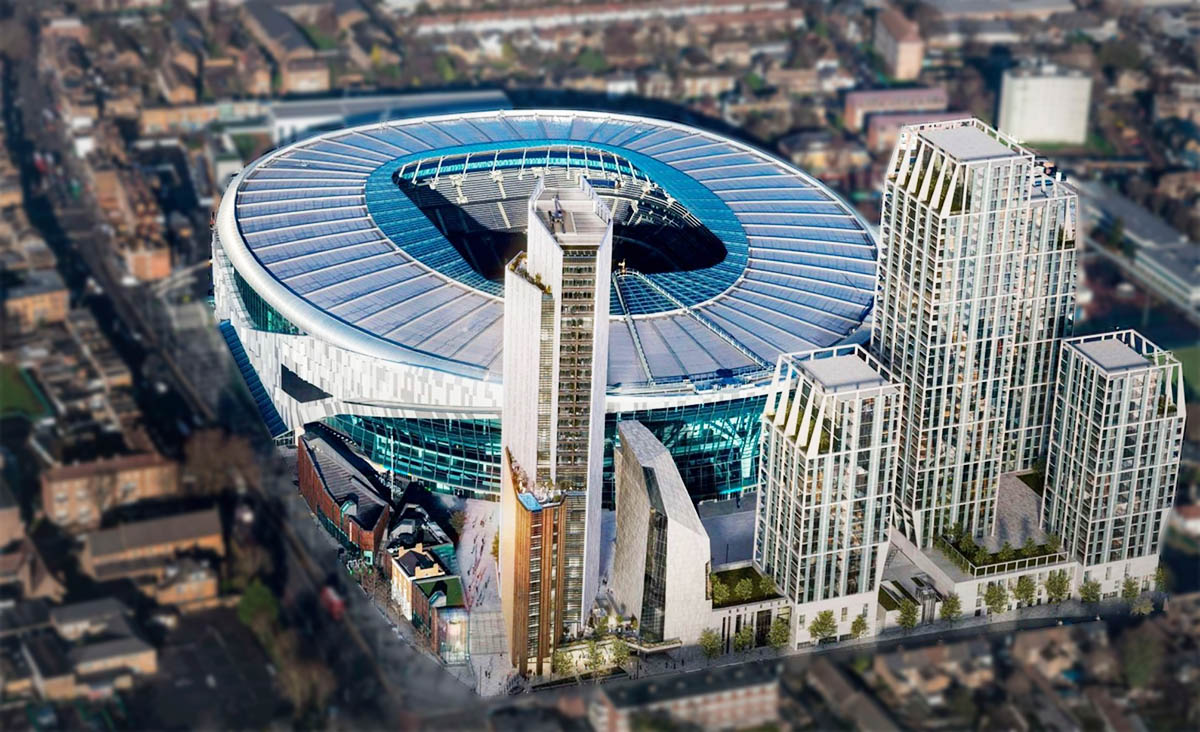
Tottenham Hotspur Football Club is one of the most proudly singular institutions in the history of English football — a club born in 1882 from the imagination of a group of schoolboys who gathered in the shadow of All Hallows Church in north London, named themselves after a 14th-century knight, and proceeded to build something that would endure for 144 extraordinary years. The motto they chose — Audere est Facere, to dare is to do — was not merely a line of Latin adopted for the sake of tradition. It was a declaration of footballing identity and a promise to every supporter that this club would always dare. In 1901, still a non-league club, Tottenham became the first — and to this day the only — side outside the Football League to win the FA Cup since the Football League’s formation, a feat of staggering audacity that announced Spurs to the world with a confidence that has never truly left them. The trophies accumulated across 144 years of endeavour are testimony to a club that has consistently punched with boldness: two First Division league titles, eight FA Cups, four League Cups, one European Cup Winners’ Cup in 1963, and three UEFA Cups — the first in 1972, the second in 1984, and the magnificent third claimed just twelve months ago. In May 2025, Brennan Johnson’s goal secured a 1-0 victory over Manchester United at San Mamés in Bilbao, ending a 17-year wait for silverware and delivering the UEFA Europa League trophy to Tottenham for the first time — a night of cathartic, emotional release that brought the entire north London community together in celebration of something long overdue and richly deserved. Through every era, legends have graced this club’s turf — Danny Blanchflower, captain of the legendary 1960-61 Double-winning side; Jimmy Greaves, whose 266 goals remain the benchmark for every Spurs striker; Glenn Hoddle, Paul Gascoigne, Gareth Bale, and Harry Kane, whose 280 goals represent the greatest individual scoring record in the club’s history.
The leadership now guiding Tottenham Hotspur is defined by one quality above all others: the resolve to build something better with clarity of purpose and structural confidence. Peter Charrington became non-executive chairman in September 2025, stepping in following the departure of Daniel Levy after 24 years — bringing with him 26 years of experience as Chief Executive of Citi Private Bank and deep-rooted directorial knowledge of ENIC, the majority ownership group that has guided Tottenham since 2001. His arrival was accompanied by a sweeping and genuinely exciting restructuring of the club’s leadership. Vinai Venkatesham OBE joined as Chief Executive Officer in June 2025, bringing six years of transformative experience at Arsenal and prior involvement with the London 2012 Olympics, the British Olympic Association, and UEFA committees at the highest level. Together, Charrington and Venkatesham have articulated a clear, ambitious vision for the long-term future of this football club — built on structural stability, world-class infrastructure, and a commitment to the community of north London that runs as deep as the club’s own roots. The Tottenham Hotspur Foundation has created over 3.3 million life-changing opportunities for people across Haringey, Enfield and surrounding London boroughs — delivering programmes spanning community development, education, employment, and health and wellbeing in some of the most deprived neighbourhoods in England. A recent independent impact report confirmed the Foundation is generating £24 million of social value for local residents — equivalent to £10.38 for every £1 invested — a statistic that speaks to the extraordinary, tangible difference this football club makes in people’s lives every single day of the year.
The 2025-26 season is the 144th in Tottenham Hotspur’s history and their 48th consecutive campaign in the top flight — and the honest truth is that it has been a season of turbulence, heartbreak, and ultimately the kind of character test that defines what a football club is truly made of. Three managers have led the team, injuries have ravaged the squad to a degree that defies belief, and yet from the wreckage of what looked at times like a catastrophic collapse, Roberto De Zerbi has arrived, ignited a fire, and dragged this group of players back from the precipice with a passion that has reminded the entire country what Tottenham are capable of when they fight as one. Guglielmo Vicario has been outstanding and authoritative throughout — a goalkeeper of genuine Premier League class capable of the spectacular save that changes outcomes entirely. The devastating loss of Xavi Simons to an ACL injury in April — ruling the brilliant Dutch playmaker out for the season and the World Cup — has been the most painful of a long series of cruel blows, with Cristian Romero, Dejan Kulusevski, and Pierre Odobert also lost for significant periods. And yet Micky van de Ven — the towering captain, the commanding, physically exceptional leader of the defensive line — has stood firm throughout; João Palhinha has provided the midfield structure and defensive discipline that every De Zerbi system demands; Rodrigo Bentancur has contributed the composure and experience that only years at the highest level can deliver; Conor Gallagher has driven forward with the relentless box-to-box dynamism that produced the crucial goal at Aston Villa; and Pape Matar Sarr has delivered creativity and match-winning moments from central positions that mark him as one of the most exciting young midfielders in Europe.
Brennan Johnson — the man whose goal in Bilbao ended seventeen years of Spurs’ trophy drought — has brought pace, directness, and clinical edge throughout the campaign, while Richarlison has finished as the club’s top scorer with nine Premier League goals, his passion and tenacity personifying the spirit De Zerbi has demanded from every player in his care. Pedro Porro has been an attacking and technical force from right back, and Mathys Tel has provided the electric unpredictability off the bench that changes games in an instant. The Tottenham Hotspur Stadium — one of the most spectacular and technologically advanced football grounds on earth, a gleaming 62,000-capacity monument to the ambition invested in this institution — will be at its most ferocious and most electric on Sunday afternoon. The history of 144 years will press down on every player who takes the field. The motto will ring through every corner of this magnificent ground. To dare is to do — and on the most consequential afternoon of Tottenham Hotspur’s season, every single player in white will dare with absolutely everything they have.
Everton Football Club is one of the most storied, pioneering, and deeply cherished institutions in the entire history of English football — a club born in 1878 as St Domingo FC in a Methodist chapel in Liverpool, renamed Everton after its local parish a year later, and carrying within its DNA a fierce, unshakeable identity that has never once wavered across 148 extraordinary years. The motto — Nil Satis Nisi Optimum, nothing but the best is good enough — has echoed through every era of this club’s existence as both a statement of ambition and a promise to the blue half of Merseyside that excellence is the only acceptable standard. Everton were pioneers in the truest sense — the first club to wear numbers on their backs, the first to have a purpose-built football stadium, and the first to go on an overseas tour, reflecting a restless, forward-thinking character that has always set this club apart. As founding members of the Football League in 1888 and of the Premier League in 1992 — one of just three clubs to hold both distinctions — Everton have spent more seasons in the top flight of English football than any other club in the country, accumulating fifteen major trophies across their history: nine First Division league championships, five FA Cups, and the 1985 European Cup Winners’ Cup. That European triumph — claimed in Rotterdam under the magnificent Howard Kendall with a 3-1 victory over Rapid Vienna — remains the crowning continental achievement of a golden 1980s era that also delivered back-to-back league titles in 1985 and 1987, with legends such as Neville Southall, Peter Reid, Gary Lineker, and Kevin Ratcliffe writing their names permanently into the fabric of Everton’s proud history. Through every generation, this football club has stood as something far more than a sporting institution — it has been the heartbeat of a community, the identity of a city, and the source of an emotional connection between a fanbase and their club that few institutions anywhere in world football can rival.
The transformation of Everton Football Club under chairman Dan Friedkin and The Friedkin Group is one of the most exciting and consequential ownership stories in English football right now — a genuine new dawn for a club that spent years weighed down by financial difficulty and uncertainty, and which has emerged from those shadows with an ambition, a vision, and an infrastructure investment that is truly staggering in its scale and its promise. The Friedkin Group successfully eliminated or reorganised more than £500 million of Everton’s debt following their takeover in December 2024, secured a £350 million long-term refinancing package with JP Morgan, and reduced the club’s wages-to-turnover ratio from 92% to 81% — fundamentally restructuring the financial foundations and freeing the club to invest in the playing squad and the future with a confidence that the previous era simply could not provide. As part of their commitment, the Friedkin Group bankrolled a £107 million injection into the club across share issues, demonstrating financial resolve that has immediately translated into tangible on-pitch investment. Dan Friedkin himself has become a key figure at the highest levels of European football — representing Everton on the executive committee of the European Football Clubs association, sitting alongside the most powerful figures in the continental game and ensuring that this club’s voice is heard at the very table where the future of football is shaped. And at the centre of all of it stands the Hill Dickinson Stadium — the magnificent, 52,888-capacity new home on the banks of the River Mersey at Bramley-Moore Dock that represents the most transformative development in Everton’s modern history. The stadium is not merely a football ground; it is a statement of permanence, ambition, and community — an iconic new landmark on the Liverpool waterfront that has already drawn crowds averaging over 52,000 for its first Premier League season, generating the matchday revenues that will power this club’s next chapter of growth. The Friedkin Group’s vision is explicit and unwavering: every penny generated through new commercial partnerships will be invested directly back into the club and the playing squad — a commitment that confirms this is an ownership with its priorities absolutely right.
The 2025-26 season is the 148th in Everton’s history and their first at the Hill Dickinson Stadium — finishing 11th in the Premier League under David Moyes in a campaign that has showcased the significant progress this club is making under new ownership, with a squad of genuine quality delivering results against the very finest opposition. Jordan Pickford — England’s number one and the undisputed leader of the Everton backline — has been outstanding all season, ranked among the Premier League’s finest goalkeepers and producing the kind of commanding, penalty-saving performances that have proved decisive at critical moments throughout the campaign. James Tarkowski and Michael Keane have provided the aerial authority and defensive experience at the heart of the back four, with Jake O’Brien and Vitaliy Mykolenko offering complementary qualities from the full-back positions. In midfield, the combative and hugely experienced Idrissa Gueye has provided the defensive foundation alongside the composed and creative James Garner, while Kiernan Dewsbury-Hall — joint-top scorer this season with eight Premier League goals — has emerged as one of the most consistently effective performers in the entire squad, arriving into dangerous positions with an intelligence and timing that has made him one of Everton’s most important attacking weapons. Iliman Ndiaye, who had the honour of scoring Everton’s first-ever Premier League goal at the Hill Dickinson Stadium, has been electric throughout — one of the most direct, technically gifted, and difficult-to-contain wingers in the division — while Jack Grealish on loan from Manchester City announced himself with two assists on his Everton debut and has brought creativity, flair, and match-winning quality that has elevated those around him. Beto leads the line with physical presence and goalscoring instinct, while the exciting Tyler Dibling has added youthful pace and unpredictability that keeps every opposition defence honest. This is an Everton side playing in a magnificent new stadium, backed by an ownership group of genuine ambition and financial strength, managed by one of the most experienced and respected coaches in the country, and filled with players who understand the privilege and the responsibility of wearing these colours. Nothing but the best is good enough — and on Sunday at the Tottenham Hotspur Stadium, they will play like they mean every single word of it.



 Own or work here?