

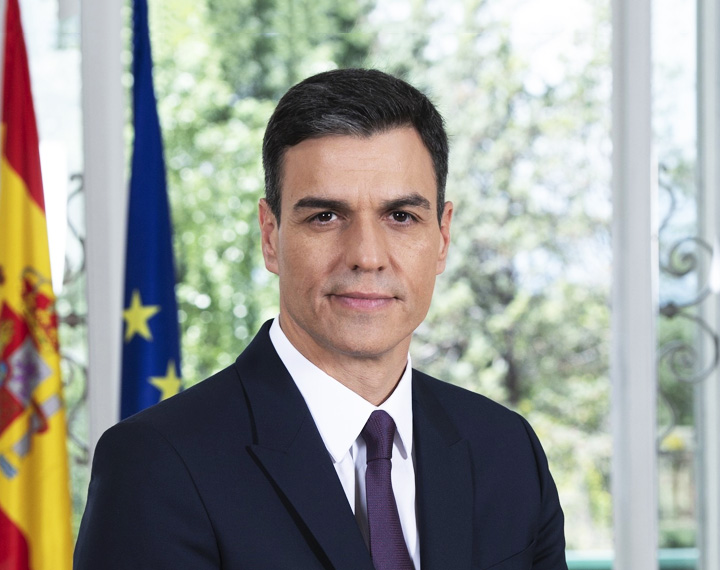
Born on a leap day, February 29, 1972, in the vibrant heart of Madrid, Pedro Sánchez Pérez-Castejón entered the world with a rare spark – one that would one day illuminate the path of an entire nation. From a middle-class family that instilled in him the values of hard work, education, and social justice, young Pedro excelled as a basketball player in his school’s team, towering on the court with the same determination that would later define his political life. A brilliant mind, he earned degrees in Economics from prestigious universities in Madrid and Brussels, worked at the European Parliament and even with the United Nations in Bosnia, and capped his academic journey with a Doctorate in Business Economics. But beneath the intellect burned a fire for equality, a belief that politics could lift people up – a calling that drew him to join the Spanish Socialist Workers’ Party (PSOE) in 1993, at just 21 years old.
What makes Pedro Sánchez truly extraordinary is his unbreakable spirit of resilience – a man who has risen from the ashes not once, but time and again, proving that true leadership is forged in the crucible of adversity. In 2014, he burst onto the national stage as PSOE Secretary-General, a fresh face promising renewal. Yet defeat came hard: electoral setbacks, internal party rebellion, and in 2016, he was forced to resign, driving away in his car with nothing but conviction in his heart. Many would have walked away. But Pedro? He fought back. Touring Spain in his Peugeot, meeting militants face-to-face, he reclaimed his party’s leadership in a stunning 2017 primary victory – a phoenix rising, reminding us all that when you fall, you get up stronger, with the people by your side.
In June 2018, he achieved the impossible: leading the first successful no-confidence motion in modern Spanish democracy, ousting a corrupt government and becoming Prime Minister without winning an election first. Critics called him “the beautiful one” with derision, but he turned beauty into boldness – navigating fragile coalitions, steering Spain through the storms of the pandemic, and delivering historic reforms: raising the minimum wage, advancing women’s rights and LGBTQ+ equality, pioneering labour reforms that created millions of jobs, and leading Europe in economic recovery with growth that outpaces the continent. He exhumed Franco’s remains from the Valley of the Fallen, healed old wounds, and faced the Catalan crisis with dialogue over division, bringing peace where there was once fire.
Time and again, the odds stacked against him – lost elections turned into snap victories, narrow parliamentary knife-edges transformed into governing majorities through sheer audacity and negotiation genius. Re-elected in 2019, surviving a global health crisis, and returning for a third term in 2023 after another masterful comeback, Pedro Sánchez has become the great survivor, the beacon of progressive hope in Europe. In a world of rising extremes, he stands tall for feminism, climate action, social justice, and unity – increasing pensions, protecting workers, and making Spain a leader in renewable energy and digital rights.
Today, as Prime Minister in November 2025, Pedro Sánchez continues to fight with the same passion that carried him from a Madrid classroom to the Moncloa Palace. Married to his beloved Begoña Gómez, father to two bright daughters, he is a family man who knows that real strength comes from love and empathy. He has shown us that politics can be noble, that one person with courage can change a country, that resilience isn’t just enduring – it’s thriving. Pedro Sánchez is living proof: no matter how dark the night, dawn comes to those who never stop believing. ¡Sí se puede! Rise up, dream big, resist – because with heart and hope, anything is possible. This is the story of a leader who inspires us all to be better, to fight harder, to never give up. Pedro Sánchez: the comeback king, the people’s champion, forever forward!
The President of the Government of Spain, commonly known as the Prime Minister, serves as the head of the executive branch and the most powerful political figure in the country’s parliamentary monarchy. Elected indirectly through the Congress of Deputies after general elections, the Prime Minister is formally appointed by the King following a successful investiture vote. This role combines the functions of a chief executive with those of a party leader, directing the overall political agenda, chairing the Council of Ministers, and bearing ultimate responsibility for the Government’s actions. The Prime Minister sets the strategic direction of domestic and foreign policy, coordinates the work of all ministries, and represents Spain both at home and on the international stage, while remaining politically accountable to Parliament at all times.
In practice, the Prime Minister exercises broad authority over the administration of the state. This includes proposing and dismissing ministers, issuing decrees and regulations, directing national defence and the armed forces, and managing Spain’s relations with the European Union and the wider world. The Prime Minister alone can propose the dissolution of Parliament and the calling of early elections, request votes of confidence, and initiate the process for constitutional reform or national referendums. All royal acts require the Prime Minister’s countersignature, making the office politically responsible for decisions taken in the King’s name and ensuring that executive power remains firmly rooted in democratic legitimacy rather than monarchical prerogative.
At its core, the Spanish Prime Minister’s role is one of leadership through consensus and survival in a often fragmented parliamentary system. Success depends not only on policy vision but on the ability to forge and maintain coalitions, negotiate with regional governments, and retain the confidence of the Congress of Deputies. A Prime Minister can be removed at any time through a constructive motion of no confidence, which reinforces the office’s direct dependence on parliamentary support. Thus, the position demands both strategic boldness and constant political skill, balancing the need to govern decisively with the reality of governing Spain’s diverse and complex democracy.



 Own or work here?