


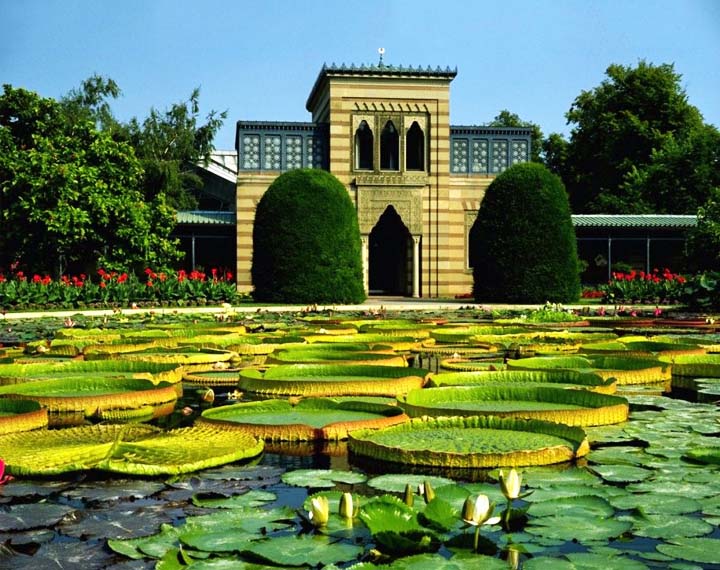
Wilhelma Zoological and Botanic Garden
A unique blend of zoo and botanical garden with historic architecture. Wilhelma, located in Stuttgart, Germany, is a zoological-botanical garden that combines the beauty of a landscaped park with the diversity of a zoo and the richness of a botanical garden. Established in the mid-19th century, its role and function have evolved over the years to become one of the most popular attractions in the region, attracting visitors from near and far.
The history of Wilhelma dates back to the 1840s when King Wilhelm I of Württemberg decided to create a private retreat modeled after the Moorish gardens of southern Spain. Designed by architect Karl Ludwig von Zanth, the palace and gardens were completed in 1846, named “Wilhelma” in honor of the king. After the king’s death, the estate fell into disrepair until the late 19th century when it was repurposed as a zoological garden and botanical collection.
Today, Wilhelma encompasses over 80 acres of meticulously landscaped grounds, featuring a stunning array of plants, trees, and flowers from around the world. Its botanical collection includes over 8,000 species, making it one of the largest and most diverse in Europe. Additionally, the zoo is home to more than 11,000 animals representing over 1,200 species, ranging from exotic mammals and birds to reptiles and amphibians.
As a zoological-botanical garden, Wilhelma serves multiple functions. It functions as a center for conservation, education, and research, contributing to the preservation of endangered species and ecosystems through breeding programs and scientific studies. The garden also plays a significant role in public outreach and environmental education, offering visitors the opportunity to learn about biodiversity, ecology, and conservation in a captivating and immersive setting.
Throughout its history, Wilhelma has undergone numerous renovations and expansions to enhance its facilities and improve the visitor experience. Today, it remains a beloved destination for families, nature enthusiasts, and botany aficionados alike, providing a tranquil escape from the bustle of city life while fostering appreciation for the wonders of the natural world. Whether strolling through its lush gardens, admiring its diverse flora and fauna, or participating in educational programs, visitors to Wilhelma are invited to connect with nature in a meaningful and unforgettable way.
Rate us and Write a Review
 Closed Now!08:00 - 20:00
- Saturday08:00 - 20:00
- Sunday08:00 - 20:00
- Monday08:00 - 20:00
- Tuesday08:00 - 20:00
- Wednesday08:00 - 20:00
- Thursday08:00 - 20:00
- Friday08:00 - 20:00


 Own or work here?
