

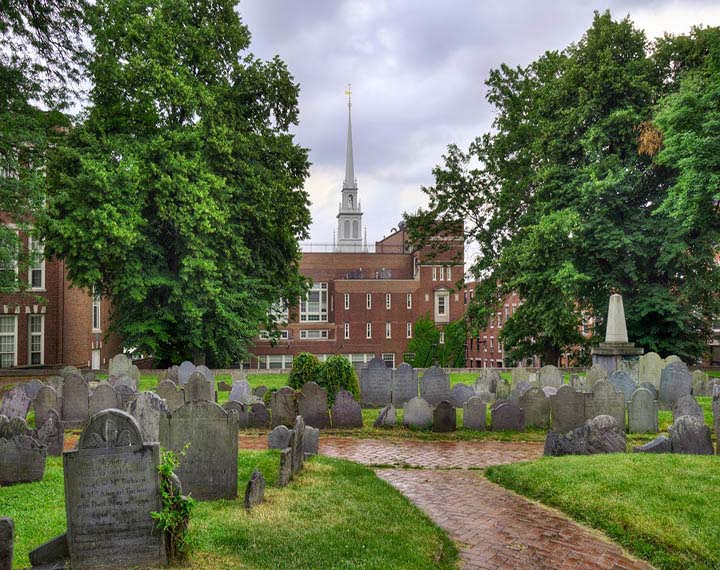
Nestled in Boston’s North End, Copps Hill Burying Ground stands as one of the city’s oldest and most evocative historic sites, established in 1659 as the second cemetery after King’s Chapel. Overlooking the harbor and the bustling streets below, it served as the final resting place for more than 1,200 souls, including artisans, merchants, and free Black residents who formed a vibrant community in the 18th century. Walking its uneven paths today feels like stepping into a tangible chapter of colonial America, where weathered slate headstones whisper stories of resilience amid epidemics, wars, and the relentless march of time.
During the American Revolution, Copps Hill became an unwitting stage for conflict when British troops under Sir William Howe commandeered its heights in 1775 to bombard Charlestown during the Battle of Bunker Hill. Cannon fire scarred the graves, and soldiers even used tombstones as makeshift targets for target practice, leaving a legacy of defiance etched into the very earth. This pivotal role underscores the burying ground’s place not just as a somber repository of the dead, but as a silent witness to the birth pangs of a nation, where the line between reverence and rebellion blurred under musket smoke.
In the modern era, Copps Hill endures as a poignant reminder of Boston’s diverse tapestry, with graves of Puritan ministers rubbing shoulders with those of enslaved and free African Americans like Prince Hall, the abolitionist and Masonic leader. Preservation efforts have kept its ancient stones from crumbling entirely, allowing visitors to ponder themes of mortality and memory amid the neighborhood’s Italian trattorias and clamoring tourists. It’s a quiet counterpoint to the city’s frenetic energy, inviting reflection on how the past’s echoes continue to shape the ground we tread upon.



 Own or work here?