

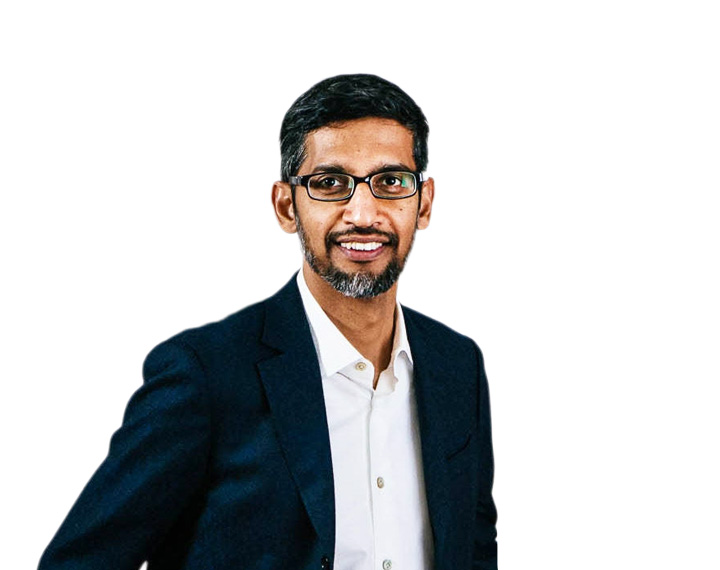
Sundar Pichai’s journey from a humble upbringing in India to the top of the world’s most influential technology company is a truly inspiring testament to the power of perseverance, vision, and quiet leadership. Born in Madurai, he grew up in a modest home without many of the conveniences we take for granted, but he was rich in curiosity and a passion for knowledge. His path from earning a degree at IIT Kharagpur to pursuing master’s and MBA degrees in the U.S. demonstrates an unwavering commitment to learning and a fearless embrace of new opportunities.
Upon joining Google in 2004, his impact was immediate and profound, but his success was built not on ego, but on a collaborative and empathetic leadership style. He was the driving force behind the creation of the Chrome browser, which revolutionized the internet, and later took on a pivotal role in leading Android, the world’s most popular mobile operating system. These achievements highlight his remarkable ability to identify and champion projects that would shape the future of technology for billions of people.
Today, as the CEO of Alphabet and Google, Sundar Pichai remains a leader who is known for his humility and his ability to unite teams around a shared, ambitious mission. His story is a powerful reminder that with hard work, a passion for your craft, and a focus on empowering others, you can achieve extraordinary things and create a legacy that extends far beyond a single product or company.
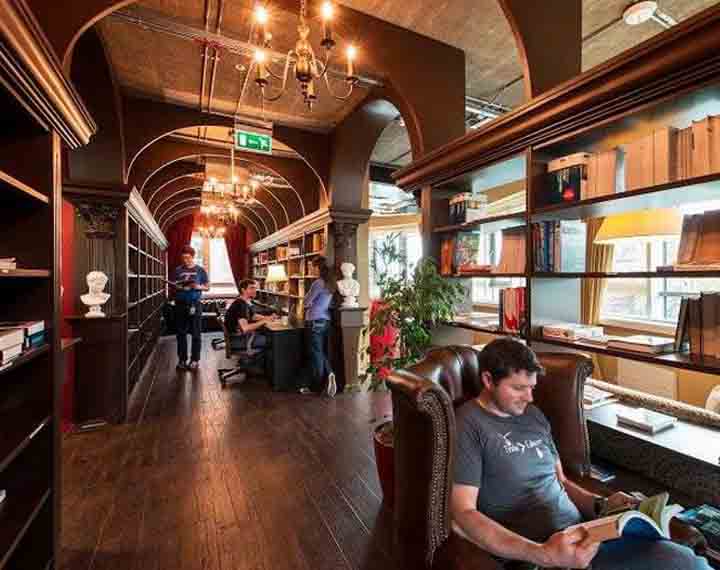
Google’s Los Angeles office is located in Venice and includes both engineering operations and North American advertising sales teams. In the Los Angeles office, engineers have the opportunity to take on challenging programming issues in a collaborative environment. Google engineers work on dozens of projects across ads, search, machine learning, computer vision, G+ Photos, Chrome, YouTube Social, video/media search, Google Docs storage and more. The Los Angeles advertising sales teams work with advertisers and agencies across industries such as entertainment, retail, auto, tech, finance and health care to drive successful marketing and advertising campaigns.
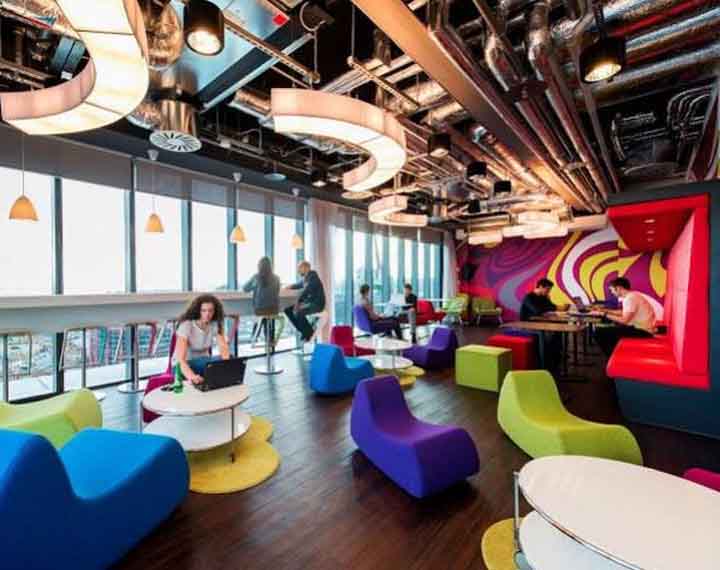
Google’s presence in Venice, California, is a beautiful fusion of world-class innovation and local artistry, perfectly capturing the city’s unique, creative spirit. Housed within the iconic “Binoculars Building”—a masterpiece of postmodern architecture designed by Frank Gehry with a stunning sculpture by Claes Oldenburg and Coosje van Bruggen—this office is not just a workplace; it’s a testament to the power of imagination. Its location, just a stone’s throw from the vibrant boardwalk, reflects a culture that encourages curiosity and a balanced, inspired life. Google Venice represents a space where a company’s ambitious, future-focused goals live in harmony with a community’s rich history of artistic expression, proving that the most transformative work happens when creativity is celebrated both inside and out.
More boardshorts than boardroom, high tech meets high tide at Google L.A. Our engineers work on such high-impact products as Ads, Chrome, and YouTube, while our sales teams push the limits of digital advertising for top-tier clients. Take advantage of our picture-perfect SoCal weather by hitting the rock wall and elevate team strategy sessions with a game of oversized chess on the roof deck. In-house coffee and juice bars provide pick-me-ups, and beach breaks double as brainstorm sessions when you borrow one of our 4-seat surrey bikes, beach cruisers, or surfboards and head to the boardwalk.
CEO Sundar Pichai received a Global Citizen Award from the Atlantic Council, recognizing Google’s response to the war in Ukraine and support of refugees and displaced people around the world. Below is a video and edited transcript of his remarks delivered in New York City.
I am truly humbled to receive this award. It’s even more meaningful to receive it alongside such an accomplished group of honorees — congratulations to you all. Above all, tonight we’re here to honor another group that deserves our focus: the people of Ukraine who continue to face unspeakable hardship, and those working tirelessly to help them. People like Dimitri, an entrepreneur I met based in Kyiv. In 2021, Dimitri founded a startup to provide online mental health services. When the war began, he committed to offer mental health care to all Ukrainians — especially those who can’t afford to pay for it. He’s now reinvesting 100% of his profit towards that goal.
Our people like Tomek, a Polish journalist who shares his passion for science through YouTube. Seeing the disruption the war was causing to kids’ education, he worked with a teacher and interpreter to launch a new, Ukrainian-language science channel. It has meant that children forced to leave Ukraine could use YouTube to keep learning in Poland.
I’m also thinking of 10-year-old Yana, who left Ukraine with her family and enrolled in school in Poland. With the help of Google Translate, she’s made a new best friend, despite the language barrier. Yana and her family are among the 7 million refugees from Ukraine in Europe today. The need is unprecedented. So is the response. When I was in Warsaw last spring, I was struck by how many Google employees were hosting multiple families in their homes. That was typical in the region, and the generosity continues today. In the U.S., I’m inspired by the effort to welcome Ukrainian and Afghan newcomers. And again, it’s led by everyday people who are stepping up to help. The private sector can scale these efforts, and fill gaps with technical expertise, resourcing and innovation”.



 Own or work here?